
TL;DR

Get decor and gifts delivered free with Prime
- Fast, free delivery on millions of items
- Prime Video, Amazon Music and more included
- Member-only deals all year
A Hunker report describes a DIY method for making a rustic planter from reclaimed wood pallets. It recommends choosing pallets marked HT, removing damaged wood and building a simple frame; planter size and exterior design can be adapted to the available boards.
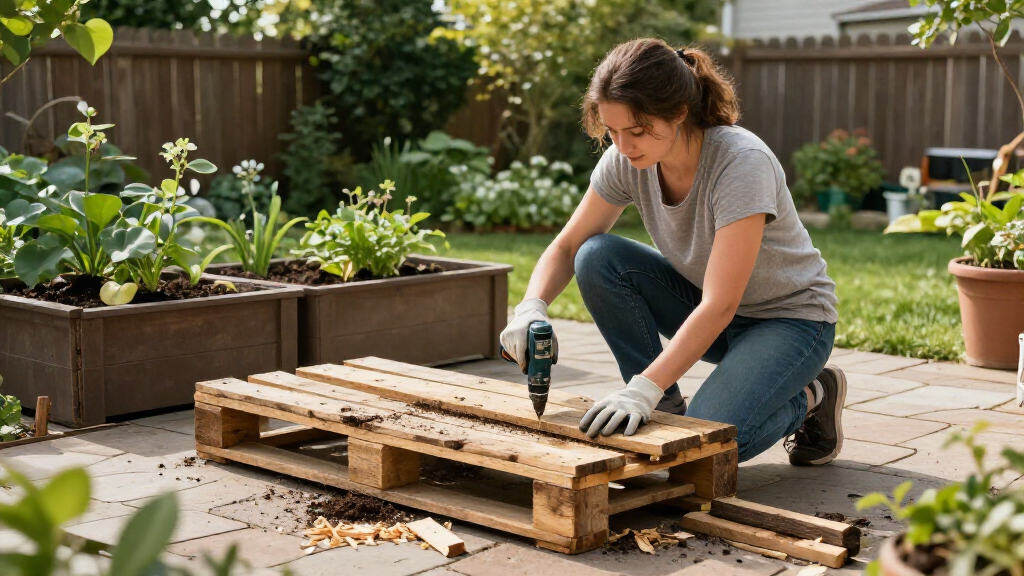
Hunker has outlined a DIY method for turning old wood pallets into custom rustic planters, offering a reuse option for people who want a planter sized and styled for a home, porch or patio. The guide describes a basic wooden frame covered with pallet boards and recommends selecting pallets marked HT, for heat-treated, rather than wood preserved with chemicals that could leach into soil.
The project starts with taking a pallet apart or cutting it into usable sections. Hunker says pulling boards free can cause them to crack, while cutting may help preserve them. The report advises wearing gloves around nails and trimming away rot or damage that could weaken the finished planter. Boards can then be cut to the desired dimensions; a larger box will require more wood and may take more than one pallet.
For the frame, the guide calls for four corner posts or eight boards arranged as pairs in L shapes, plus eight horizontal pieces for the top and bottom edges. The horizontal boards attach between the corners to create an open-sided box. Wood glue, screws or nails can hold the frame together, and the bottom supports can sit level with the base or be raised to give the planter short legs.
Flat boards cover the frame’s sides and bottom. Hunker suggests using the more visibly worn pieces on the exterior, while reserving better-condition boards for the frame and interior. Builders can arrange the exterior boards vertically or horizontally, add a border around the opening, leave gaps, or create a diagonal pattern. A saw and sander are listed among the basic tools, with paint or stain optional.
A Reuse Project With Flexible Design
The approach gives usable pallet timber a second purpose and lets builders control the planter’s size, shape and appearance instead of buying a finished container. That flexibility may suit gardeners who need a particular fit or want a weathered wood look that differs from glazed ceramic or plastic planters.
The report also frames the project as adjustable for different skill levels, from a straightforward box to more decorative board arrangements. That does not mean every pallet is suitable: wood condition and treatment matter, and the guide’s HT recommendation is particularly relevant when the planter will hold plants in soil. For anyone uncertain about a pallet’s history or markings, the source does not provide a test method or guarantee that a particular piece is safe.
Products Worth Considering

Philips Hue Festavia Outdoor Globe String Lights, 8 Bulbs, 22 ft

Shark HydroVac Reveal Cordless Wet-Dry Vacuum and Mop, Lilac, WD321

Dyson Omni-Glide Cordless Stick Vacuum, Gold/Iron
As an affiliate, we earn on qualifying purchases.
From Delivery Pallets to Planter Frame
The Hunker report presents the planter as a response to the effort of finding containers in the right size and style. It describes pallets as potentially available free from online listings or businesses with leftover delivery materials, but availability depends on local supply and permission to take them. The report does not identify a specific business, pallet supplier or project location.
The proposed construction is a basic four-sided box: a frame carries flat boards on the sides and bottom. The exterior can be left bare for a rustic finish or coated with paint or stain. The guide also suggests placing plants in their existing pots inside the wooden structure, rather than relying on the pallet boards alone to hold them. This can reduce the consequences if the planter’s boards fail, though the article does not specify drainage or liner instructions.
Pallet Safety and Build Details
The source does not give a publication date in the supplied material, nor does it provide tested load limits, exact measurements, a complete materials list or instructions for drainage. The right dimensions and amount of lumber will depend on the intended plants and the pallet boards available. It also does not establish that every pallet marked HT is otherwise clean or in suitable condition.
Hunker recommends avoiding chemically preserved pallets for this use, but the supplied report does not explain how to identify every treatment type or assess a pallet’s prior exposure. Readers should check markings and condition and avoid using wood with unknown contamination or extensive rot. The guide’s construction outline is not a substitute for checking that the finished box is stable and suitable for its location.
Choose the Pallet and Planter Size
The next steps for anyone trying the project are to source a pallet in good condition, check for the HT mark, decide on the planter dimensions and gather suitable tools and fasteners. The builder then needs to remove or cut the boards, discard unsafe or badly damaged pieces, assemble the frame and attach the side and bottom boards.
Hunker offers no scheduled follow-up or further development. The remaining decisions are practical ones for each build: whether to keep plants in their pots, how to finish the wood and how to arrange the exterior boards. The report leaves drainage and specific protective treatments unanswered, so those details should be considered for the intended plants and setting before the planter is used.
Key Questions
What kind of pallet does the guide recommend?
Hunker recommends looking for pallets marked HT, indicating heat treatment, and avoiding chemically preserved wood that could leach into soil. It also advises choosing boards in relatively good condition and removing rotten or severely damaged sections.
What tools and materials are needed?
The report lists a saw and sander as basic tools and suggests wood glue, screws or nails to join the frame. Paint or stain is optional. The exact quantity of boards depends on the planter’s dimensions and the pallet.
Can the planter be made in different sizes?
Yes. The guide says the box shape can be adjusted for smaller plants such as succulents or larger plants such as vegetables. Larger planters require more wood and may need multiple pallets.
How can plants be protected if the wood fails?
Hunker suggests leaving plants in their existing pots and placing those pots inside the wooden planter. That way, the containers still hold the plants if pallet boards break. The report does not provide specific drainage or liner instructions.
Source: hunker.com