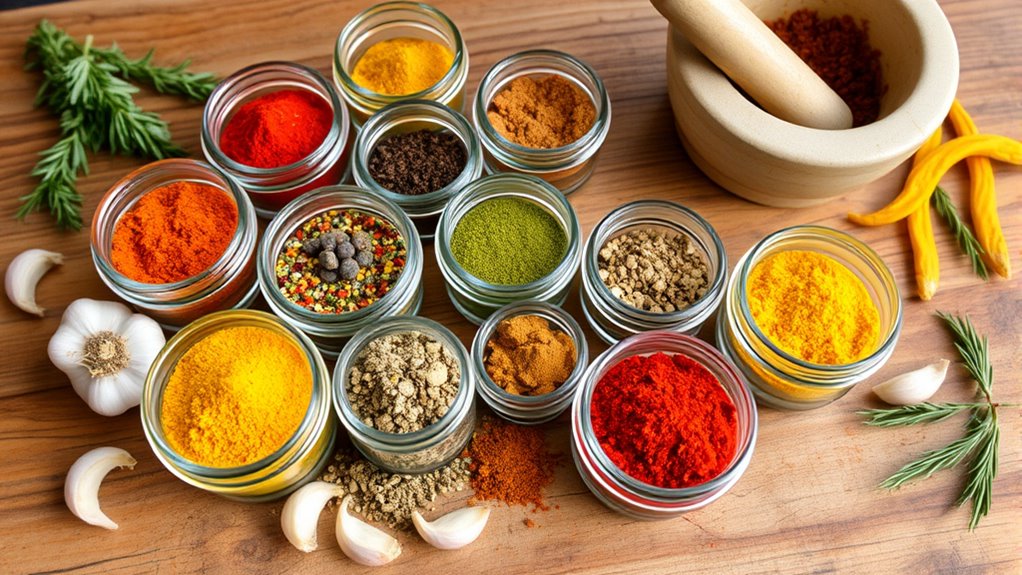

You can quickly make flavorful, low-sodium spice blends at home by combining herbs like basil, oregano, and thyme with citrus zest for a bright, fresh taste. Toast and grind spices such as cumin, turmeric, and paprika to boost flavor without salt, or mix peppercorns with red pepper for a spicy kick. Incorporating fresh herbs or healthy fats can enhance these blends even more. Keep exploring for more ideas to spice up your healthier meals.
Key Takeaways
- Create homemade spice blends like Italian herbs, citrus zest mix, and curry powders using dried herbs and spices without added salt.
- Store blends in airtight containers in a cool, dark place to preserve freshness and flavor.
- Incorporate fresh herbs such as basil, parsley, cilantro, and mint to enhance flavor naturally.
- Toast spices and bloom them in oil to deepen aroma and flavor without sodium.
- Use spice blends to flavor dishes like fish, vegetables, and salads, reducing the need for salt while maintaining rich taste.
Homemade Italian Herb Blend
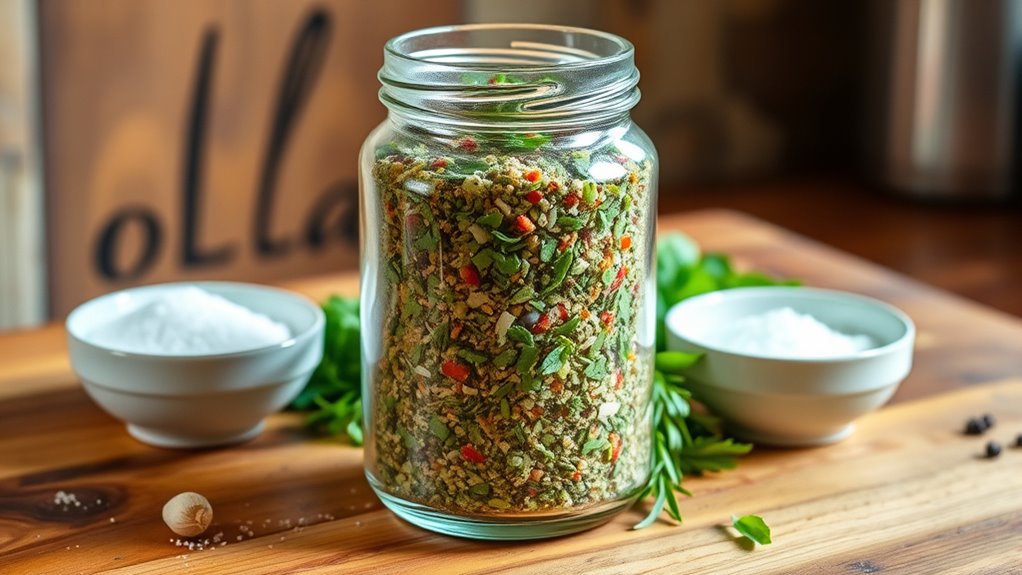
Creating your own Italian herb blend at home is a simple way to enhance your dishes without adding excess sodium. This versatile blend pairs especially well with seafood, bringing out fresh, savory flavors without relying on salt. To get started, combine dried basil, oregano, thyme, rosemary, and a touch of garlic powder. Store your spice blend in an airtight container away from sunlight to maintain its potency. When you’re ready to cook seafood, sprinkle the herb mixture over fish or shellfish before grilling or baking. This not only boosts flavor but also keeps your sodium intake in check. Making your own blend allows you to customize the herbs to suit your taste and guarantees you’re using fresh ingredients every time. Additionally, incorporating kitchen staples like homemade spice blends can reduce dependence on processed seasonings, aligning with health-conscious cooking habits.
Citrus and Herb Zest Mix
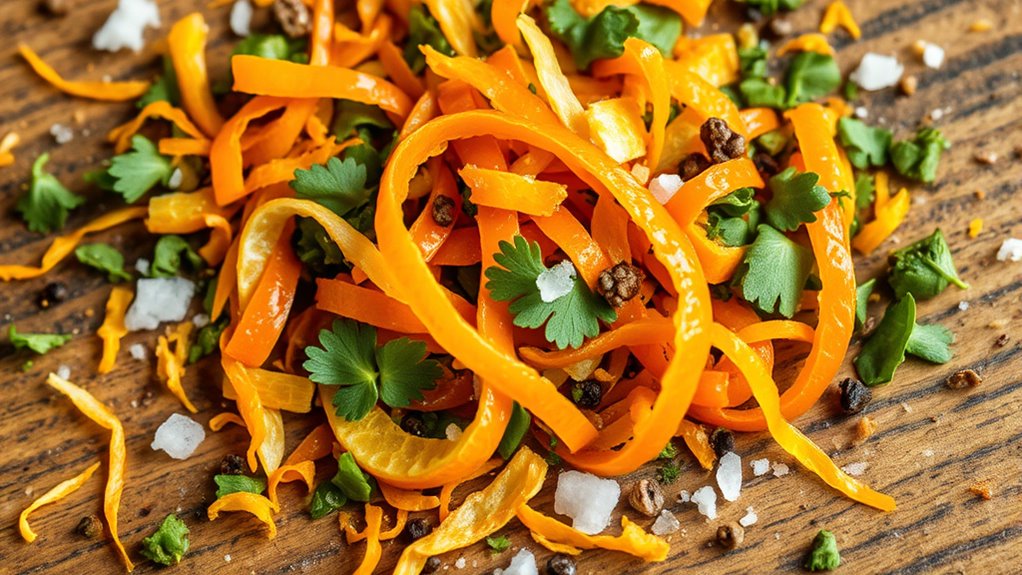
Building on the idea of flavoring your dishes with homemade spice blends, Citrus and Herb Zest Mix offers a bright, tangy twist that enhances a variety of meals without adding sodium. This mix is perfect for elevating flavor pairing in salads, grilled fish, or roasted vegetables. To make it, you’ll want to focus on zest preservation, drying citrus peels carefully to retain their vibrant aroma. Use finely grated lemon, lime, or orange zest combined with herbs like thyme, rosemary, or basil for a balanced, fresh flavor. The key is storing the blend in an airtight container to keep the zest’s brightness intact. This versatile mix adds depth to your cooking while staying low-sodium, making every bite flavorful and health-conscious.
Smoky Paprika and Cumin Dust
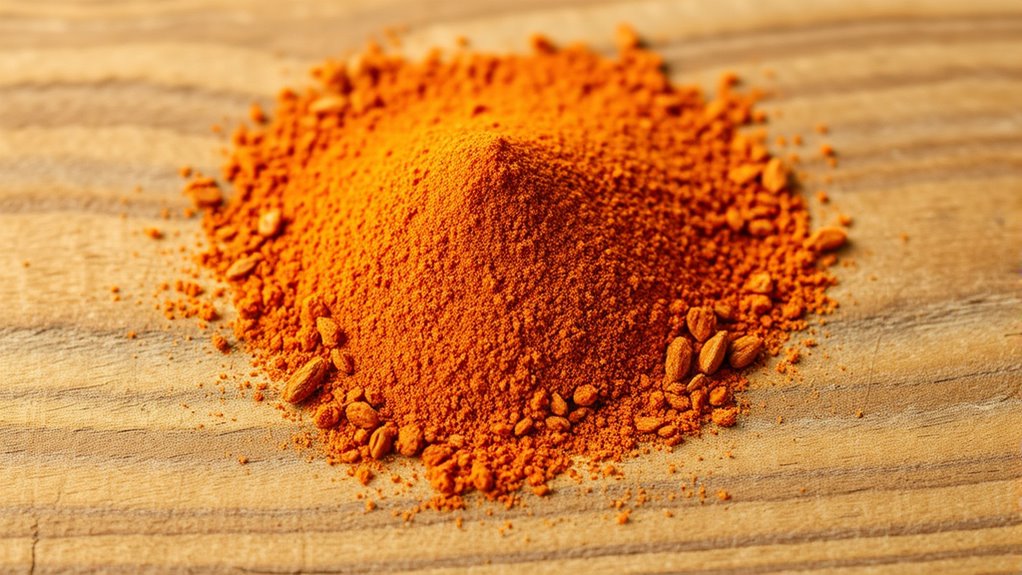
If you’re looking to add depth and a smoky warmth to your dishes without the sodium, Smoky Paprika and Cumin Dust is an excellent choice. This blend combines the rich flavor of smoky paprika with the earthy aroma of cumin dust, creating a bold, savory taste. You can sprinkle it on roasted vegetables, grilled meats, or even popcorn for a flavorful kick. The smoky paprika provides a gentle heat and a deep red hue, while the cumin dust adds a subtle nuttiness and warmth. Making this spice blend at home allows you to control the ingredients and avoid excess salt. Keep it stored in an airtight container, and use it to elevate your dishes without compromising your low-sodium goals. For those interested in enhancing vehicle performance, Porsche Tuning offers various options to improve power and handling, which can be tailored to meet your driving preferences.
Fresh Herb Garden Mix
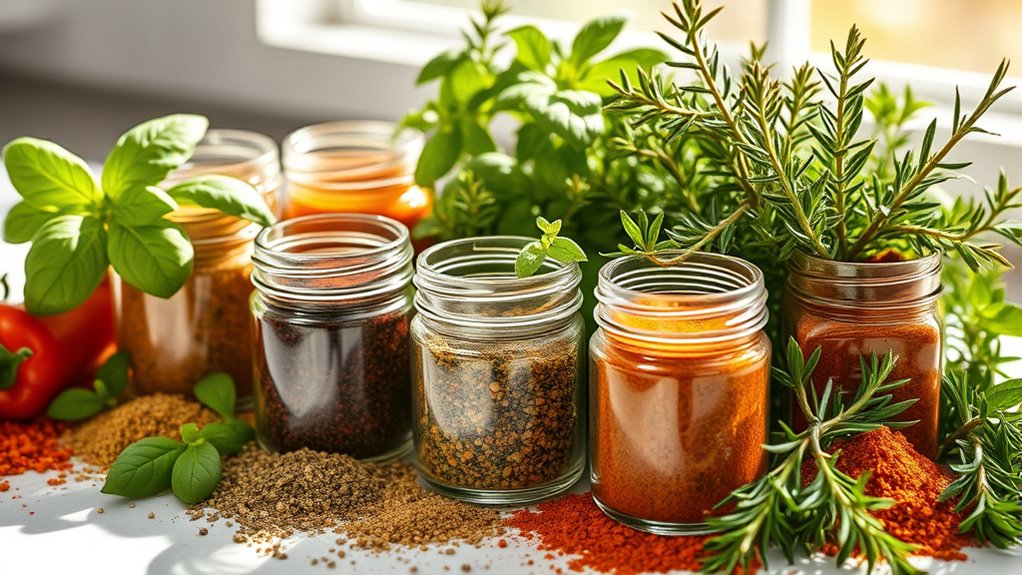
A fresh herb garden mix offers a vibrant, low-sodium way to enhance the flavor of your dishes. Growing herbs at home supports sustainable gardening and reduces reliance on store-bought options. To maximize freshness, use herb preservation techniques like drying or freezing herbs, ensuring you enjoy their aroma year-round. A well-crafted herb blend can elevate salads, marinades, and roasted veggies without added salt. Consider adding these herbs to your mix:
- Basil – for sweetness and aroma
- Parsley – for brightness and freshness
- Rosemary – for earthy depth
Additionally, incorporating Kia Tuning concepts such as performance upgrades can be a fun way to personalize your gardening space and make your herb garden uniquely yours.
Spicy Peppercorn Blend
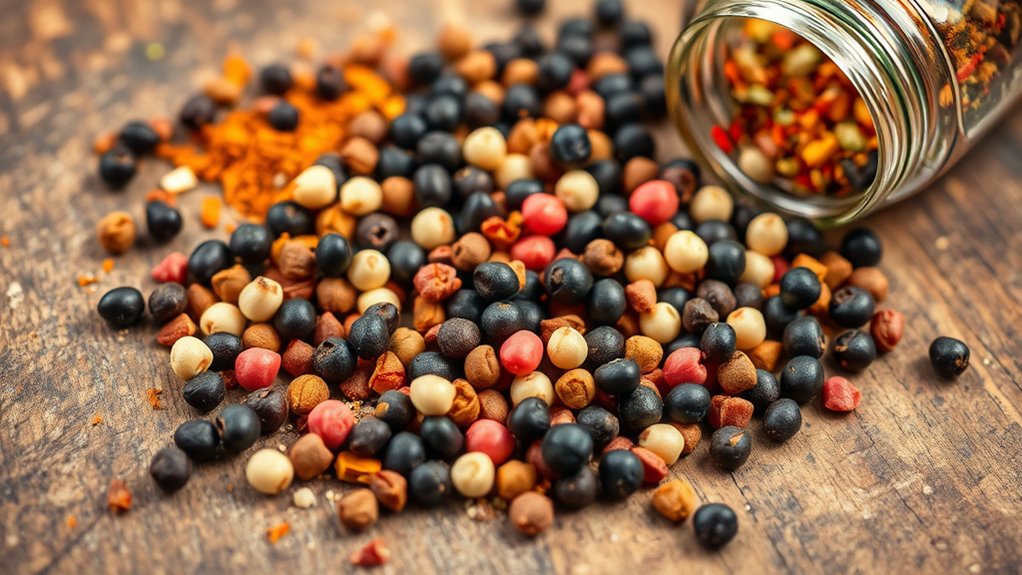
A spicy peppercorn blend adds a bold kick to your dishes without relying on salt. You can experiment with different peppercorn varieties like black, white, green, or pink to create complex flavors. Each variety offers unique heat levels and aromatic qualities, so choose based on your taste preference. When preparing your blend, use proper grinding techniques—coarse for seasoning steaks or fine for sprinkling over salads. Freshly ground peppercorns release more essential oils and flavors, enhancing the spice without excess sodium. Combining these varieties with a touch of crushed red pepper or other spices boosts heat without adding salt. This blend is versatile and perfect for seasoning meats, vegetables, or even popcorn, delivering robust flavor while keeping your sodium intake low.
Warm Cinnamon and Nutmeg
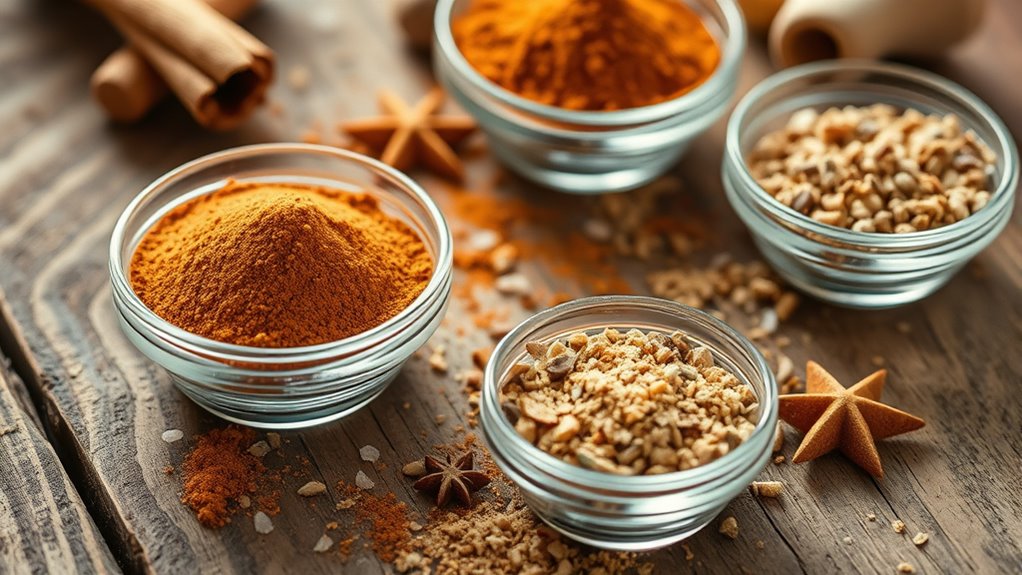
Building on the idea of enhancing flavor without added sodium, warm spices like cinnamon and nutmeg bring comforting depth to your dishes. They’re perfect for pairing with baked goods, adding a sweet aroma and rich flavor without extra salt. Cinnamon, in particular, offers impressive health benefits, such as helping regulate blood sugar and improving heart health. Nutmeg complements cinnamon by adding a subtle warmth and complexity to your recipes. Here are three ways to incorporate these spices:
- Sprinkle cinnamon and nutmeg over oatmeal or yogurt for a flavorful breakfast.
- Add them to baked apple or pumpkin desserts for natural sweetness.
- Mix into homemade spice blends for muffins or bread, enhancing aroma and taste naturally. These warm spices elevate your dishes while supporting your health. Incorporating spice blends can also help you reduce overall sodium intake without sacrificing flavor.
Savory Garlic and Onion Powder
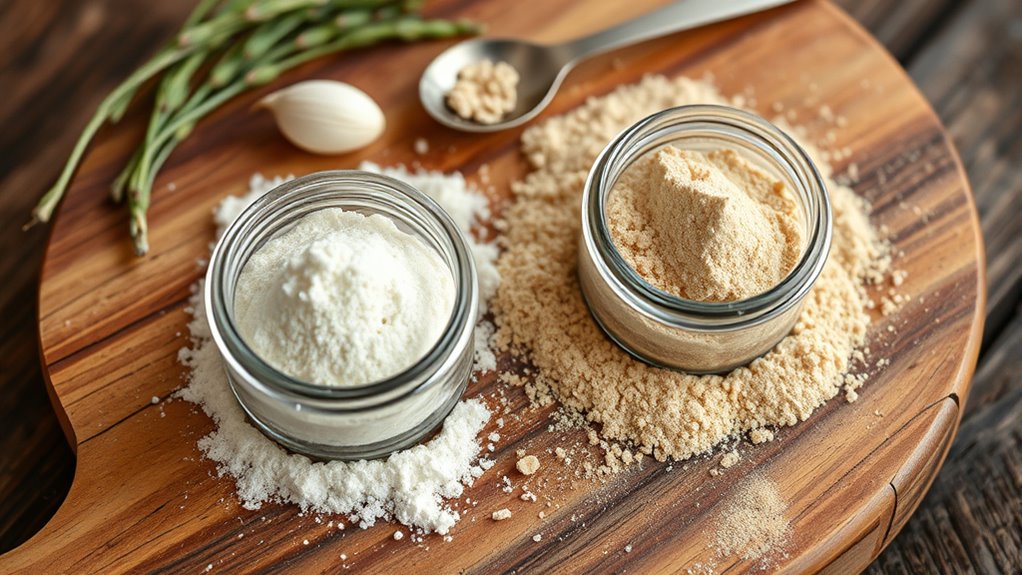
Because they deliver bold, savory flavor without the need for salt, garlic and onion powders are essential additions to low-sodium cooking. These versatile ingredients form the base of many savory blends, enhancing dishes with their rich, aromatic qualities. When making your own garlic onion powder, you can control the salt content while still achieving that deep, savory taste. Use these powders to season vegetables, meats, or grains, adding complexity without extra sodium. They also blend well with other herbs and spices to create custom savory mixes tailored to your preferences. By incorporating garlic onion powders into your homemade spice blends, you’ll enjoy robust flavor in every bite, all while keeping your sodium intake in check. Additionally, understanding divorce statistics can help you appreciate the importance of clear communication and expert guidance when navigating complex situations.
Fiery Chili Powder Alternative

If you’re looking to add some heat and depth to your low-sodium spice blends, swapping out traditional chili powders for a fiery alternative can make a big difference. Not only does this boost flavor, but it also offers health benefits like metabolism support and antioxidant properties. To craft your own, consider these options:
Enhance your low-sodium spice blends with fiery chili alternatives for bold flavor and health benefits.
- Smoked paprika with cayenne for a smoky, spicy kick
- Ground chipotle peppers for a rich, smoky heat
- Ground ancho or guajillo chilies for a milder, fruity spice
Store your homemade fiery chili powder in an airtight container in a cool, dark place to maintain freshness and potency. Proper storage tips ensure your blend stays vibrant and effective over time, maximizing flavor and health benefits.
Lemon-Pepper Seasoning
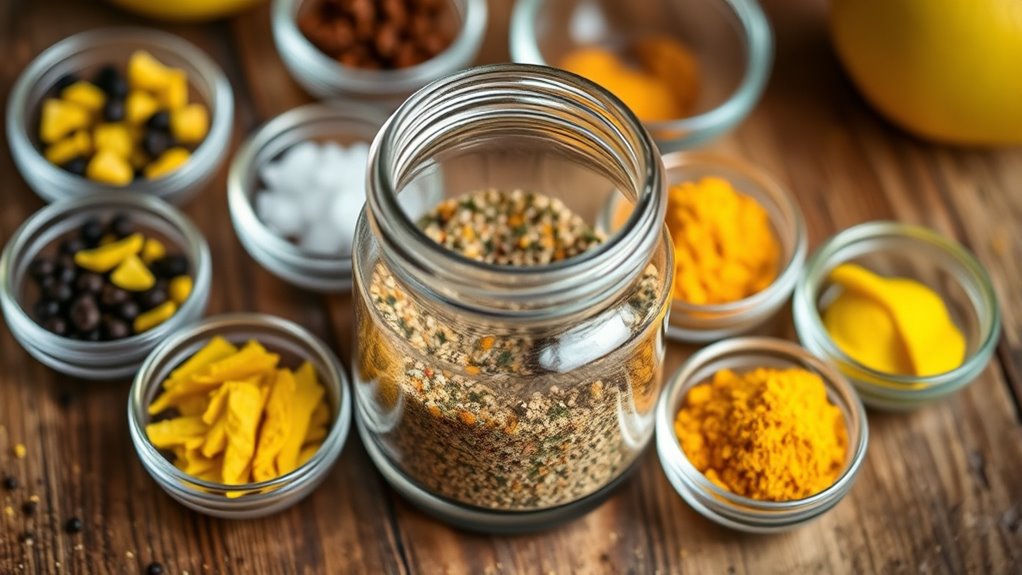
Lemon-pepper seasoning offers a bright, tangy flavor that enhances a wide range of dishes without adding sodium. It’s perfect for pairing with fish, as the citrus notes complement seafood beautifully, boosting flavor without extra salt. To make your own low-sodium lemon-pepper, combine dried lemon zest, black pepper, garlic powder, and a touch of onion powder. Store your lemon-pepper spice in an airtight container in a cool, dark place to maintain its freshness. When using, sprinkle it on grilled fish, roasted vegetables, or chicken for a burst of citrusy brightness. Be mindful of how much you use, as its bold flavor can quickly overpower dishes. Proper storage ensures your homemade blend stays flavorful and ready to elevate your meals. Understanding city dynamics can also help you discover local markets and hidden ingredients to further customize your spice blends.
Curry Powder Without Salt
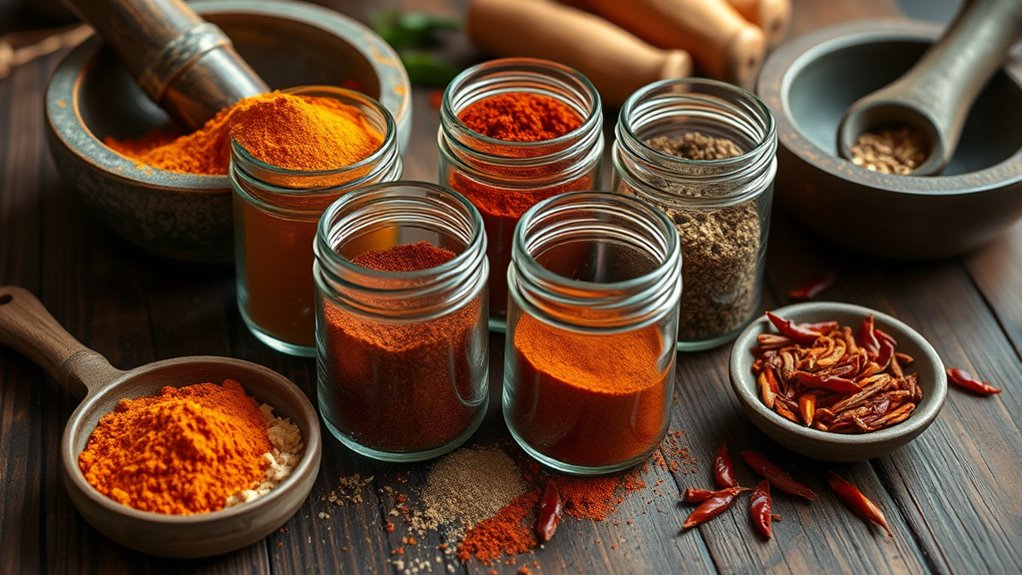
You can create a flavorful curry powder without salt by combining aromatic herbs and spices that boost depth and aroma. Using ingredients like turmeric, cumin, coriander, and ginger enhances the complexity of your dish without added sodium. These spice blends help you enjoy rich flavors while keeping your meals heart-healthy. Incorporating healthy fats from sources like coconut oil can also support overall flavor and nutritional balance in your cooking.
Flavorful Spice Combinations
Creating a flavorful curry powder without salt involves blending aromatic spices that bring depth and warmth to your dishes. By experimenting with spice combinations, you can craft vibrant flavors without sacrificing health benefits. To add complexity, consider these options:
- Ground turmeric, cumin, and coriander for earthy richness
- Garam masala, cinnamon, and cardamom for a warming blend
- Paprika, fenugreek, and black pepper for a smoky kick
Incorporating diverse spice combinations can also help prevent flavor fatigue and keep your meals exciting. Store your spice blends in airtight containers to maintain flavor and freshness, which is essential for seasoning storage. Using diverse spice combinations not only enhances taste but also offers health benefits like anti-inflammatory properties. Creating your own low-sodium spice blends empowers you to control salt intake while enjoying robust, satisfying flavors.
Enhancing Curry Depth
To deepen the flavor of your salt-free curry powder, focus on toasting and blooming your spices before adding other ingredients. Toasting releases essential oils, enhancing richness, while blooming in oil helps develop complex flavors. Incorporate marinating techniques by coating proteins or vegetables with your spice blend early, allowing flavors to meld and intensify. Proper storage tips are vital; keep your curry powder in an airtight container away from heat and light to preserve its depth. Consider preparing your spice mix in advance and letting it sit for a few days before use—this improves flavor integration. Additionally, paying attention to spice blending techniques can help you achieve a more balanced and layered flavor profile. By toasting, blooming, marinating thoughtfully, and storing correctly, you’ll create a curry with robust, layered depth, even without added salt.
Using Aromatic Herbs
Aromatic herbs can considerably enhance the flavor complexity of salt-free curry powders, offering vibrant, invigorating notes that elevate the dish. Just like a well-timed marriage proposal adds depth to a relationship, herbs bring layers of flavor that make each bite memorable. When exploring spice blends, think of herbs as your secret weapon—akin to groundbreaking space exploration. To add depth, consider these herbs:
- Cilantro—bright and citrusy, balancing spiciness
- Basil—sweet and aromatic, enriching warmth
- Mint—cool and revitalizing, cutting through richness
Incorporating these herbs creates a harmonious blend, making your curry enticing without salt. Their natural flavors can transform simple ingredients into a culinary adventure, much like space exploration pushes boundaries or a proposal sparks a new chapter. Additionally, understanding how changing gears on a gravel bike works can help you maintain smooth transitions in your cooking process, ensuring your spice blend develops evenly.
Frequently Asked Questions
How Long Can Homemade Low-Sodium Spice Blends Be Stored Safely?
Your homemade low-sodium spice blends can typically be stored safely for 6 months to a year. To maximize shelf life, keep them in airtight containers away from direct sunlight and moisture. Follow proper storage tips like labeling with dates and avoiding frequent opening. Regularly check for signs of spoilage, such as clumping or loss of aroma, to guarantee freshness and safety of your spice blends over time.
Can I Substitute Dried Herbs With Fresh in These Spice Blends?
Oh, sure, go ahead and swap fresh herbs for dried—because who needs consistency in flavor enhancement? Dried herbs are concentrated and perfect for spice blends, while fresh herbs lose their magic when dried. Herb drying impacts their potency, so substitute carefully. If you do, remember, fresh herbs bring a delicate brightness that dried ones can’t match, making your low-sodium spice blends more vibrant and flavorful—just not quite the same.
Are There Specific Storage Conditions to Preserve Flavor and Potency?
To preserve flavor and potency, you should store your spice blends in airtight storage containers away from direct sunlight. Keep humidity control in mind by choosing containers that prevent moisture from entering, which can cause clumping or spoilage. Store your spice blends in a cool, dark place, like a pantry or cupboard, and avoid areas with temperature fluctuations to maintain their freshness and flavor over time.
How Do I Adjust Recipes if I Want a Milder or Spicier Blend?
Imagine tuning a delicate melody, adjusting spice strength to craft the perfect flavor. To make your blend milder or spicier, start by adding small amounts of heat or gentle herbs, then taste and adjust gradually. Focus on balancing flavors, so no single note overpowers the others. This way, you create a harmonious blend that reflects your desired level of spice while maintaining a delightful, well-rounded taste.
Can I Customize These Blends for Specific Dietary Restrictions?
Yes, you can customize spice blends to suit specific dietary restrictions by making appropriate dietary modifications and flavor adjustments. You might reduce or omit certain ingredients, like salt or sugar, to meet health needs. Experiment with herbs and spices to enhance flavor without compromising dietary needs. Always check ingredient labels and consider substituting with suitable alternatives to guarantee your blends align with your dietary restrictions while maintaining delicious taste.
Conclusion
Now, imagine sprinkling these vibrant spice blends over your favorite dishes, transforming simple ingredients into flavorful masterpieces. With each pinch, you bring to life the aroma of fresh herbs, smoky warmth, or zesty citrus—all without the salt. As your kitchen fills with inviting scents, you’ll savor the satisfaction of crafting wholesome, low-sodium flavors that delight your senses and nourish your body. Enjoy cooking with these homemade blends, and let each meal become a celebration of taste and health.