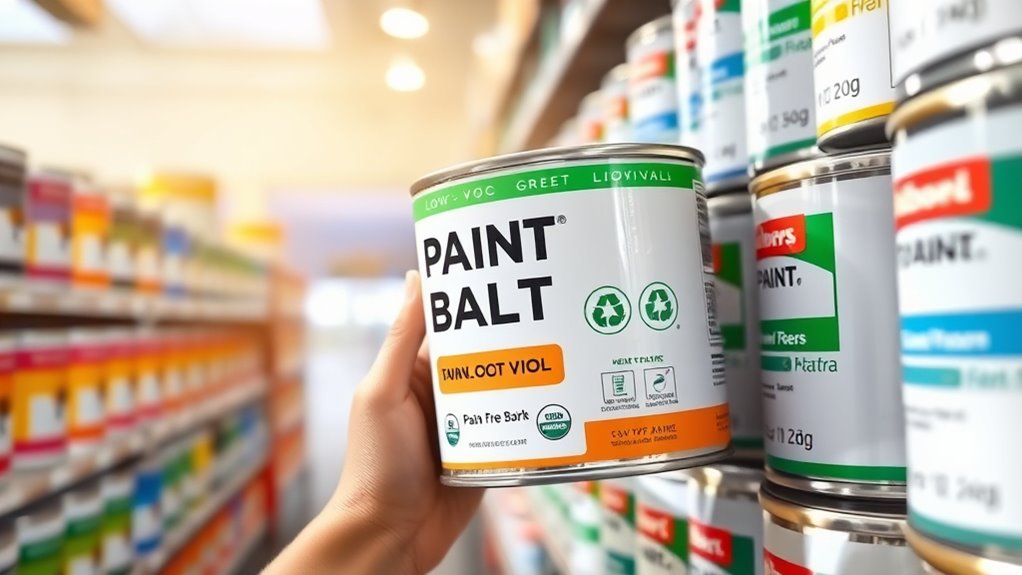

To choose low-VOC paints for healthier air, look for products with clear labeling that mention low or zero VOC content. Prioritize brands committed to transparency and eco-friendly practices, and avoid paints with harmful chemicals like formaldehyde or benzene. Not sacrificing quality, these paints provide excellent coverage and durability while reducing indoor pollutants. Making this switch supports a safer home environment, and the next details will help you understand how to make the best choices.
Key Takeaways
- Check product labels for low or zero VOC certifications to ensure reduced emissions.
- Choose reputable brands committed to transparency and eco-friendly manufacturing practices.
- Prioritize paints formulated without harmful chemicals like formaldehyde, benzene, and toluene.
- Consider the paint’s performance and durability to avoid frequent reapplication and potential indoor pollution.
- Opt for paints with independent environmental or health certifications to verify safety and low emissions.

When choosing paint for your home, opting for low-VOC options can considerably improve indoor air quality. VOCs, or volatile organic compounds, are chemicals that evaporate into the air as paint dries, potentially causing health issues like headaches, respiratory problems, and allergies. By selecting low-VOC paints, you’re making a conscious effort to reduce these airborne pollutants and create a healthier living environment. But beyond your immediate health, it’s important to think about paint ingredient safety and environmental impact. Low-VOC paints are formulated to contain fewer harmful chemicals, which means you’re less likely to expose yourself and your family to toxic substances. This is especially significant if you have young children, pets, or anyone with respiratory sensitivities. Furthermore, many low-VOC paints are made with safer ingredients that don’t compromise quality while minimizing health risks.
When evaluating paint options, pay close attention to the ingredients listed on the label. Reputable brands often provide transparency about their formulations, highlighting the absence or reduction of hazardous chemicals like formaldehyde, benzene, or toluene. This focus on paint ingredient safety guarantees that you’re not just choosing a paint that looks good, but one that supports a safer indoor atmosphere. Additionally, considering the environmental impact of your paint choice is vital. Traditional paints can contain solvents and chemicals that persist in landfills or leach into water sources, contributing to pollution. Low-VOC paints tend to have a lighter ecological footprint because they release fewer harmful emissions during and after application. Choosing environmentally friendly options supports sustainability efforts and helps reduce your overall ecological impact.
Another factor to keep in mind is the durability and coverage of the paint. Many low-VOC paints now offer excellent coverage and longevity, so you don’t have to sacrifice quality for safety. It’s worth investing in reputable brands known for their commitment to eco-friendly formulations. These paints often undergo rigorous testing and adhere to strict regulations, giving you peace of mind that you’re making a responsible choice. When you prioritize low-VOC, safe ingredients, and eco-conscious manufacturing, you’re not just enhancing your home’s air quality—you’re also contributing to a healthier planet. Selecting the right paint isn’t just about aesthetics; it’s about making informed decisions that protect your health and the environment for years to come.
As an affiliate, we earn on qualifying purchases.
Frequently Asked Questions
Are There Any Low-Voc Paints Suitable for Outdoor Use?
Yes, there are low-VOC paints suitable for outdoor use. Look for options that offer outdoor durability and weather resistance, guaranteeing your paint can withstand sun, rain, and temperature changes. Many brands now produce low-VOC formulas specifically designed for exterior surfaces, providing both environmental benefits and long-lasting protection. Always check the label for outdoor suitability and weather resistance features to ensure your outdoor project stays vibrant and healthy over time.
How Long Do Low-Voc Paints Off-Gas Compared to Regular Paints?
Low-VOC paints off-gas for a shorter period than regular paints, typically lasting a few days to a week. You’ll notice VOC emission timelines are considerably reduced, with most emissions diminishing within 2-3 days after application. This shorter off-gassing duration means you get cleaner indoor air faster, making low-VOC paints a healthier choice. Keep your space well-ventilated during the first few days for ideal air quality.
Can Low-Voc Paints Be Used on All Types of Surfaces?
Think of low-VOC paints as a versatile artist’s brush, capable of transforming many surfaces while respecting your health. Yes, you can use them on most surfaces, but always check for paint compatibility and surface adhesion. Some delicate materials may need special preparation or primer. When you choose the right low-VOC paint for your project, you guarantee a beautiful, lasting finish that’s safe for your space and your loved ones.
Do Low-Voc Paints Require Special Application Techniques?
Low-VOC paints usually don’t require special application techniques, but you’ll want to follow the recommended application process carefully. Proper surface preparation is essential to guarantee good adhesion and a smooth finish. Clean, dry surfaces and remove any grease or dust before painting. Use quality brushes or rollers, and apply thin coats for even coverage. This approach helps you achieve professional-looking results without needing any unique application methods.
Are There Any Color Limitations When Choosing Low-Voc Paints?
You won’t believe it, but low-VOC paints have almost no color limitations! While some tinting restrictions exist, they’re minimal compared to traditional paints. You get a vast array of color options, and modern tinting systems ensure vibrant, consistent hues without sacrificing air quality. So, go ahead—select any color you love without worrying about restrictions, and enjoy healthier, beautiful spaces with ease!
Conclusion
Choosing low-VOC paints isn’t just a small step; it’s a giant leap toward transforming your home into a sanctuary of pure, breathing air. By making this simple switch, you’re fighting back against invisible toxins that threaten your health every single day. Don’t settle for anything less than the best for your loved ones. Take action now—your lungs, your family, and your future self will thank you for making this life-changing, air-purifying choice today!