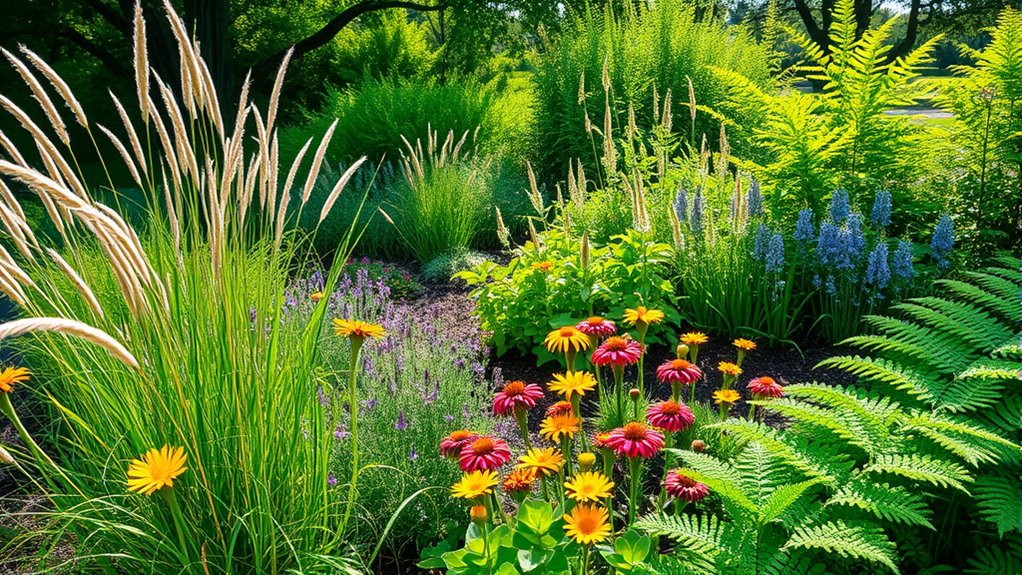

Choosing native plants for your landscape creates a sustainable, eco-friendly environment you’ll enjoy with less effort. Native plants adapt to your local climate and soil, requiring less water, fertilizers, and pest control. They support local pollinators, birds, and insects, helping maintain biodiversity. With minimal maintenance, your landscape becomes resilient and self-sustaining. To discover more eco-friendly tips and how native plants enrich your space, keep exploring the benefits for your garden and the planet.
Key Takeaways
- Native plants are adapted to local climate and soil, reducing water and maintenance needs.
- They support biodiversity by providing habitat for pollinators, birds, and insects.
- Using native plants enhances soil stability, reduces erosion, and minimizes runoff.
- They create resilient, low-maintenance landscapes that require fewer chemical inputs.
- Native plants foster ecological health and promote sustainable, visually appealing gardens.
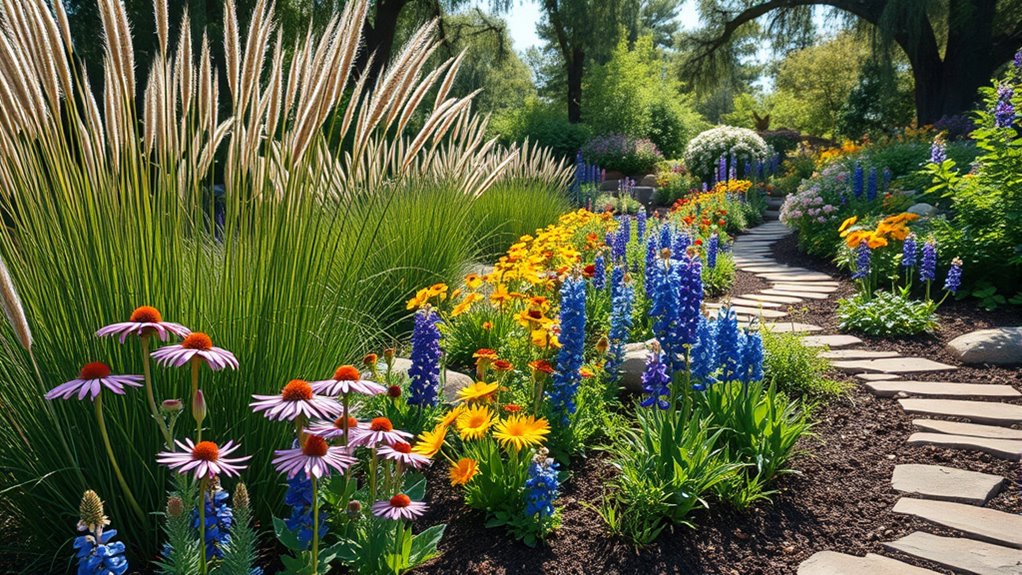
Have you ever wondered how your yard can be beautiful and eco-friendly at the same time? Choosing native plants is one of the best ways to achieve that balance. Native plants are adapted to your local climate and soil, which means they require less water and maintenance. By planting species that naturally thrive in your area, you’re practicing water conservation, reducing the need for frequent watering or chemical inputs. This not only saves you money but also conserves precious water resources, especially during dry seasons or drought conditions. When you focus on native plants, you’re also boosting biodiversity enhancement in your yard. These plants provide food and shelter for local pollinators, birds, and insects, creating a vibrant ecosystem right outside your door. Instead of planting exotic species that may struggle to survive or require extensive care, native plants support the health of your local environment by encouraging a variety of native wildlife to flourish.
Incorporating native plants into your landscape helps establish a sustainable environment that benefits both you and the planet. They typically have deep root systems that improve soil stability, reduce erosion, and increase water absorption. This means less runoff and lower risk of flooding, which are common issues in urban and suburban areas. Additionally, native plants tend to be more resistant to pests and diseases, so you won’t need to rely heavily on chemical pesticides or fertilizers. This makes your yard safer for children, pets, and beneficial insects, while also protecting local waterways from chemical contamination. By selecting the right native species, you can design a landscape that’s not only visually appealing but also resilient and low-maintenance.
Creating a native plant garden encourages a self-sustaining landscape that requires minimal intervention once established. You’ll notice that your yard becomes more lively and diverse, attracting butterflies, bees, and hummingbirds. These pollinators play a vital role in maintaining healthy ecosystems, and supporting them through native plant choices enhances biodiversity enhancement. Over time, your yard can become a habitat that supports a variety of species, all while reducing your ecological footprint. Plus, native plants often need fewer supplemental resources, making your gardening efforts more sustainable and enjoyable. Establishing native plants also supports ecosystem services, which are crucial for maintaining environmental health and resilience. The result is a landscape that’s both beautiful and beneficial, helping you connect more deeply with the environment and contribute to a healthier planet.
Frequently Asked Questions
How Do I Identify Native Plants for My Region?
To identify native plants for your region, start by consulting regional plant guides available online or at local nurseries. Visit native plant nurseries, where staff can help you pick species suited to your area. Observe plants in local parks or natural areas to see which thrive naturally. Using this info, you’ll choose plants that are well-adapted, reducing maintenance and supporting local ecosystems.
Are Native Plants More Resistant to Pests and Diseases?
You’ll find native plants more resistant to pests and diseases, offering greater pest resistance and disease resilience. Unlike exotic species, native plants have adapted to local conditions, so they naturally fend off common threats, reducing your need for chemical interventions. This resilience keeps your landscape healthier and more sustainable, creating a vibrant, low-maintenance garden that thrives with less effort while supporting local ecosystems.
What Soil Types Are Best for Native Plants?
You should choose soil types that match your native plants’ natural habitat for best results. Loamy soil with good drainage and organic matter works well. Before planting, amend your soil with compost or other organic matter to improve fertility and structure. Guarantee proper planting depth to support healthy root development. These steps help your native plants thrive, stay resilient, and require less water and maintenance over time.
How Often Should Native Plants Be Watered?
You should water native plants only when absolutely necessary—think once every few weeks or even less, depending on the season. Their incredible drought tolerance means they thrive on minimal watering, saving you time, water, and effort. Overwatering is their enemy, so resist the urge to flood them. Usually, natural rainfall suffices, and you’ll see them flourish with just occasional deep watering during extreme droughts or dry spells.
Can Native Plants Be Used in Container Gardening?
Yes, native plants work well in container gardening. They attract pollinators and often have drought tolerance, making them low-maintenance and eco-friendly choices. When planting in containers, select appropriately sized pots with good drainage, and use native soil or a mix suited for native species. Regular watering keeps them healthy, but their drought tolerance helps prevent overwatering. This approach supports pollinator attraction and sustainable gardening practices.
Conclusion
By choosing native plants, you’re not just planting; you’re promoting preservation, protecting perennials, and practicing responsible, resilient landscaping. Your sustainable selections support local wildlife, reduce resource waste, and foster a flourishing, friendly environment. So, step into this sustainable stance, sow seeds of stability, and see your space transform into a thriving sanctuary. Remember, your small steps can profoundly shape a sustainable, scenic, and sensational space that stays strong and stunning for years to come.