
To declutter safely, start by organizing your items into clear categories such as keep, donate, recycle, or discard. Gather donation-ready items into designated bins and research local centers ahead of time to verify they accept your items. Check items for damage and condition before donating, and recycle or dispose of unusable goods responsibly. Proper storage will keep your space tidy and make future decluttering easier. If you keep exploring, you’ll discover more tips for a smooth process.
Key Takeaways
- Sort items into categories: keep, donate, recycle, or discard, based on condition and usefulness.
- Research local donation centers to ensure they accept your items and follow their guidelines.
- Use clear, labeled storage containers to organize items and facilitate future decluttering.
- Inspect electronics, toys, and clothing for damage or missing parts before donating.
- Dispose of damaged or unusable items responsibly, recycling or discarding according to local regulations.

Decluttering your space can feel overwhelming, but taking intentional steps makes it manageable and rewarding. The key is breaking down the process into simple, focused actions. Start by gathering your items and sorting them into categories: keep, donate, recycle, and discard. When it comes to donating, it’s helpful to have designated boxes or bins ready. This not only keeps your space organized but also makes the process quicker and more efficient. Remember, your goal isn’t just to reduce clutter but to find new homes for items that can still be useful to others.
As you sort through your belongings, consider the importance of proper storage solutions. Use clear containers, labeled bins, or shelving units to organize the items you plan to keep. Thoughtful storage not only keeps your space tidy but also makes future decluttering easier. When it’s time to donate, have a plan for how you’ll transport your items. Keep donation centers in mind—these are the places where your unwanted goods can truly benefit someone else. Research local donation centers in advance, so you know where to take your items and what they accept. Many centers welcome clothing, household goods, and even small furniture, but it’s best to check their guidelines beforehand to avoid disappointment.
If you’re unsure about whether an item is still usable, ask yourself if it’s in good condition. Clothing with stains or tears might not be suitable for donation, but some thrift stores accept lightly worn items. Electronics, toys, and books should be inspected for damage or missing parts before donating. When in doubt, it’s better to recycle or dispose of items responsibly rather than clutter your space further. Keep a list of nearby donation centers and recycling centers, so you can easily drop off items during your decluttering sessions. Additionally, understanding the privacy policies of donation centers can help ensure your personal information is protected when donating sensitive items.
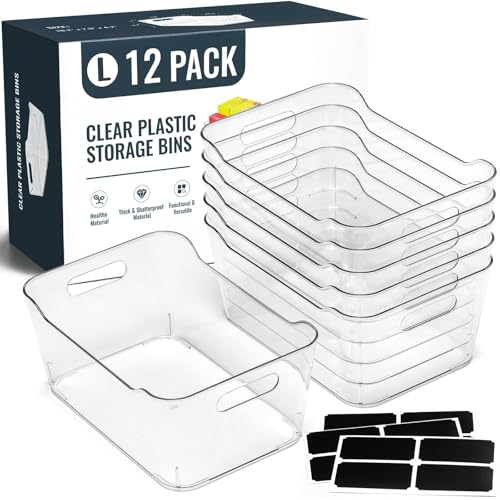
12 PACK Multi-Use Clear Plastic Storage Bins for Organizing w/Labels – Home, Kitchen, Pantry, Bathroom, Office, Cabinet Shelf Organizer Bins – SOHO Collection, RV, Fridge Organization Containers – L
12 PACK CLEAR ORGANIZER BINS – Item includes 12 pcs plastic bins (10.3" L x 7.3" W x…
As an affiliate, we earn on qualifying purchases.
As an affiliate, we earn on qualifying purchases.
Frequently Asked Questions
How Do I Determine Which Items Are Safe to Donate?
You can determine which items are safe to donate by checking donation eligibility and item safety. Confirm items are clean, undamaged, and in good condition before donating. Avoid clothing with stains or tears, broken electronics, or expired items like medications or cosmetics. If unsure about an item’s safety or donation eligibility, research the organization’s guidelines or contact them directly. This way, you help ensure your donations are useful and safe for recipients.
Are There Specific Donation Centers for Sensitive or Fragile Items?
Imagine delicate glassware wrapped in soft tissue, carefully transported to specialized donation centers. Yes, there are centers dedicated to fragile and sensitive items, ensuring proper handling and safety. These specialized donation centers understand the importance of fragile item handling, providing the right environment to protect your valuables. Before donating, call ahead to confirm their policies, ensuring your items are treated with care and reach those who need them most.
What Should I Do With Items That Aren’T Accepted by Charities?
If charities won’t accept your items, you should explore alternative disposal options. Check local recycling programs for items like electronics, plastics, or textiles, which often have dedicated recycling facilities. You can also consider responsible disposal methods, such as hazardous waste collection for batteries or chemicals. Properly sorting and researching recycling options helps guarantee your items are disposed of safely and environmentally friendly, reducing waste and supporting sustainability efforts.
How Can I Declutter Safely During a Pandemic?
Imagine your clutter as a garden that needs tending, even in tough times. During a pandemic, declutter safely by following strict cleaning protocols and opting for contactless donation options. Wash and disinfect items thoroughly, and use gloves when handling them. Choose donation centers that offer contactless drop-offs, ensuring you protect your health while clearing space. Your mindful efforts help both your home and community flourish safely.
Are There Legal Considerations When Donating Certain Items?
Yes, there are legal restrictions and liability concerns when donating certain items. You should check local laws and regulations to guarantee items like electronics, furniture, or clothing meet safety standards. Avoid donating items that could pose health risks or violate safety rules, as you might be held liable. Always verify what’s acceptable, and consider consulting your local charity or donation center for guidance to avoid potential legal issues.

VictoryStore 6-Pack Clothing Donation Bin, Corrugated Plastic, 22.3 Gallons, Collapsible Storage Box with Handles, Durable & Recyclable Collection Box
Festive Holiday Design – Bright graphics with clothes, arrows, and happy children make the donation bin cheerful and…
As an affiliate, we earn on qualifying purchases.
As an affiliate, we earn on qualifying purchases.
Conclusion
Think of your belongings as a garden. When you carefully prune and clear out the overgrowth, your space becomes brighter and more vibrant. Donating items is like planting seeds for new growth in someone else’s garden. By decluttering thoughtfully, you’re nurturing a cycle of renewal, creating a space that’s fresh and inviting. Embrace this process as tending to your personal garden, making room for new blooms and brighter days ahead.

Safco Trash Can Recycle Bin Combo, 28 Gallon Each (3 Bin), At Your Disposal Recycling Center, Black/Grey
DO-IT-ALL WASTE RECEPTACLE. At-Your-Disposal Triple Recycling Center performs as an indoor, value-priced trash and recycling receptacle for higher…
As an affiliate, we earn on qualifying purchases.
As an affiliate, we earn on qualifying purchases.

SINGAYE Metal Shelves Wire Shelving:Storage Rack Standing Units Shelf for Kitchen Laundry Bathroom Closet Organizers Pantry Narrow Mesh Adjustable 10" D x 16" W x 55" H Black
The shelves are more densely arranged, which increases the load-bearing capacity, and the smaller gaps are more suitable…
As an affiliate, we earn on qualifying purchases.
As an affiliate, we earn on qualifying purchases.