
Flexible floor plans let you easily adapt your space as your needs change, helping you make the most of your home without costly renovations. With features like movable partitions, sliding doors, and multi-purpose furniture, you can convert rooms for work, guests, or hobbies effortlessly. This approach offers long-term value, saving money and providing the freedom to adjust your home over time. Keep exploring to discover how smart design choices can transform your living environment.
Key Takeaways
- Adaptable layouts allow seamless reconfiguration of spaces to meet evolving family or work needs.
- Movable partitions and sliding doors facilitate quick transformations of room functions.
- Multi-use furniture and design elements maximize space efficiency for changing activities.
- Flexible floor plans support home modifications without extensive renovations or moving costs.
- Long-term benefits include cost savings, increased home value, and a home that evolves with lifestyle changes.

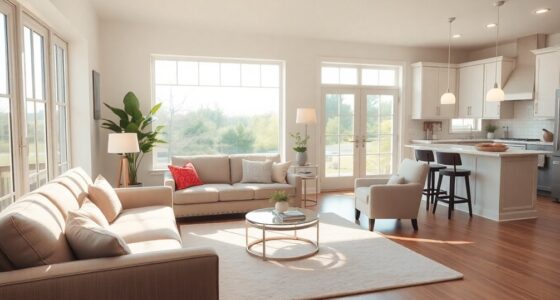
Flexible floor plans are transforming the way you design and use your living space. You no longer have to settle for rigid layouts that limit how you live and grow. Instead, adaptable layouts give you the freedom to customize your home to fit your changing needs. One of the biggest advantages of these designs is the ability to create multi use spaces. Whether you’re working from home, entertaining guests, or seeking a quiet retreat, you can easily reconfigure your rooms to serve different purposes. For instance, a living room can double as a home office or a guest bedroom with the right furniture and partition options. This flexibility means you’re making the most of every square foot without sacrificing comfort or style.
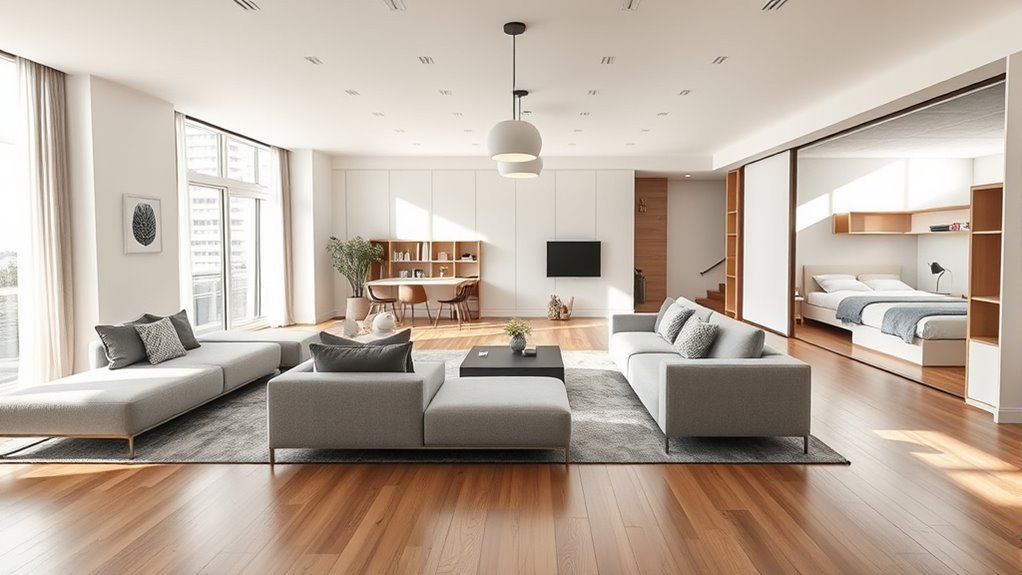
Flexible floor plans let you easily transform your space for work, leisure, or guest hosting without sacrificing style.
With adaptable layouts, you can transform your home as your lifestyle evolves. Perhaps you start a new job that requires a dedicated workspace, or your family expands, demanding more rooms or different configurations. A flexible floor plan allows you to add or remove walls and partitions, making it easy to accommodate these changes. This kind of design encourages creativity and practicality, ensuring your home remains functional no matter what life throws your way. You won’t have to go through the hassle and expense of moving or extensive renovations. Instead, you can reimagine your space with simple adjustments, giving you a sense of control and satisfaction.
Another benefit of flexible floor plans is how they promote a sense of openness and connection within your home. Open layouts foster better communication and interaction among family members, whether you’re cooking in the kitchen or relaxing in the living area. When you include multi use spaces, you also gain visual flow and versatility. For example, a dining area can become a workout zone or a craft corner when needed. The key is choosing furniture and design elements that are easy to move or reconfigure, so your space remains adaptable without clutter or chaos. Incorporating smart design choices like movable partitions and sliding doors further enhances this flexibility by making transitions seamless and intuitive.
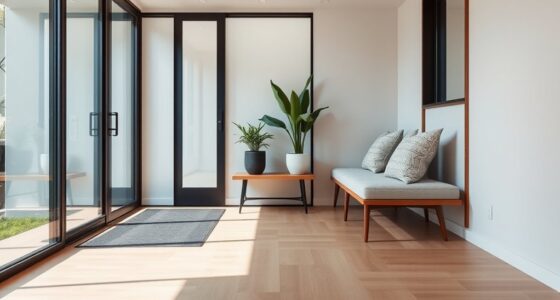
Incorporating flexible floor plans into your home means investing in smart design choices. Movable partitions, sliding doors, or furniture that serves multiple functions help you maximize your space’s potential. These elements make it simple to switch from one use to another, ensuring your home can keep pace with your changing needs. In the end, adaptable layouts empower you to create a living environment that’s as versatile and dynamic as your life itself. With this approach, you gain a home that’s truly yours—flexible, functional, and ready for whatever the future holds.
As an affiliate, we earn on qualifying purchases.
Frequently Asked Questions
Can Flexible Floor Plans Increase Property Value?
Yes, flexible floor plans can increase your property’s value. They enhance interior design by allowing better space optimization, which appeals to a broader range of buyers. When your home offers adaptable layouts, it shows potential for different needs, making it more attractive. This versatility not only boosts your home’s usability but also elevates its market appeal, often leading to higher offers and quicker sales.
Are Flexible Layouts Suitable for Small Homes?
Tiny homes naturally benefit from flexible layouts, making multi-purpose rooms a smart choice. You’ll find that such designs maximize space efficiently, allowing you to adapt to changing needs with ease. Whether it’s a cozy guest space or a functional workspace, flexible layouts suit small homes perfectly. They keep your living area versatile, comfortable, and clutter-free, helping you enjoy every inch of your tiny home without feeling cramped.
How Much Does Customizing a Flexible Plan Cost?
Customizing a flexible plan typically costs between 5% and 15% more than standard designs, depending on your customization options. Your cost considerations include selecting specific features, materials, and layout adjustments. You’ll pay for added flexibility, but it’s worth it for a space that adapts to your evolving needs. Be sure to discuss detailed options with your builder to get an accurate estimate tailored to your desired level of customization.
Do Flexible Floor Plans Affect Home Insurance?
Flexible floor plans can influence your home insurance, mainly through insurance implications and coverage considerations. You might see higher premiums if the modifications increase risk or value, or if they involve structural changes. It’s essential to inform your insurer about any customizations to guarantee proper coverage. Keep in mind, some flexible designs could also qualify for discounts if they improve safety or energy efficiency, so check with your provider.
What Are the Best Materials for Adaptable Spaces?
You should choose durable, versatile materials like bamboo, engineered wood, or metal for adaptable spaces. These materials support modular furniture and multi-use zones, allowing your space to transform easily without wear. Many worry about longevity, but quality options ensure strength and flexibility. By selecting the right materials, you’ll create a functional, stylish environment that adapts seamlessly to your changing needs, maximizing comfort and utility over time.
Conclusion
Flexible floor plans let you adapt your space as your needs change, making your home more functional and future-proof. Did you know that 78% of homeowners value adaptable layouts when designing or renovating? By choosing a flexible design, you guarantee your space can evolve with you, saving money and time in the long run. Embrace these versatile plans to create a home that truly fits your lifestyle now and tomorrow.