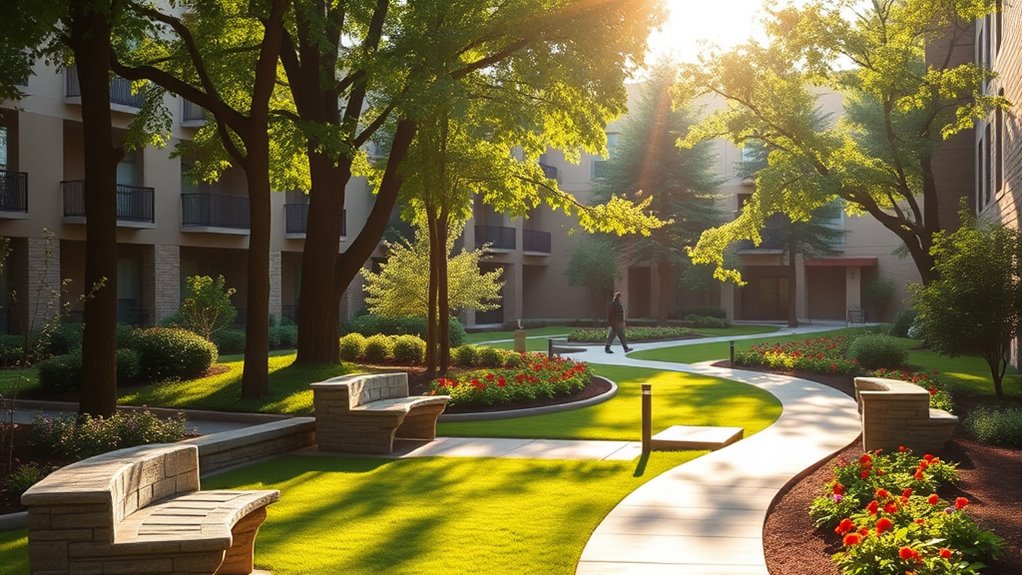

When designing soundscaping for senior living, focus on creating a calm, safe environment by carefully balancing acoustics. Use white noise to mask disruptive sounds like traffic or sirens and introduce gentle auditory cues—such as soft chimes—to guide residents and promote orientation. Adjust sound levels, tone, and timing to guarantee comfort and reduce stress. If you want to discover more ways to enhance the auditory atmosphere, keep exploring strategies that support seniors’ well-being.
Key Takeaways
- Use strategic white noise to mask external sounds and create a calming environment for residents.
- Incorporate gentle, recognizable auditory cues to guide behavior and enhance safety.
- Calibrate sound levels carefully to avoid overwhelming residents while minimizing disruptive noise.
- Personalize soundscapes based on individual preferences and changing needs for optimal comfort.
- Prioritize soothing, consistent sounds that promote relaxation and reduce anxiety in senior living spaces.
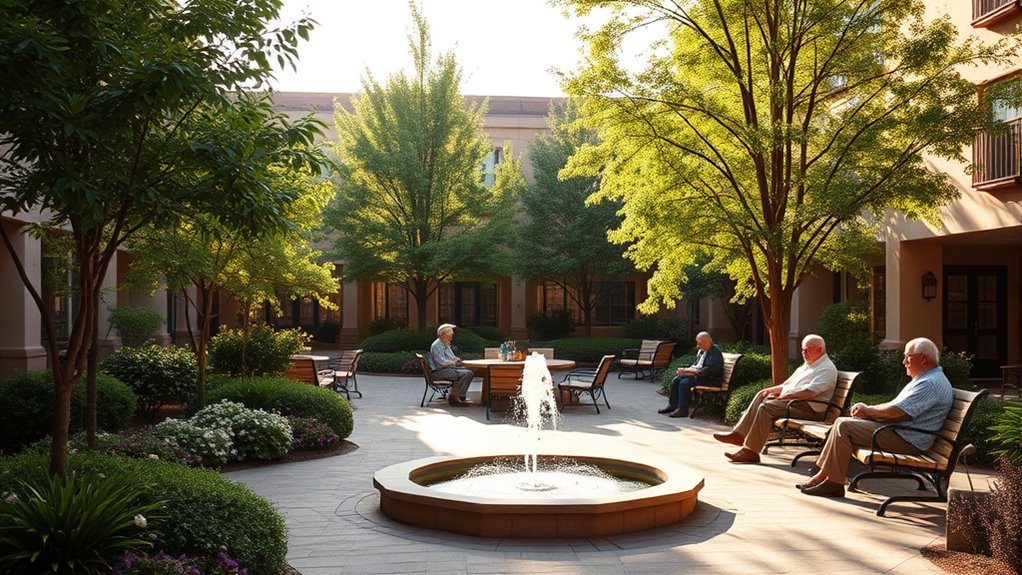
Have you ever considered how the right sounds can transform a senior living environment? The auditory landscape plays a essential role in creating a space that feels safe, comfortable, and engaging. One effective way to shape this environment is through the strategic use of white noise and auditory cues. White noise, a consistent sound that masks disruptive noises, can help seniors focus, relax, or sleep better. It acts as a buffer against sudden loud sounds, which might otherwise startle or unsettle residents. For example, gentle white noise machines can be placed in communal areas or bedrooms to reduce the impact of external noises like traffic or sirens, creating a more tranquil atmosphere.
Strategic white noise and auditory cues create a calming, safe environment that enhances senior well-being.
Auditory cues are equally indispensable—they serve as signals that guide residents’ behavior and reassure them of their surroundings. These cues can include subtle sounds that indicate location, activity, or safety features. For instance, soft chimes or gentle beeps near bathroom doors can help residents with memory impairments find their way more easily. Similarly, familiar sounds like a ringing phone or a doorbell can cue social interaction, encouraging residents to engage with staff or visitors. When used thoughtfully, auditory cues can foster independence and reduce anxiety, especially for those with cognitive challenges.
In designing soundscapes for senior living spaces, it’s important to take into account volume, tone, and timing. The goal is to create an environment where sounds are soothing rather than jarring. White noise should be calibrated to mask disruptive noises without overwhelming residents. Likewise, auditory cues should be clear and consistent, providing reassurance without causing confusion. You want sounds that are easily recognizable but not intrusive. Think of gentle chimes instead of loud alarms, or soft background music that promotes relaxation without being distracting.
Implementing these sound strategies requires attention to individual preferences and needs. Some seniors may find certain sounds calming, while others might find them irritating. Personalizing soundscapes helps make certain that everyone benefits. Regular assessments and adjustments are key, as residents’ needs can change over time. By intentionally incorporating white noise and auditory cues into the environment, you create a more supportive, harmonious space where residents feel secure and engaged. Understanding the importance of sensory environments helps in designing spaces that truly support residents’ well-being. The right sounds don’t just fill the space—they shape a nurturing environment that enhances overall well-being.
As an affiliate, we earn on qualifying purchases.
Frequently Asked Questions
How Do Soundscapes Affect Residents’ Mental Health Over Time?
You’ll find that soundscapes considerably impact residents’ mental health over time. Pleasant, calming sounds promote relaxation and reduce anxiety, enhancing overall well-being. Incorporating sound therapy into daily routines can help manage stress and improve mood. Conversely, loud or disruptive noises may increase agitation or depression. By intentionally designing sound environments, you support residents’ mental health, fostering a peaceful atmosphere that encourages comfort and emotional resilience.
What Are the Best Technologies for Noise Control in Senior Facilities?
You should consider using sound masking systems, like white noise generators, combined with acoustic panels to control noise effectively. For example, a senior facility installed sound masking and acoustic panels in common areas, reducing disruptive noises and creating a calmer environment. These technologies work together to absorb sound and mask intrusive noises, enhancing residents’ comfort and privacy while promoting a peaceful atmosphere conducive to well-being.
How Can Staff Be Trained to Manage Acoustic Environments Effectively?
You can train staff effectively by incorporating regular staff training sessions focused on acoustic awareness. Encourage them to recognize noise sources and understand their impact on residents. Teach practical strategies for managing noise levels, like speaking softly or using designated quiet zones. Reinforce the importance of maintaining a calm environment through ongoing education. With consistent staff training, you’ll foster an environment where acoustic considerations become second nature, improving residents’ comfort and well-being.
Are There Specific Sounds That Promote Relaxation for Seniors?
Imagine the gentle rustling of leaves and soft melodies filling the air, creating a soothing retreat for seniors. You can promote relaxation with nature sounds like flowing water or birdsong, paired with calming music that eases anxiety. These sounds help seniors feel more at peace, reduce stress, and encourage restful moments. Incorporate these auditory elements into daily routines to foster a tranquil environment that supports their well-being.
How Does Individual Hearing Loss Influence Soundscape Design Choices?
Your soundscape design should consider individual hearing loss by incorporating personal hearing aids, which enhance clarity and reduce background noise. You can also use auditory masking strategies to minimize disruptive sounds, creating a calmer environment. By tailoring sound levels and choosing soothing, easily distinguishable sounds, you help seniors with hearing impairments stay engaged and comfortable, improving overall well-being and communication within the space.
Conclusion
By carefully designing soundscapes, you create a sanctuary where gentle whispers of nature contrast with the hustle of daily life, offering seniors a peaceful refuge. Imagine a quiet garden bathed in soft sounds, shielding them from the chaos of busy streets just beyond. When you prioritize acoustic comfort, you craft an environment that feels like a calming embrace—where serenity and importance coexist, enriching every moment and supporting well-being in senior living spaces.