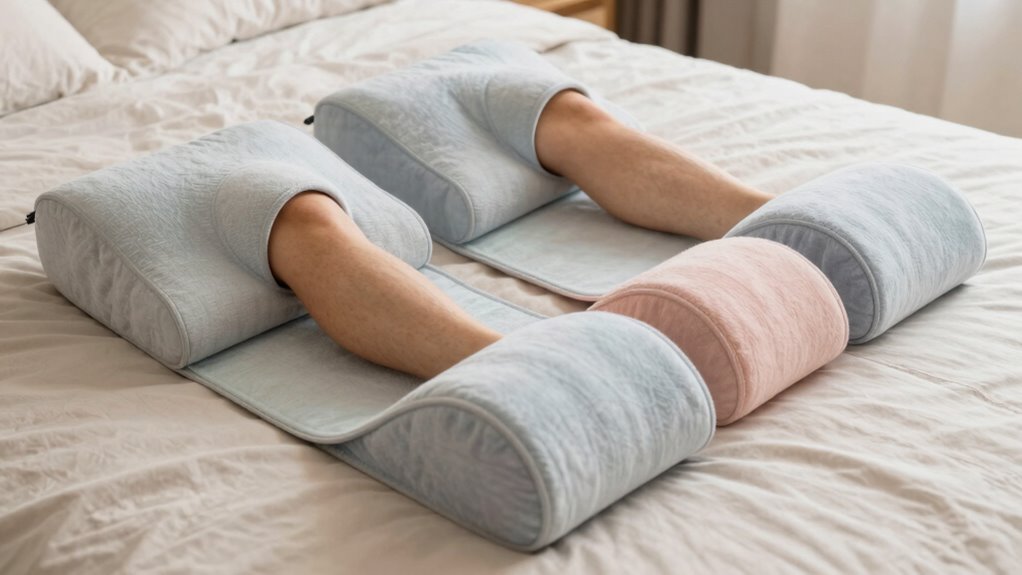

To get the angle right with leg elevation pillows and wedges, aim to raise your legs above heart level, ideally between 15 to 30 degrees. Use supportive pillows or wedges designed to maintain a comfortable, consistent position without slipping. Place a pillow under your calves or knees, adjusting gradually for comfort and effectiveness. Keep an eye on your body’s response, and if you’re curious about maximizing these setups, there’s more to discover below.
Key Takeaways
- Use pillows or wedges that elevate legs 15-30 degrees above heart level for optimal circulation and swelling reduction.
- Ensure the elevation device securely supports legs without slipping or causing discomfort.
- Adjust the height gradually to find a comfortable angle that maximizes benefits and minimizes discomfort.
- Position pillows under calves or knees based on comfort and medical advice for proper support.
- Regularly monitor body response and modify the setup if numbness, tingling, or discomfort occurs.
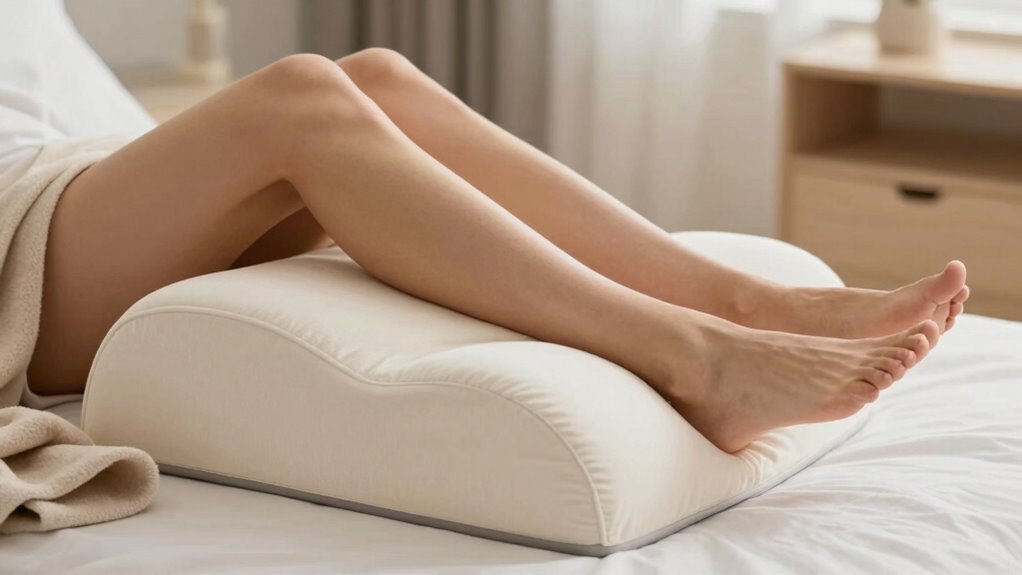
Elevating your legs with specially designed pillows and wedges can substantially improve circulation, reduce swelling, and promote faster recovery. When you position your legs properly, you encourage blood flow back to your heart, which helps prevent blood pooling and improves overall circulation. This positioning is especially beneficial if you’re recovering from surgery, dealing with varicose veins, or experiencing discomfort from prolonged standing or sitting. The right setup can make a noticeable difference in how quickly you heal and how comfortable you feel during recovery.
Elevate your legs to improve circulation, reduce swelling, and support faster recovery after surgery or long periods of standing.
Getting the angle just right is vital. If your legs are elevated too high, it can cause discomfort or even impede proper blood flow, while too low won’t provide the desired benefits. The goal is to find a position where your legs are raised above your heart level, generally around 15 to 30 degrees. This angle optimizes circulation improvement and aids in swelling reduction without putting unnecessary strain on your back or hips. You want to avoid a flat position, as it won’t provide enough gravitational help to drain excess fluids, nor should you elevate your legs so high that circulation becomes restricted. Proper body positioning techniques can enhance the effectiveness of elevation and prevent strain.
Using a wedge pillow or a specialized leg elevation pillow can help you achieve that perfect angle. These products are designed to support your legs comfortably, maintaining consistent elevation without slipping or slipping out of position. Place the pillow under your calves or knees, depending on comfort and the specific advice from your healthcare provider. Adjust the height gradually to find the most comfortable angle that still offers the benefits of circulation improvement and swelling reduction. It’s also helpful to incorporate proper positioning techniques to maximize comfort and efficacy.
It’s also important to pay attention to how your body responds. If you start to experience numbness, tingling, or increased discomfort, lower the elevation slightly. Comfort is key, and a position that’s too high can sometimes cause more harm than good. Consistency matters—try to elevate your legs for 15-20 minute intervals throughout the day, especially after periods of activity or standing, to maintain the benefits. Regularly monitoring your response can help you determine the optimal elevation for your individual needs.
As an affiliate, we earn on qualifying purchases.
Frequently Asked Questions
Can Leg Elevation Pillows Be Used During Sleep All Night?
Yes, you can use leg elevation pillows during sleep all night if your sleeping posture is comfortable and the pillow firmness supports your needs. Make sure the pillow maintains the right angle to avoid strain on your hips or back. Adjust the height or firmness as needed, and listen to your body. Proper positioning helps reduce swelling and improve circulation without disrupting your sleep quality.
What Materials Are Best for Leg Elevation Pillows?
Think of your leg elevation pillow as a sturdy bridge supporting your comfort. Opt for materials like high-density foam or memory foam—they’re durable, mold to your shape, and withstand daily use. Look for customizable pillows with removable covers, so you can easily wash and adjust the firmness. These materials offer the perfect blend of durability and flexibility, ensuring your elevation setup stays supportive and comfortable night after night.
How Do I Prevent Slipping When Using a Wedge Setup?
To prevent slipping with your wedge setup, use slip-resistant covers on the wedge and pillows. You can also place non-slip pads underneath the wedge or pillows for extra grip. Make certain the surface beneath the setup is dry and stable. Adjust the positioning regularly to ensure safety and comfort. These steps will help keep your wedge secure and prevent slipping during use.
Are There Specific Angles Recommended for Different Conditions?
You might think any angle works, but specific ones really boost blood circulation and reduce swelling. For most conditions, elevate your legs to a 45-degree angle—this optimizes blood flow while preventing discomfort. If you’re recovering from surgery or have severe swelling, a slightly higher or lower angle may be better, but always check with your healthcare provider. Proper angles make a real difference in comfort and healing.
How Often Should I Replace My Leg Elevation Pillows?
You should replace your leg elevation pillows when they show signs of wear, loss of support, or damage. Regularly clean your pillows with gentle pillow cleaning methods to maintain hygiene. Consider the material durability—if your pillow’s foam or fabric starts breaking down or losing firmness, it’s time for a replacement. Frequent checks help guarantee your pillows continue providing proper elevation and comfort, preventing discomfort or skin issues.
Conclusion
Getting your leg elevation just right might seem simple, but it’s a delicate balance—too high, and you risk discomfort; too low, and you won’t see the benefits. Think of it like tuning an instrument; the perfect angle makes all the difference. With the right pillow or wedge setup, you can achieve that harmony, easing discomfort and promoting healing. Remember, small adjustments can lead to big improvements—so find your ideal angle and elevate with confidence.