
Using layered cooling bedding with breathable natural fabrics and proper ventilation is more effective than relying on a single product. Combining moisture-wicking sheets, lightweight blankets, and cooling pillows helps regulate your body temperature and airflow. Good room ventilation boosts these effects, reducing heat and humidity. This thorough approach prevents heat buildup better than just one solution. Keep exploring to discover how these strategies work together to create a cooler, more comfortable sleep environment.
Key Takeaways
- Layering breathable, natural fiber bedding enhances airflow and moisture management, providing superior cooling compared to single products.
- Combining cooling covers, gels, and moisture-wicking sheets creates an effective heat barrier and improves sleep comfort.
- Multiple bedding layers allow customization for individual temperature preferences, unlike relying on one cooling product.
- Proper room ventilation and airflow complement layered bedding, maximizing cooling efficiency.
- An integrated cooling strategy addresses heat and moisture from multiple angles, offering better comfort than a single solution.
Have you ever woken up in the middle of the night sweating and feeling uncomfortable? If so, you’re not alone. Many people struggle with heat and perspiration during sleep, which can ruin the quality of your rest. While there are products marketed as “cooling” bedding, relying on just one item often isn’t enough. Instead, layering strategies can make a meaningful difference, and they’re often more effective than a single cooling product. Incorporating biodiversity and sustainable living practices into your bedding choices, such as using natural fibers, can also enhance your sleep environment.
Start with your mattress or pillow. If you have memory foam, you might notice it traps heat, making you feel hotter over the night. But the right memory foam can be improved with cooling covers or gels that help dissipate heat. Pairing memory foam with moisture-wicking sheets creates a better environment for sleep. Moisture-wicking fabrics pull sweat away from your skin, keeping you dry and comfortable, which is vital for cooling down. These fabrics are designed to promote airflow, helping to regulate your body temperature naturally. When combined, memory foam that contours to your body’s shape and moisture-wicking sheets create a powerful barrier against heat buildup. Additionally, choosing natural fibers for your bedding can significantly improve breathability and sustainability. Using breathable materials can also help reduce the buildup of heat and moisture, increasing overall comfort. Incorporating climate-appropriate textiles can further optimize your sleep environment by enhancing airflow and moisture management.
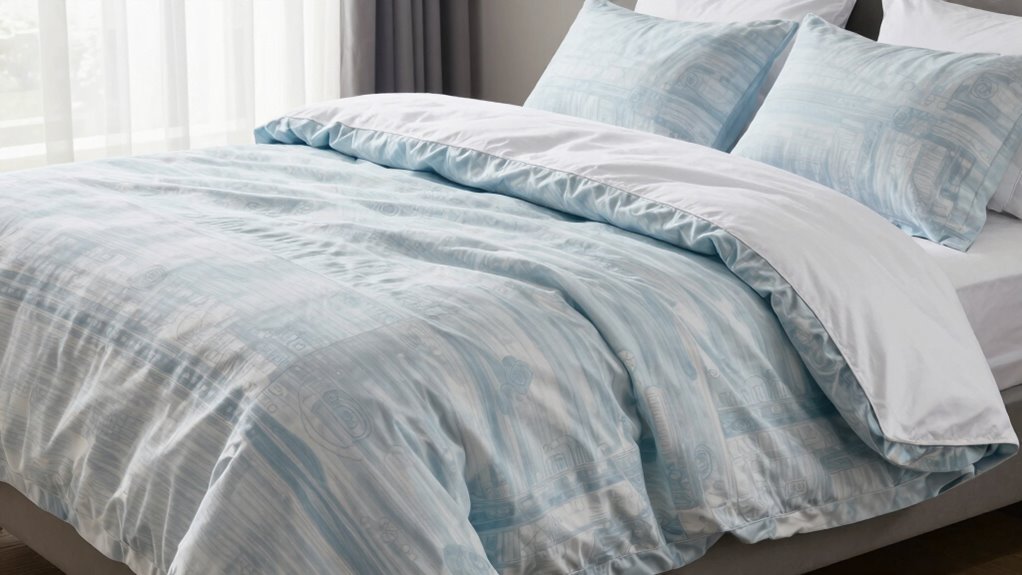
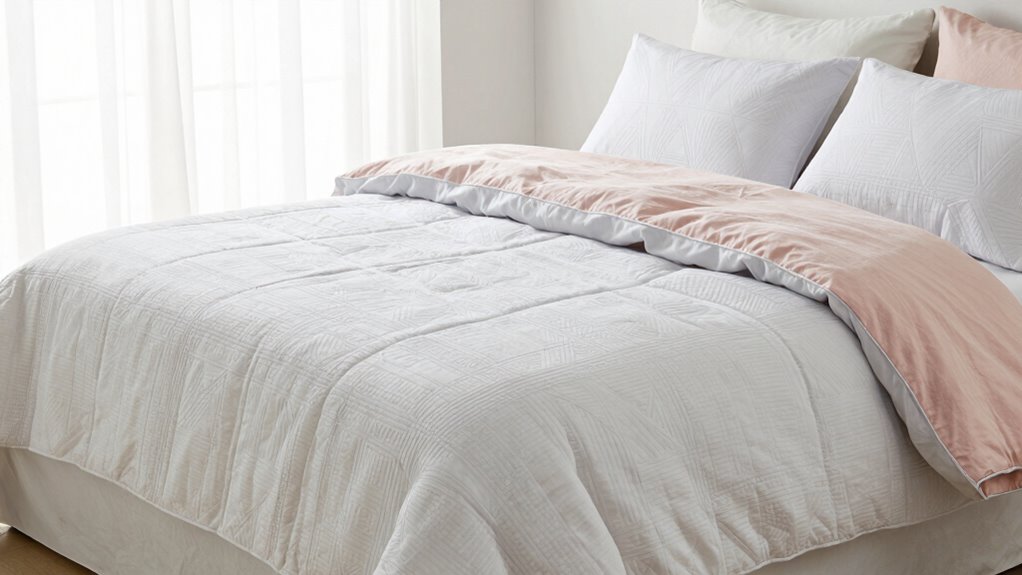
Next, consider your bedding layers. Opt for lightweight, breathable blankets or comforters made from natural fibers like cotton or bamboo. These materials have better airflow and moisture management compared to synthetic options. You might also want to add a cooling pillow that features breathable foam or gel infusions. Using multiple layers allows you to adjust your bedding based on your comfort level without sacrificing overall cooling performance. If you wake up feeling hot, simply removing or adjusting a layer can help you cool down faster. Proper material selection plays a crucial role in enhancing the overall cooling effect of your bedding.
Another important aspect is ventilation. Good airflow in your room can greatly improve sleep quality. Open windows or use a fan to circulate air, especially if your bedding is designed to wick moisture and promote cooling. The combination of layered bedding, moisture-wicking fabrics, and proper airflow creates an extensive cooling strategy that works better than any single product. This layered approach addresses heat and moisture from multiple angles, making it easier for your body to shed excess heat and stay comfortable throughout the night. A well-ventilated environment is essential for maximizing the benefits of your cooling layers. Ensuring proper ventilation can also help reduce humidity levels, further supporting a cooler sleeping environment. Additionally, maintaining a cool room temperature through climate control can significantly enhance the effectiveness of your layering strategy.
As an affiliate, we earn on qualifying purchases.
Frequently Asked Questions
How Do Cooling Bedding Layers Affect Overall Sleep Quality?
Cooling bedding layers greatly improve your sleep quality by enhancing temperature regulation and sleep comfort. When you layer breathable sheets, cooling pads, and lightweight blankets, you prevent overheating and maintain a consistent body temperature throughout the night. This combination helps you fall asleep faster, reduces night awakenings, and promotes deeper, more restful sleep. Overall, thoughtful layering creates a ideal environment for better sleep, ensuring you wake up refreshed and energized.
Can Layering Cooling Bedding Help With Night Sweats?
Layering cooling bedding can definitely help with night sweats by maintaining ideal sleep temperature and enhancing bedding comfort. By using breathable layers, you allow air to circulate and wick away moisture, preventing overheating. This strategy lets you customize your sleep environment, making it easier to stay cool and comfortable throughout the night. Ultimately, layering provides a versatile, effective way to manage night sweats and improve your overall sleep quality.
What Is the Best Material for Cooling Bedding Layers?
Think of cooling bedding layers as your personal breeze, and the best material for this breeze is natural linen. Linen offers exceptional fabric breathability, allowing air to flow freely, and excels at moisture management, keeping you dry and comfortable. Its lightweight, airy nature helps prevent heat buildup, making it ideal for hot sleepers. Opt for linen or other breathable fabrics like cotton to stay cool and restful all night long.
How Often Should I Replace or Wash Cooling Bedding Layers?
You should wash your cooling bedding layers weekly to maintain fabric durability and freshness, especially if you sleep hot or sweat at night. If you notice signs of wear or odor, consider replacing them sooner. Regular washing keeps the layers effective and prevents bacteria buildup. Follow the care instructions for each material, as delicate fabrics may need gentler washing. This routine guarantees your bedding stays cool, clean, and durable over time.
Are There Any Allergy Concerns With Layered Cooling Bedding?
Imagine your bedding as a fortress against allergens. Layering with hypoallergenic materials and dust mite-resistant fabrics reduces allergy concerns, keeping your sleep environment safe. These fabrics act like shields, blocking irritants and promoting cleaner, healthier sleep. So, if you’re worried about allergies, opt for these materials. They help prevent allergic reactions and create a more comfortable, allergen-free space, making your sleep both cooler and safer.
Conclusion
Think of your bed as a fortress of comfort, where layering cooling bedding is your secret weapon against restless, fiery nights. By stacking breathable sheets, cooling blankets, and moisture-wicking fabrics, you create a invigorating oasis that whispers calm and coolness with every touch. It’s like wrapping yourself in a gentle, icy breeze on a warm summer night. Embrace this layered strategy, and let your sleep become a serene, snow-capped mountain—cool, peaceful, and endlessly soothing.