To design a home that feels beautiful and easy to navigate, focus on balanced furniture placement that creates clear walkways and avoids clutter. Use light, neutral colors to make spaces feel open and reflect natural light to enhance brightness. Keep sight lines unobstructed with strategic decor and focal points, while incorporating layered lighting for ambiance and safety. Thoughtful spatial planning improves flow and comfort—if you keep exploring, you’ll discover more ways to transform your space into a stunning, functional haven.

Get decor and gifts delivered free — and shop member deals
- Fast, free delivery on millions of items
- Access to Prime Big Deal Days deals on October 6–7
- Prime Video, Amazon Music and more included
Key Takeaways
- Use proportionate furniture and keep pathways clear to promote smooth movement and reduce clutter.
- Choose light, neutral colors with minimal accents to enhance openness and visual flow.
- Maintain unobstructed sight lines by arranging decor to prevent visual clutter and disorientation.
- Incorporate layered lighting to define spaces, improve visibility, and create inviting atmospheres.
- Integrate cohesive design principles combining layout, color, and lighting for an intuitive, functional home.
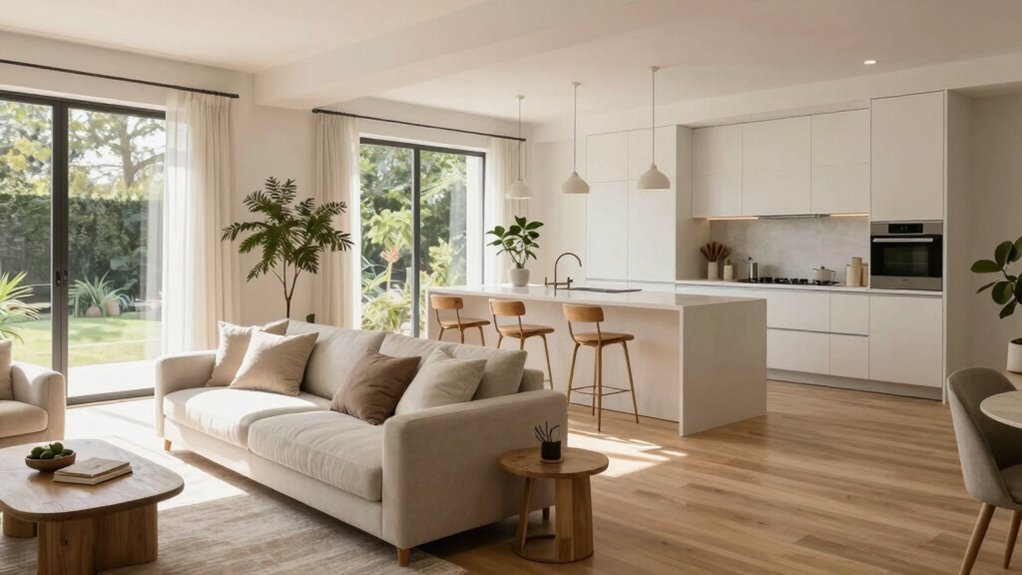
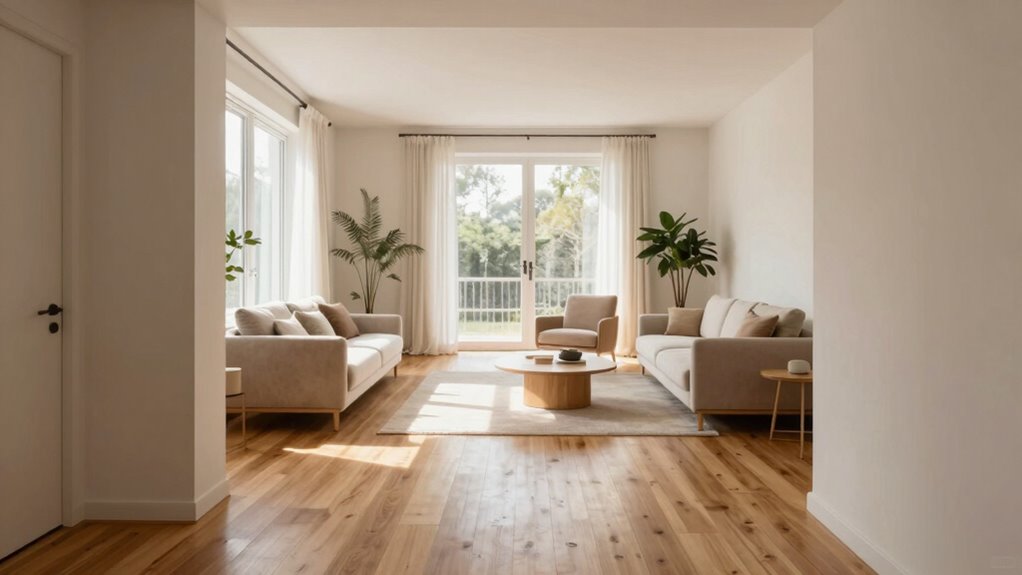
Designing a home that feels both beautiful and easy to navigate begins with thoughtful planning. You want your space to look appealing, but also to flow naturally, so you can move effortlessly from one area to another. To do this, start by carefully considering furniture placement. Avoid cluttering your rooms with oversized pieces that block pathways or make the space feel cramped. Instead, choose furniture that fits the scale of your rooms and arranges it in a way that encourages smooth movement. For example, position sofas and chairs to create clear walkways, never forcing you to squeeze past furniture. Keep the center of each room open, allowing for easy access to key areas like the kitchen, bathroom, and bedrooms. This way, your home feels welcoming without sacrificing functionality.
Thoughtful furniture placement creates a welcoming, functional home with smooth flow and open, accessible spaces.
Color schemes also play an essential role in making your home feel inviting and easy to navigate. Opt for light, neutral tones on walls and floors to create a sense of openness and brightness. These shades reflect natural light, making rooms appear larger and more cohesive. Use accent colors minimally to add interest and personality without overwhelming the space. When choosing your palette, think about the mood you want each area to evoke—calm, energizing, cozy—and select colors accordingly. Consistent color schemes throughout your home help establish visual flow, guiding your eye naturally from one room to the next. This consistency reduces visual clutter and makes progression between spaces feel seamless.
In addition to furniture placement and color schemes, think about sight lines and focal points. Keep sight lines clear by avoiding obstructive furniture or decor that blocks views into other rooms or important features like windows or artwork. Use rugs, lighting, and decorative elements to create focal points that draw attention without cluttering the space. When you design with these principles in mind, you make it easier to move through your home without feeling disoriented or crowded.
Finally, consider lighting as an essential element of flow. Use a mix of natural light, ambient lighting, and task lighting to illuminate each space evenly. Proper lighting helps define areas, making it easier to see and move around safely. When your home combines well-placed furniture, harmonious color schemes, and thoughtful lighting, it transforms into a space that’s not only beautiful but also intuitive to navigate. Incorporating spatial awareness into your design process can further enhance the functionality and comfort of your home, ensuring that every area supports your everyday activities.
small space furniture arrangement
As an affiliate, we earn on qualifying purchases.
As an affiliate, we earn on qualifying purchases.
Frequently Asked Questions
What Are the Best Colors to Create a Calming Home Flow?
To create a calming home flow, opt for soft, muted colors based on color psychology, like gentle blues, greens, or neutral tones. These hues promote relaxation and tranquility. Use matte or satin paint finishes to lessen glare and add depth, enhancing the soothing atmosphere. Avoid overly bright or harsh colors, and keep your palette cohesive to foster a peaceful, harmonious environment that feels inviting and easy to move through.
How Can I Incorporate Natural Light Effectively in My Design?
You can subtly invite more natural light by thoughtfully placing skylights and incorporating indoor plants near windows to reflect and soften sunlight. Consider strategic skylight placement to brighten key areas without overwhelming them. Adding indoor plants near these light sources not only enhances the beauty but also helps distribute light evenly. This creates a warm, inviting atmosphere that feels both natural and harmonious, making your home more lively and comfortable.
What Are Space-Saving Furniture Options for Small Homes?
You can maximize your small home by choosing multi-functional furniture like sofa beds, fold-away tables, and storage ottomans. Hidden storage solutions, such as under-bed drawers or wall-mounted shelves, help you keep clutter out of sight. Opt for pieces that serve dual purposes to save space and maintain a sleek look. These options allow you to make the most of every square inch while keeping your home organized and stylish.
How Do I Choose Accessories That Enhance Movement and Beauty?
You might think accessories clutter your space, but well-chosen artistic accents and decorative elements actually enhance movement and beauty. Select pieces that complement your flow, like sleek sculptures or vibrant textiles, to create visual interest without blocking pathways. Use accessories intentionally, balancing aesthetics with function. This way, your home becomes a harmonious blend of style and ease, proving that the right decor can make movement feel natural and inviting.
What Layout Mistakes Should I Avoid for Better Flow?
You should avoid poor focal point placement and ignoring traffic pattern optimization. Guarantee your focal points are well-positioned to draw attention naturally without blocking pathways. Keep traffic flows clear by arranging furniture to create smooth, unobstructed routes, especially near entryways and main living areas. Don’t cram spaces or place furniture in ways that force people to navigate awkwardly. Instead, prioritize open pathways that promote effortless movement and visual harmony.
Conclusion
Think of your home as a gentle stream, flowing effortlessly from one space to another. When you design with intention—balancing beauty with ease—you create a sanctuary that guides you naturally. Every turn, every pause, becomes part of a seamless dance, inviting comfort and grace. With mindful choices, your home transforms into a flowing river, where movement feels natural, and beauty surrounds you like a calm, endless current—always inviting, always effortless.
Halloween Picks
halloween
As an affiliate, we earn on qualifying purchases.