Adaptive design for your home office creates a flexible, ergonomic space tailored to your needs, boosting productivity and well-being. By choosing adjustable furniture, smart storage, and clutter-free layouts, you can maximize comfort and efficiency. Incorporating versatile elements allows your workspace to evolve with your tasks and lifestyle. Prioritizing these strategies helps you build a personalized environment that promotes focus and reduces discomfort. Keep exploring to discover how to transform your home office into a truly adaptive workspace.
Key Takeaways
- Incorporate adjustable furniture to easily reconfigure the workspace for different tasks and needs.
- Use vertical storage and multi-purpose furniture to maximize limited space efficiently.
- Design dedicated zones for activities like video calls to optimize lighting and acoustics.
- Promote ergonomics with supportive chairs and desks to enhance comfort and health during extended work hours.
- Implement flexible layout strategies that allow seamless transformation between work, relaxation, and collaborative areas.
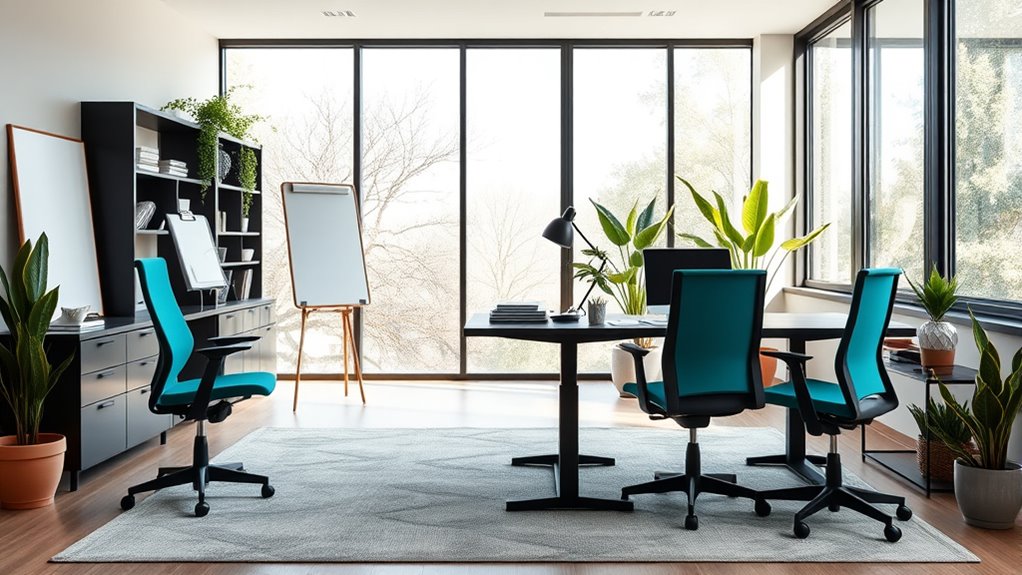
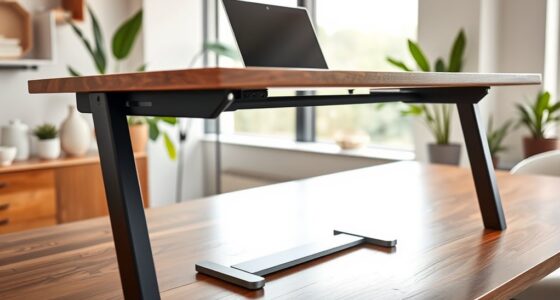
Have you ever struggled to create a functional and comfortable workspace at home? If so, you’re not alone. Many people find it challenging to design an area that promotes productivity while fitting seamlessly into their living space. The key lies in adaptive design, which involves tailoring your home office to meet your specific needs and making smart choices that maximize both comfort and efficiency. One of the most effective strategies is investing in ergonomic furniture. When you select a supportive chair, an adjustable desk, and accessories that promote proper posture, you reduce the risk of discomfort and long-term health issues. Ergonomic furniture isn’t just about comfort – it helps you maintain focus and energy levels throughout the day, especially during long work hours.
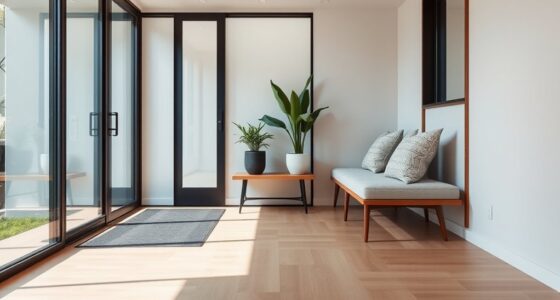
Alongside ergonomic furniture, space optimization plays a *vital* role in creating a functional home office. You want to make the most of every square inch, especially if your living area is limited. Start by decluttering and organizing your workspace, keeping only essentials within arm’s reach. Use vertical storage solutions like shelves or wall-mounted organizers to free up desk space and keep your work area tidy. Multi-purpose furniture also works wonders; for example, a fold-away desk or a storage ottoman can serve dual roles, saving precious space when not in use. As you arrange your office, think vertically and horizontally, ensuring you don’t block natural light sources or create congestion. Proper space optimization not only makes your workspace more efficient but also enhances your overall comfort, helping you stay focused and motivated. Additionally, understanding space utilization can help you make smarter choices in arranging your workspace.
Another aspect of adaptive design is flexibility. Your home office should be able to evolve with your changing needs. Consider adjustable furniture that can be rearranged easily or adapted for different tasks. If your work involves frequent video calls, allocate a dedicated corner with good lighting and minimal background distractions. When you’re not working, your workspace should be easy to transform into a relaxing area. Incorporate modular furniture that you can reconfigure or move around, making your home office a versatile space rather than a fixed, static environment.
Ultimately, creating a successful home workspace revolves around thoughtful choices. By prioritizing ergonomic furniture and space optimization, you build an environment that supports your productivity and well-being. Remember, your home office should feel like a place where you can focus without discomfort or clutter, and with adaptive design principles, you can make that a *paramount* reality.
Frequently Asked Questions
How Can Adaptive Design Improve Productivity in Home Offices?
You can boost your productivity by embracing adaptive design in your home office. Focus on lighting optimization to reduce eye strain and improve focus, and implement noise reduction strategies like soundproofing or noise-canceling headphones to minimize distractions. These enhancements create a comfortable environment, helping you stay concentrated and efficient throughout your workday. Adaptive design guarantees your space adjusts to your needs, making work more enjoyable and productive.
What Are Cost-Effective Adaptive Solutions for Small Workspaces?
Like a true Renaissance artist, you can transform your small workspace with cost-effective adaptive solutions. Use multi-use furniture to maximize functionality, such as fold-away desks or storage beds, and employ space-saving strategies like vertical storage or modular units. These options are budget-friendly and versatile, allowing you to optimize limited space without sacrificing comfort or productivity. Start small, think creatively, and watch your workspace evolve into a practical, inspiring environment.
How Does Adaptive Design Support Ergonomic Health?
Adaptive design supports your ergonomic health by incorporating adjustable features that promote proper posture and comfort. You can make ergonomic adjustments to your workstation, such as height-adjustable desks and supportive chairs, reducing strain and preventing injuries. These adjustments enhance your overall health benefits by encouraging movement and proper alignment throughout the day. With adaptive design, you create a personalized, comfortable workspace that prioritizes your well-being and productivity.
Can Adaptive Design Accommodate Multiple Users in One Space?
Yes, adaptive design can accommodate multiple users in one space by creating a flexible shared workspace. You can incorporate adjustable furniture and privacy solutions like movable screens or soundproof barriers, allowing each person to customize their area. This approach promotes collaboration while maintaining individual privacy, making your space versatile and efficient for multiple users. Adaptive design guarantees everyone’s needs are met without sacrificing comfort or functionality.
What Are the Best Materials for Flexible Home Office Furniture?
Looking for the best materials for flexible home office furniture? Why not choose lightweight, durable options like bamboo or high-quality engineered wood? These materials work well with modular shelving and foldable desks, offering ease of movement and resilience. You get sturdy, eco-friendly materials that make your workspace adaptable and stylish. Isn’t it great when your furniture can transform to suit your needs without sacrificing quality or look?
Conclusion
By embracing adaptive design, you create a workspace that’s a chameleon, seamlessly shifting to meet your needs. Think of your home office as a garden, flourishing with flexibility and thoughtful touches. When you prioritize adaptability, your work area becomes a sanctuary that grows with you, not against you. So, nurture your space, and watch it transform into a vibrant landscape where productivity and comfort bloom side by side. Your perfect workspace is just a flexible design away.