Creating community spaces in multi-unit housing involves designing inviting amenities like communal lounges, rooftop gardens, fitness areas, and outdoor recreation spots that encourage social interaction. Make sure these spaces are accessible, clean, well-lit, and comfortable to use. Engage residents through events or feedback channels to foster ownership and pride. When residents participate and connect, it strengthens bonds and creates a vibrant neighborhood. Keep exploring to discover more ways to build thriving common areas.
Key Takeaways
- Incorporate diverse amenities like lounges, rooftop gardens, and outdoor grills to foster social interaction.
- Ensure shared spaces are accessible, well-lit, clean, and inviting to encourage resident use.
- Engage residents through events, feedback channels, and committees to promote ownership and community involvement.
- Design spaces that accommodate different interests and needs, such as coworking areas and playgrounds.
- Encourage resident participation in maintaining and respecting shared amenities to strengthen community bonds.
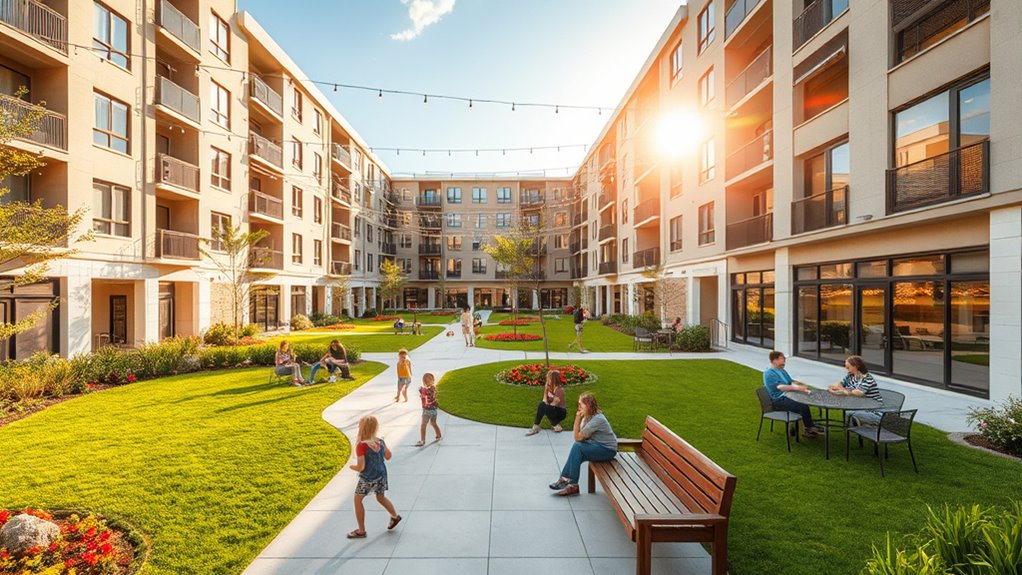
Creating community spaces in multi-unit housing can markedly enhance residents’ quality of life and foster a sense of belonging. When you prioritize shared amenities, you’re giving residents places to connect, relax, and build relationships. These spaces serve as natural gathering points, making it easier for neighbors to meet and engage. Whether it’s a communal lounge, rooftop garden, or fitness area, well-designed shared amenities encourage resident engagement, which is essential for developing a vibrant community.
Community spaces in multi-unit housing foster connection, relaxation, and a vibrant sense of belonging.
By offering diverse shared amenities, you give residents multiple ways to participate. Some might enjoy a cozy reading nook or coworking space, while others prefer outdoor grills or playgrounds. When residents have options, they’re more likely to use these spaces regularly, strengthening their ties to the community. The key is to keep these amenities accessible and inviting, so residents feel comfortable enough to spend time there. Simple touches like comfortable seating, good lighting, and clean surroundings can make a big difference in how often people utilize these shared spaces.
Resident engagement is the backbone of successful community spaces. As a property manager or developer, you should actively encourage residents to participate in planning and maintaining these areas. Hosting community events, like barbecues or movie nights, can spark interactions and create a sense of ownership. When residents feel invested, they’re more likely to respect shared amenities and keep them in good condition. Creating opportunities for feedback also helps you understand what amenities are most valued, guiding future improvements.
You can also foster resident engagement by involving residents in decision-making. For example, setting up a community committee or survey can reveal what amenities or features residents want most. This approach not only ensures that shared amenities meet their needs but also makes residents feel heard and valued. When residents feel connected to their community spaces, they’re more likely to take pride in maintaining them, which benefits everyone.
Incorporating shared amenities thoughtfully and fostering resident engagement creates a lively, cohesive environment. These spaces become more than just physical areas; they transform into hubs of social interaction. When you focus on making shared amenities accessible, comfortable, and aligned with residents’ interests, you build a community where everyone feels at home. Additionally, understanding spoiled or expired lemon juice can help in managing shared kitchen facilities and prevent waste. Ultimately, well-designed community spaces and active resident participation lead to happier residents, increased satisfaction, and a stronger sense of belonging within your multi-unit housing development.
Frequently Asked Questions
How Can Residents Fund Community Space Improvements?
You can fund community space improvements by exploring fundraising strategies like hosting events or setting up online campaigns. Additionally, look into grant opportunities offered by local governments or nonprofit organizations that support community development. Engaging residents to contribute or volunteer can also boost funds and community spirit. Combining these approaches helps you gather the necessary resources to enhance shared spaces effectively.
What Safety Protocols Are Essential for Shared Spaces?
Think of safety as the foundation of your shared space—without it, everything else collapses. You should implement clear emergency procedures, so everyone knows what to do during a fire or medical emergency. Regular maintenance schedules keep equipment and facilities in top shape, preventing accidents. Enforce safety rules consistently, and guarantee proper signage. These steps turn your communal area into a safe haven where residents can relax and connect confidently.
How to Encourage Resident Participation in Community Activities?
You can boost resident engagement by involving residents in activity planning, making sure activities reflect their interests. Promote participation through clear communication, inviting feedback, and offering diverse options. Create a welcoming atmosphere with friendly staff and volunteers. Use social media, flyers, or community boards to spread the word. Encourage residents to organize their own events, fostering a sense of ownership and stronger community bonds in your shared spaces.
What Are Legal Considerations for Shared Space Usage?
You need to take into account liability concerns and zoning regulations when using shared spaces. Make sure you have proper insurance coverage to protect against accidents or damages, and review local zoning laws to confirm your space complies with legal requirements. Obtain necessary permits if required, and establish clear rules for residents to reduce risks. Staying informed and proactive helps prevent legal issues and creates a safe, welcoming environment for everyone.
How to Handle Conflicts Over Community Space Access?
If conflicts over community space access erupt, you must act swiftly—imagine chaos overtaking your peaceful haven! Prioritize clear rules to protect tenant privacy and manage noise effectively, ensuring everyone feels respected. Communicate openly, listen to concerns, and set fair schedules for shared areas. Mediation can help resolve disputes calmly, preventing minor disagreements from spiraling into major issues and keeping your community harmonious and welcoming.
Conclusion
By creating community spaces, you foster connection, encourage collaboration, and build trust. You invite neighbors to share moments, support each other’s growth, and develop a sense of belonging. You transform empty areas into lively gathering spots, turning strangers into friends, and spaces into stories. Through intentional design and shared experiences, you nurture a vibrant, inclusive community where everyone feels seen, heard, and valued. Together, you create more than housing—you create a home.