Designing an inclusive bathroom with a curbless shower guarantees safe, accessible, and user-friendly space for everyone. You should incorporate features like slip-resistant flooring, adjustable fixtures, and strategically placed grab bars to promote independence and safety. A built-in seat adds comfort, while good lighting improves visibility. Focus on universal design principles that prioritize functionality over aesthetics, creating a welcoming environment. Continue exploring to discover how these thoughtful features can transform your bathroom into an inclusive haven.
Key Takeaways
- Incorporate curbless, barrier-free showers to enhance accessibility and ease of entry for all users.
- Use slip-resistant flooring and textured tiles to prevent falls and improve safety.
- Install adjustable fixtures, such as handheld showerheads and height-adjustable controls, for customizable use.
- Add strategic grab bars and built-in seating to support stability and comfort during bathing.
- Ensure proper lighting and clear space for easy movement, promoting independence and confidence.
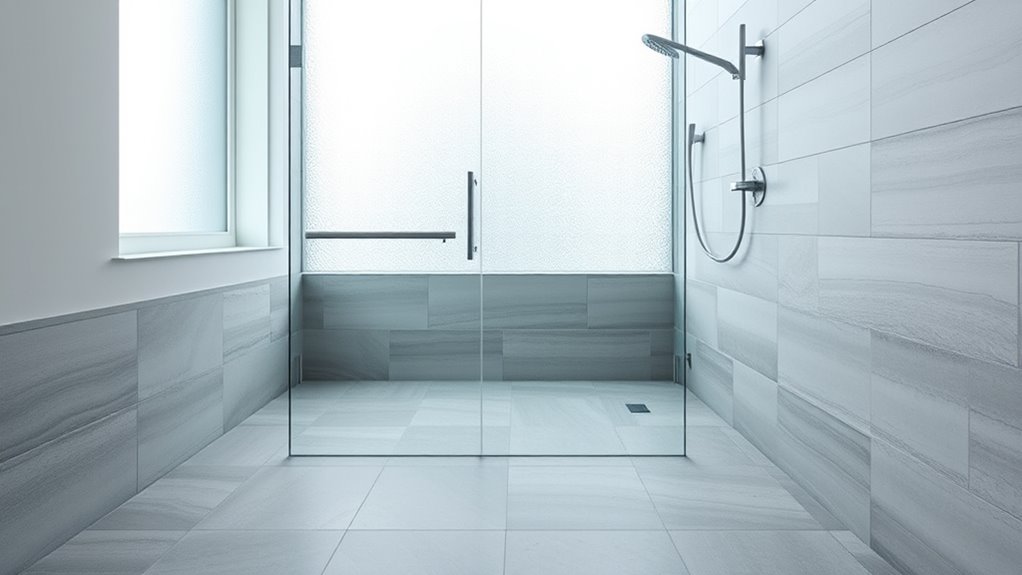
Accessible fixtures are the backbone of inclusive bathroom design. Think about installing handheld showerheads, adjustable-height shower controls, and lever-style faucets, which are much easier to operate than traditional knobs. These fixtures allow users to customize their experience without struggling with tight, hard-to-turn handles. Installing a built-in shower seat or bench provides additional support, giving users a place to sit while showering or rest if needed. When choosing fixtures, opt for ones that are within reach and simple to operate, ensuring that everyone can use them comfortably. Proper placement is *imperative*; fixtures should be positioned at heights suitable for individuals with different mobility levels, making the entire shower experience more accessible. Incorporating universal design principles can further enhance the space’s usability for all users.
Safety features are just as *essential* in creating an inclusive bathroom environment. With curbless showers, slip-resistant flooring becomes a must-have. You should select textured tiles or install slip-resistant mats to prevent falls. Grab bars are another critical safety addition, especially in a curbless shower where stability is *paramount*. Position them strategically around the shower area to provide support when entering, exiting, or moving within the space. Think about adding a gentle, thermostatic valve to regulate water temperature and prevent scalding accidents. Lighting also plays a role; bright, even illumination ensures visibility, reducing the risk of slips or missteps. These safety features work together to create a space that’s both welcoming and secure, giving users confidence and independence.
Designing a bathroom with curbless showers isn’t just about aesthetics; it’s about prioritizing safety and accessibility. By integrating accessible fixtures and safety features, you’re removing barriers and making the space usable for everyone, regardless of age or ability. It’s a thoughtful approach that promotes dignity, independence, and comfort. When you pay attention to these details, your bathroom transforms into a truly inclusive environment—one that welcomes all users and enhances their well-being. Ultimately, inclusive bathroom design with curbless showers isn’t just a trend; it’s a necessary step toward creating spaces that serve everyone’s needs with compassion and practicality.
Frequently Asked Questions
How Do Curbless Showers Prevent Water Spillage?
Curbless showers prevent water spillage by enhancing water containment and drainage efficiency. You can guarantee this by installing a slight slope toward the drain, which guides water directly away. Using a high-quality drain with a wide opening also helps manage water flow effectively. Proper sealing around the edges prevents leaks, and choosing slip-resistant flooring minimizes accidents, making your shower safer and more functional without water escaping onto the bathroom floor.
What Are the Ideal Materials for Slip-Resistant Flooring?
Slip-resistant surfaces markedly boost safety in your bathroom. You should choose textured flooring materials like textured tiles or vinyl with slip-resistant coatings, which provide reliable grip even when wet. These materials prevent slips and falls, making your bathroom safer for everyone. Opt for surfaces that balance durability with traction, ensuring you enjoy a slip-safe, stylish space without compromising on comfort or cleanliness.
Can Curbless Showers Be Customized for Different Disabilities?
Yes, curbless showers can be customized for different disabilities by incorporating personalized accessibility features. You can add adaptive features like grab bars, seating, and handheld showerheads to suit individual needs. This customization guarantees safety and ease of use, accommodating mobility limitations or other disabilities. By tailoring the design, you create a more inclusive bathroom environment that promotes independence and comfort for everyone.
How Do You Ensure Privacy in Open-Concept Bathroom Designs?
Think of your bathroom as a concert hall, where privacy is the melody you want to protect. You guarantee privacy by using strategic privacy screens or partitions, much like curtains that frame the stage. Soundproofing solutions, like acoustic panels or soft materials, act as the silent applause, muffling noise and maintaining intimacy. These privacy strategies create a harmonious space where your personal moments stay private, even in an open-concept design.
What Is the Typical Installation Cost for Curbless Showers?
Installation costs for curbless showers typically range from $3,000 to $8,000, depending on factors like size, materials, and complexity. You should consider your budget considerations carefully, as custom features or high-end tiles can increase expenses. To manage costs, compare quotes from different contractors and explore affordable yet durable options. Planning ahead helps guarantee you get a functional, stylish shower without overspending.
Conclusion
By embracing inclusive bathroom design with curbless showers, you create a space that welcomes everyone, regardless of mobility. It’s about more than just functionality—it’s about fostering independence and dignity. Remember, a house is only as welcoming as its most accessible room. When you prioritize inclusivity, you build more than a bathroom—you build a community of care and respect. As the saying goes, “The more, the merrier,” and that’s true for spaces that serve all.