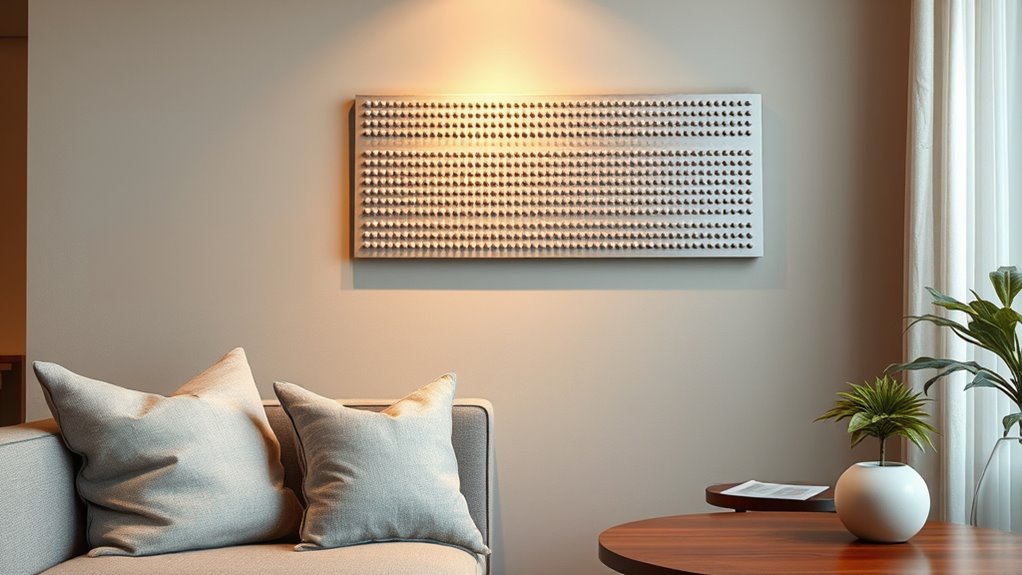

Incorporating Braille and tactile signage at home can boost safety, accessibility, and style. You can add Braille labels to thermostats, light switches, and essential items, using materials like textured wood or colorful acrylic that blend with your decor. Place signs at accessible heights near doors or key areas for easy identification. Thoughtful placement and design guarantee the signs are both functional and attractive, creating an inclusive space. Keep exploring how to seamlessly integrate these features into your home environment.
Key Takeaways
- Place Braille labels on essential items like thermostats, switches, and appliances at accessible heights for easy identification.
- Choose materials and finishes that blend seamlessly with home decor, such as textured wood or sleek metal.
- Use contrasting colors and raised symbols to ensure tactile signs are both functional and visually appealing.
- Position signs strategically near doorways, closets, and key navigation points for maximum accessibility.
- Incorporate decorative shapes and fonts that match your home’s style, balancing discretion with usability.
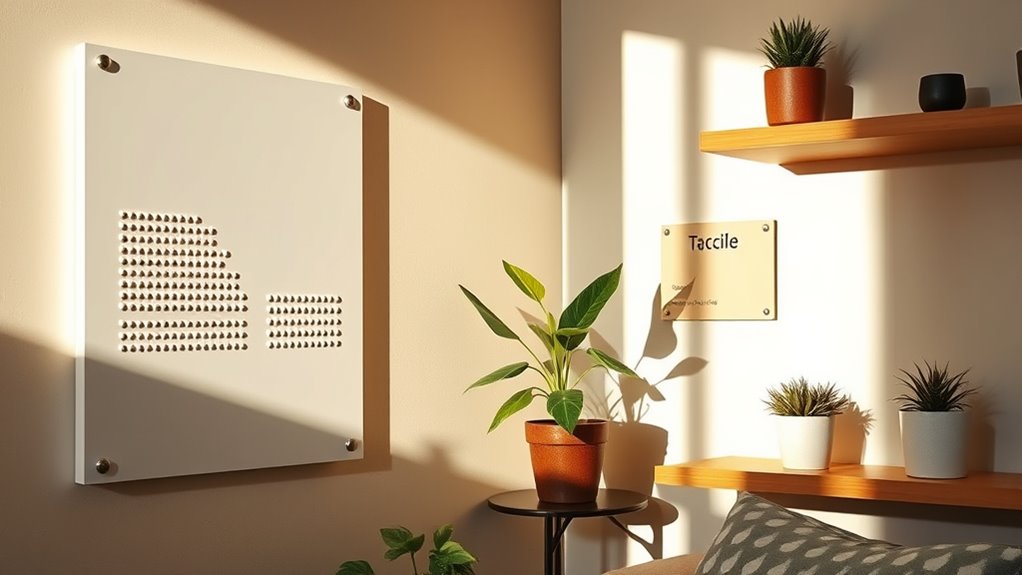
Making your home accessible and welcoming for everyone often involves adding tactile elements like Braille and tactile signage. These features aren’t just functional; they can seamlessly blend into your home’s decor, enhancing both safety and style. When you incorporate tactile signage thoughtfully, you create an environment that prioritizes home safety while maintaining decorative design. This balance ensures that those with visual impairments can navigate confidently, without sacrificing the aesthetic appeal of your space.
To achieve this, consider placing Braille labels on essential household items such as thermostats, light switches, and appliance controls. These labels serve as crucial cues, helping individuals identify functions quickly and safely. They also prevent accidental misuse or mishaps, especially in areas like the kitchen or bathroom where safety hazards are more prevalent. When selecting tactile signage, opt for materials and finishes that complement your existing decor—whether that’s sleek metal, textured wood, or colorful acrylic—so the signs enhance rather than detract from your interior design.
Decorative design doesn’t have to be sacrificed for accessibility. Today’s tactile signage options come in a variety of styles, colors, and shapes, allowing you to customize them to match your home’s theme. For example, clear, raised symbols paired with contrasting colors can be both eye-catching and functional. You might choose signage with modern geometric shapes or elegant script fonts, depending on your aesthetic preferences. Incorporating tactile elements thoughtfully ensures they’re discreet yet effective, blending into the background while remaining easily accessible for those who need them.
When planning to add tactile signage, think about placement carefully. Position signs at accessible heights and locations where they’re easy to find without obstruction. For example, near the doorway to a closet or at eye level on a pantry door. This strategic placement boosts home safety by making vital information readily available, reducing confusion and potential accidents. It also fosters independence, allowing individuals with visual impairments to navigate spaces confidently without needing assistance.
Ultimately, integrating Braille and tactile signage into your home design shows your commitment to inclusivity and safety. It’s a practical upgrade that respects the needs of all residents and visitors, creating a space where everyone feels comfortable and secure. By choosing signage that complements your decorative style, you ensure that accessibility features become a seamless part of your home’s aesthetic, making the environment both safe and beautiful for everyone who enters. Additionally, incorporating mindfulness techniques into home design can promote a calm and focused atmosphere that benefits all residents.
Frequently Asked Questions
How Do I Choose the Best Materials for Tactile Signage?
You should choose materials that offer durability and fit your aesthetic preferences. Look for options like plastic, metal, or high-quality vinyl, which resist wear and tear over time. Consider the aesthetic options available—colors, finishes, and styles—that match your home decor. Opt for tactile signage that’s easy to clean and maintain, ensuring it stays functional and visually appealing while providing clear guidance through durable, attractive materials.
Can Tactile Signage Be Customized for Different Home Layouts?
Absolutely, tactile signage can be customized for your unique home layout—because who doesn’t want signs that scream “this is my castle”? You can tailor the size, placement, and design of signage to fit every nook and cranny. Whether you have an open floor plan or a cozy apartment, signage customization guarantees your tactile cues are perfectly suited, making navigation effortless and stylishly personalized.
What Are the Maintenance Requirements for Tactile Signs?
Tactile signs require minimal maintenance, but you should regularly check their signage durability. Clean them with a damp cloth and mild soap to remove dust and dirt, avoiding harsh chemicals that could damage the surface or tactile features. Follow cleaning protocols carefully to ensure they stay clear and effective. Periodic inspections help identify any wear or damage, so you can replace signs promptly and keep your home accessible and safe.
How Do I Ensure Tactile Signs Are Discreet yet Accessible?
Think of your tactile signs as secret messages in a hidden garden—they’re there when needed but blend seamlessly into the scenery. To guarantee they’re discreet yet accessible, choose designs that match your decor for aesthetic integration, and place them thoughtfully to maintain visual privacy. Use subtle textures or colors that don’t draw unwanted attention, so they serve their purpose without disrupting your home’s harmony.
Are There Legal Standards or Recommendations for Tactile Signage at Home?
Yes, there are legal standards and recommendations for tactile signage at home. You should guarantee legal compliance with local building codes and safety standards, which often specify the size, contrast, and placement of tactile signs. These regulations help make your home accessible and safe for everyone. Check with your local authorities or accessibility organizations to confirm specific requirements, ensuring your tactile signage meets all safety standards and legal guidelines.
Conclusion
By adding Braille and tactile signage at home, you’ll transform your space into a haven so accessible, it’s practically a sensory paradise! Imagine never fumbling in the dark or feeling lost in your own house again—it’s like turning your home into a superhero’s fortress of independence! With these simple touches, you’re not just making life easier; you’re creating an environment so inclusive, it could win awards for being the most welcoming place on Earth.