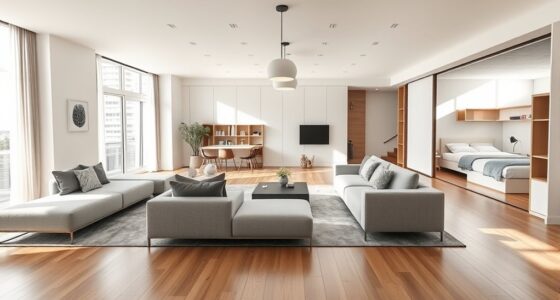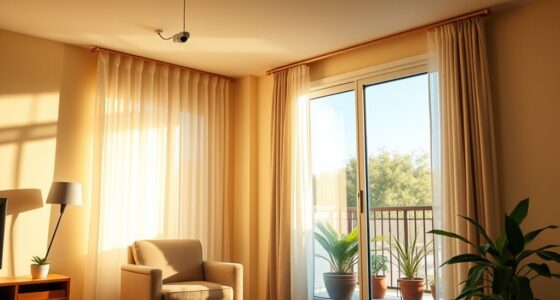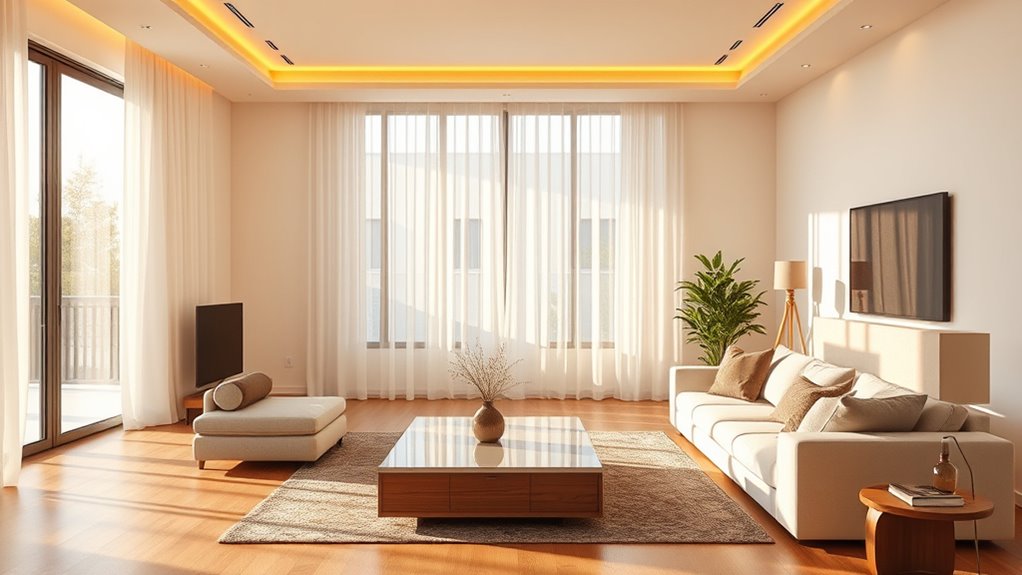

To support your circadian rhythms, choose lighting solutions that mimic natural light patterns. Look for smart bulbs or fixtures that automatically adjust color temperature throughout the day—from cool, blue-enriched light in the morning to warm, dimmer tones in the evening. Daylight simulation technology can enhance your mood, alertness, and sleep quality. By aligning your indoor lighting with natural light cues, you create a healthier environment—discover how to optimize your space for better well-being.
Key Takeaways
- Use smart lighting systems that automatically adjust color temperature and brightness throughout the day to mimic natural light patterns.
- Incorporate daylight simulation fixtures that replicate sunlight spectrum and intensity indoors.
- Opt for tunable LED bulbs that can shift from cool, blue-enriched light in the morning to warm, relaxing tones in the evening.
- Implement programmable lighting schedules to align indoor lighting with natural circadian cues, especially in low-light environments.
- Choose lighting solutions that support gradual transitions to help regulate melatonin production and promote healthy sleep cycles.
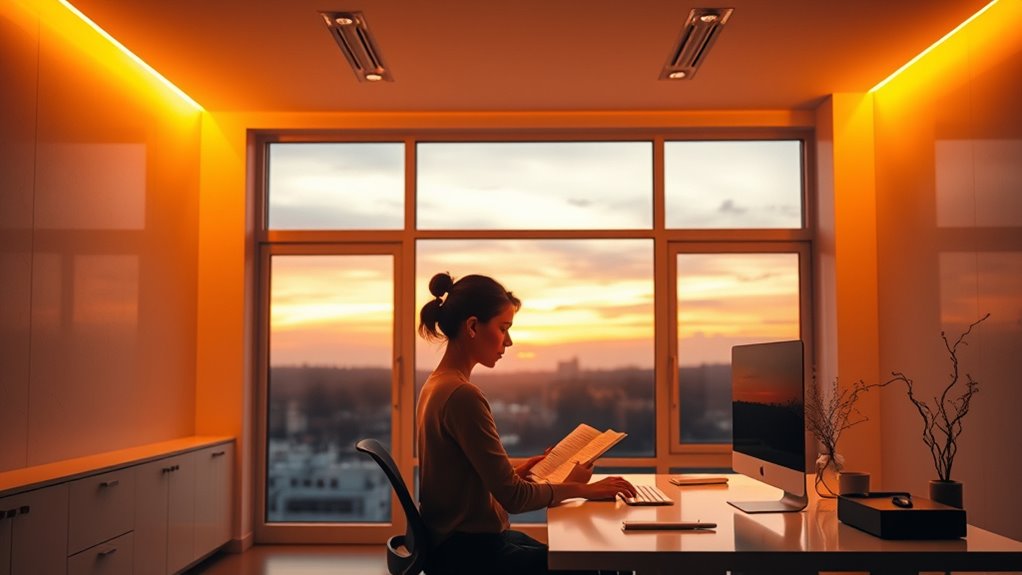
Lighting plays a essential role in regulating your body’s internal clock, or circadian rhythm, which influences sleep, alertness, and overall health. One of the key aspects of effective lighting solutions is understanding how color temperature affects your body’s natural processes. During the day, your body benefits from bright, bluish light that mimics natural sunlight, signaling it’s time to be awake and alert. As evening approaches, shifting to warmer, lower color temperatures helps signal your body to wind down, preparing you for restful sleep. This changeover is critical for maintaining a healthy circadian rhythm.
Daylight simulation is a powerful tool for aligning indoor lighting with natural light patterns. It involves recreating the spectrum and intensity of sunlight indoors, which can greatly improve your mood, focus, and sleep quality. By using lighting systems that mimic daylight, you can experience a more consistent circadian rhythm, especially if your daily routine limits exposure to natural sunlight. These systems often adjust their color temperature throughout the day, starting with a cool, blue-enriched light in the morning to boost alertness, then gradually shifting to warmer tones in the evening to promote relaxation. This dynamic approach helps your body recognize when it’s time to wake up and when to wind down, much like the natural progression of sunlight.
Daylight simulation mimics natural sunlight, promoting better sleep, mood, and focus through dynamic indoor lighting adjustments.
Incorporating daylight simulation into your environment is easier than you might think. Modern lighting options include smart bulbs and fixtures that can be programmed to change color temperature automatically or can be controlled via apps. These lights can be set to mimic the natural progression of daylight, providing your body with consistent cues. For example, in winter months or in spaces with limited windows, daylight simulation can compensate for the lack of natural light, helping you stay alert during the day and sleep better at night. Additionally, understanding the impact of light spectrum on your circadian rhythm can help you choose the most effective lighting solutions.
Understanding the importance of color temperature and daylight simulation can transform your daily routine. When your indoor lighting aligns with natural light patterns, you support your circadian rhythm, leading to improved sleep quality, higher energy levels, and better overall health. You don’t have to overhaul your entire environment; even small adjustments—like using warmer lights in the evening or investing in daylight simulation fixtures—can make a meaningful difference. Ultimately, the goal is to create a lighting environment that respects and supports your body’s natural rhythms, helping you feel more energized during the day and more relaxed when it’s time to rest.
Frequently Asked Questions
How Does Circadian Lighting Affect Productivity?
Circadian lighting boosts your productivity by enhancing alertness and regulating melatonin levels. When you’re exposed to proper lighting, your body naturally stays alert during the day and prepares for rest at night. This lighting improves focus, reduces fatigue, and supports your overall well-being. By aligning lighting with your circadian rhythms, you experience sustained energy and better concentration, making your work more efficient and less stressful.
Can Circadian Lighting Reduce Seasonal Affective Disorder?
Sure, your circadian lighting might not turn you into a sunbeam, but it can help with seasonal affective disorder. Think of it as gentle light therapy that mimics sunlight, boosting your mood naturally. By supporting your body’s internal clock, it can reduce symptoms of SAD and enhance overall mood. So, next winter, let your lights do the heavy lifting—without the awkwardness of a lampshade fashion show.
What Are the Best Color Temperatures for Evening Lighting?
For evening lighting, you should choose a warm color temperature around 2700K to 3000K, as it promotes relaxation and supports your natural circadian rhythms. In your lighting design, avoid cool, blue-toned lights that can interfere with melatonin production and disrupt sleep. Opt for dimmable fixtures to easily adjust the warmth and brightness, creating a cozy environment that helps you wind down effectively.
Are Circadian Lighting Systems Energy-Efficient?
You’ll be pleased to know circadian lighting systems are quite energy-efficient, often saving up to 40% on lighting costs. These systems use smart design considerations, such as adjustable color temperatures and automated dimming, to optimize energy savings while supporting your natural rhythms. By integrating circadian lighting, you not only boost well-being but also reduce energy consumption, making it a smart choice for both your health and your utility bills.
How Long Does It Take to See Health Benefits?
You’ll start noticing health benefits within a few days to a couple of weeks of using circadian lighting that promotes melatonin regulation and sleep cycle synchronization. As your exposure to natural-like light improves, your body adjusts its internal clock, leading to better sleep quality and overall well-being. Consistent use enhances these effects over time, helping you feel more energized during the day and rested at night.
Conclusion
By choosing lighting solutions that support your circadian rhythms, you can improve your sleep, boost your mood, and enhance overall well-being. Taking control of your environment might seem small, but it can make a big difference in your daily life. Are you ready to make smarter lighting choices that align with your body’s natural clock? Start today, and experience the benefits of a healthier, more balanced lifestyle through better lighting.