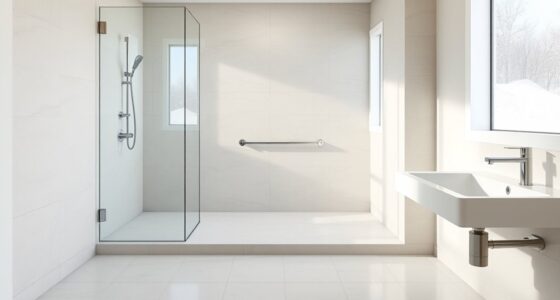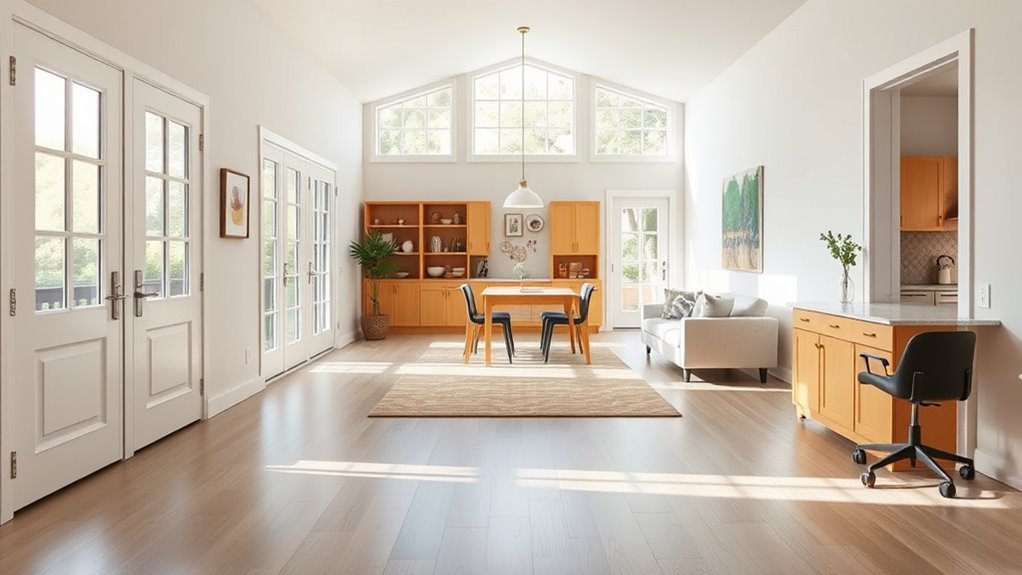

The principles of universal design in home planning focus on creating spaces that are accessible, flexible, and welcoming for everyone. You should incorporate features like wide doorways, lever handles, and adjustable surfaces to promote independence and ease of use. The layout should encourage open movement, minimize clutter, and guarantee controls are accessible from multiple points. Using durable, low-maintenance materials adds safety and longevity. If you continue exploring, you’ll discover how these principles foster environments that truly serve all members and visitors.
Key Takeaways
- Ensure homes are accessible and usable by individuals of all ages and abilities through thoughtful layout and features.
- Incorporate flexible, adaptable spaces that accommodate diverse needs without segregating or stigmatizing.
- Design with intuitive navigation, clear pathways, and accessible controls to promote safety and independence.
- Use durable, easy-to-maintain materials that enhance safety, longevity, and low maintenance.
- Focus on creating welcoming, harmonious environments that blend function with aesthetic appeal for everyone.
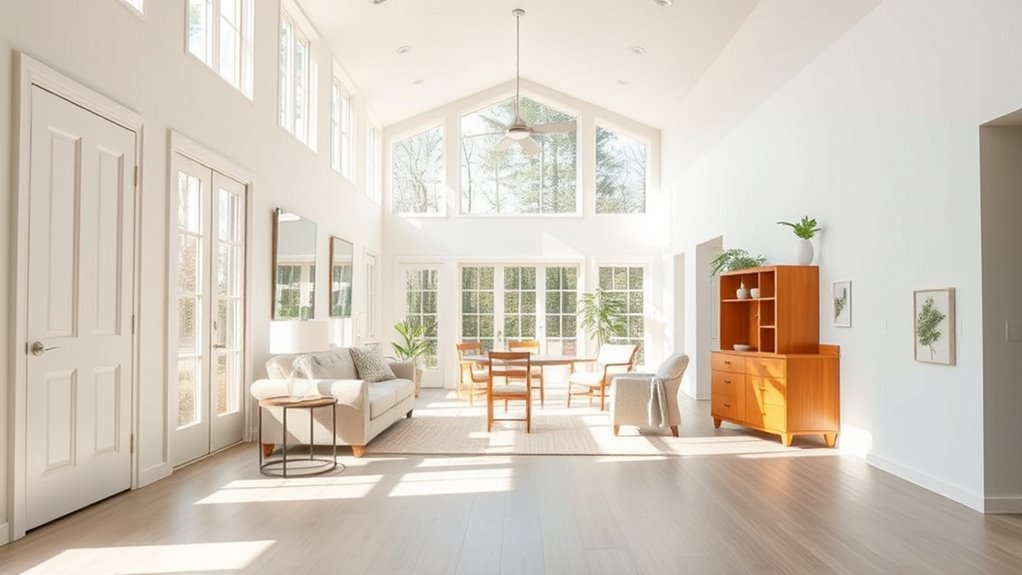
Have you ever wondered how to create spaces and products that everyone can use effortlessly? It’s a question that guides the principles of universal design, a thoughtful approach to home planning that emphasizes accessibility and usability for all. At the heart of this philosophy are adaptive features—those thoughtful modifications that make a space flexible and accommodating for people with diverse needs. Imagine doorways wide enough to accommodate wheelchairs, lever-style handles instead of knobs, or adjustable countertops that suit different heights and abilities. These adaptive features seamlessly integrate into your home, guaranteeing it remains functional for anyone, regardless of age or mobility.
Designing adaptable spaces with features like wide doorways and lever handles ensures accessibility for everyone.
Incorporating inclusive aesthetics is equally essential. It’s not just about making a space accessible; it’s about creating an environment that feels welcoming and harmonious for everyone. Instead of designing spaces that look clinical or separate, you focus on aesthetic choices—such as color schemes, lighting, and textures—that blend form and function effortlessly. This approach assures that adaptive features don’t stand out as obtrusive but become a natural part of the home’s overall look and feel. When you choose inclusive aesthetics, you foster an atmosphere where all members of your household or visitors feel comfortable and valued, regardless of their abilities.
Thinking about layout is another key element. Universal design encourages open floor plans and clear pathways, reducing obstacles and making navigation easier. For example, avoiding cluttered spaces or narrow hallways allows everyone to move freely. This also benefits families with strollers, delivery personnel, or anyone carrying heavy loads. By considering these details, you create a home that’s intuitive and safe for everyone. The placement of switches, outlets, and lighting controls should also be accessible from multiple positions, making certain convenience whether you’re standing, seated, or reaching from a wheelchair.
Your choices in materials and finishes matter, too. Opt for non-slip flooring, easy-to-clean surfaces, and durable materials that withstand daily use. These selections contribute to a home that’s not only safe but also low-maintenance and inviting. Additionally, understanding the contrast ratio of your projector can significantly enhance your home cinema experience by improving the depth and clarity of images. When you integrate adaptive features with inclusive aesthetics, your home becomes a space that anticipates needs and promotes independence. It’s about designing with empathy and foresight, transforming your environment into one that celebrates diversity and fosters comfort for all. By focusing on these principles, you’re creating a space that’s truly universal—one that everyone can enjoy, navigate, and feel at home in effortlessly.
Frequently Asked Questions
How Does Universal Design Impact Home Value and Marketability?
Universal design boosts your home’s value and marketability by enhancing property appeal and making it accessible for all. When you incorporate these principles, your home attracts a broader range of buyers, including those with mobility challenges. This increases home resale potential, as it stands out in the market. A universally designed home signals long-term usability, making it more attractive and valuable, especially in a competitive real estate environment.
What Are Common Misconceptions About Universal Design in Homes?
You might think universal design makes homes look institutional or boring, but that’s a misconception. Many believe it only benefits those with mobility challenges, but it actually improves usability for everyone. People often overlook aesthetic considerations, assuming universal design sacrifices style. In reality, thoughtful design seamlessly blends functionality with attractive aesthetics, creating a space that’s both accessible and beautiful for all residents.
How Can Universal Design Principles Be Adapted for Small or Existing Homes?
You can adapt universal design principles for small or existing homes by focusing on compact layouts that maximize space and guarantee easy movement. Incorporate flexible furnishings that can serve multiple purposes, such as fold-away beds or extendable tables, to enhance functionality. This approach helps create a comfortable, accessible environment where every space is optimized, making your home more inclusive without major renovations.
Are There Specific Building Codes Supporting Universal Design?
Building codes often include accessibility standards that support universal design principles, guaranteeing your home is safe and functional for everyone. These codes typically mandate features like wider doorways, ramps, and sufficient lighting. By following local building codes, you help create a space that’s inclusive and compliant with legal requirements. Always check your area’s specific regulations, as they can vary, to ensure your home meets all necessary accessibility standards.
How Does Universal Design Benefit Aging-In-Place Strategies?
You benefit from aging-in-place strategies by having accessible entrances and adaptable fixtures that make your home safer and easier to navigate as you age. Universal design guarantees you can move freely without barriers, reducing the risk of falls or injuries. It also allows your living space to adapt to changing needs, helping you maintain independence longer and enjoy comfort and convenience throughout your later years.
Conclusion
By applying universal design principles, you create a home that welcomes everyone, no matter their age or ability. Imagine your house as a sturdy bridge—built strong enough for all, flexible enough to adapt. When you prioritize inclusivity, you’re not just designing a space; you’re crafting a sanctuary where every family member feels safe and comfortable. Embrace these principles, and you’ll build a home that truly stands the test of time and change.