Creating a support network for independent living involves actively engaging with your community through local events, groups, and volunteer opportunities. Build genuine relationships with neighbors, friends, and service providers to create a trust-based support system. Stay informed about local resources, such as transportation, health services, and home modifications, and keep contact information handy. Prioritizing resource accessibility and collective intention can boost your confidence and independence—continue exploring to discover how to strengthen your support system effectively.
Key Takeaways
- Engage actively in local community events, groups, and volunteer activities to build relationships and access resources.
- Familiarize yourself with nearby resource centers, online directories, and programs that support accessible living.
- Develop trust-based relationships through regular communication with neighbors, friends, and service providers.
- Stay informed about community programs and events to expand your support network and support options.
- Understand and leverage available resources, including eligibility criteria and application processes, to enhance independence.
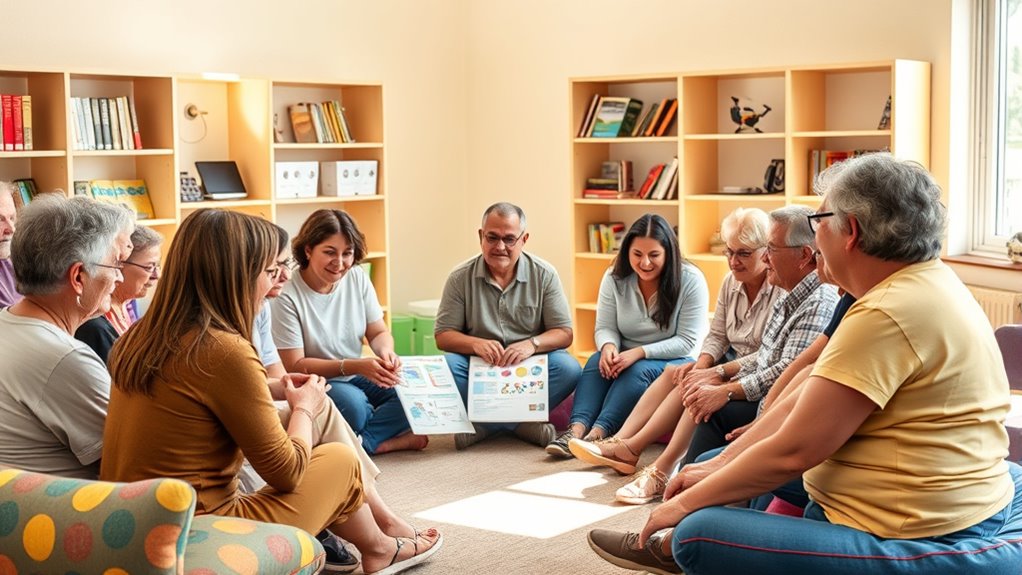
Ever wondered how people manage to live independently despite facing challenges? The secret often lies in building a strong support network that keeps you connected, informed, and prepared. Creating this network starts with understanding the importance of community engagement. When you actively participate in local events, groups, or volunteer opportunities, you not only foster relationships but also open doors to valuable resources. Community engagement helps you connect with neighbors, local organizations, and service providers who can assist you in daily life. These connections make it easier to access support when needed and reduce feelings of isolation. By engaging with your community, you gain insight into available resources, like transportation options, health services, or social programs, that might not be immediately obvious. This proactive approach ensures you’re aware of opportunities and assistance that can empower your independence. Additionally, understanding the energy of collective intention can enhance your ability to attract supportive relationships and resources that align with your personal goals. Resource accessibility is another critical component. You should regularly explore what services and tools are available in your area. Whether it’s wheelchair-accessible facilities, home modification programs, or emergency assistance, knowing what’s accessible makes a significant difference. Keep a list of local resources and contact information handy, and don’t hesitate to reach out to organizations that specialize in supporting independent living. Many communities offer resource centers or online directories that simplify this process. You might find that some services are free or subsidized, making them more affordable and easier to incorporate into your routine. Ensuring resource accessibility also involves understanding eligibility criteria and application procedures, so you can quickly jump on opportunities that fit your needs. Building a support network isn’t just about collecting contacts; it’s about fostering genuine relationships based on trust and mutual understanding. Regularly check in with your contacts, whether they’re neighbors, friends, or service providers. This ongoing communication helps you stay informed about new programs, changes in service availability, or community events that could benefit you. It also creates a safety net; when you know who to turn to, you’re less likely to feel overwhelmed or isolated during difficult times. Remember, your support network is a dynamic system that grows and adapts with your changing needs. By actively engaging with your community and prioritizing resource accessibility, you position yourself for a more confident, independent life where help is just a call or a conversation away.
Frequently Asked Questions
How Do I Find Local Support Groups in My Area?
You can find local support groups by visiting community outreach centers or checking online community boards. Reach out to local healthcare providers or social services—they often have information on peer mentorship programs and support groups. Attend community events or workshops to meet others who share your interests. Additionally, search social media platforms and local directories for groups dedicated to independent living. These resources connect you with valuable support and mentorship opportunities nearby.
What Are the Costs Associated With Building a Support Network?
Ever wonder what it takes financially to build a support network? Costs vary depending on your needs, but you should consider funding options like grants, community resources, or insurance coverage. Service fees for professionals or peer groups may apply, but many support services are affordable or free. Planning ahead helps you manage expenses effectively, ensuring you get the support you need without overspending. Are you ready to explore your options?
How Can I Involve Family Members in My Support System?
You can involve family members in your support system by maintaining open family communication and discussing caregiving roles clearly. Share your needs and listen to their concerns, ensuring everyone understands their responsibilities. Regular check-ins help coordinate efforts and build trust. Encourage family members to participate in planning and decision-making, making them feel valued. This approach strengthens your support network and fosters a collaborative environment for your independent living journey.
What Online Resources Are Available for Independent Living Support?
Imagine opening a treasure chest filled with tools for independence. You’ll find virtual peer support groups on platforms like Facebook and Reddit, where you can share experiences and advice. Online resource directories such as NIDILRR or AbilityLinks connect you to local and national services. These resources empower you to build a strong support system, making your journey to independence both manageable and inspiring.
How Do I Evaluate the Effectiveness of My Support Network?
You evaluate your support network’s effectiveness by seeking peer feedback regularly, asking for honest input about how well your support system meets your needs. Additionally, set clear goals and track your progress toward achieving them. If you find you’re consistently reaching your goals and peers confirm your support system is helpful, then your network is effective. Adjust as needed based on feedback and changing goals to maintain strong support.
Conclusion
Building a strong support network isn’t just about practical help; it’s about creating a safety net that boosts your confidence and resilience. Some theories suggest that social connections can actually enhance your mental and physical health, making independent living more sustainable. By nurturing relationships and seeking support when needed, you’re not just surviving—you’re thriving. Remember, research shows that a robust support system truly transforms independence into a fulfilling, empowered lifestyle.