To create clear pathways with minimal clutter, start by evaluating your space to identify areas that tend to become congested. Use smart storage solutions like baskets, shelves, and hooks to keep items organized and out of the way. Keep walkways unobstructed by removing unnecessary objects and placing frequently used items within easy reach. Adjust furniture and accessories to maintain open flow. If you want to learn more, you’ll discover additional tips to keep your space neat and functional.
Key Takeaways
- Designate specific zones for activities and items to prevent clutter from spreading into pathways.
- Keep pathways unobstructed by storing frequently used items within easy reach and out of the way.
- Use vertical storage solutions like wall-mounted shelves and hooks to maximize space without blocking walkways.
- Regularly evaluate and remove unnecessary objects to maintain a clear and open flow.
- Incorporate decorative elements and storage that blend with decor, diverting attention from clutter and enhancing pathway clarity.
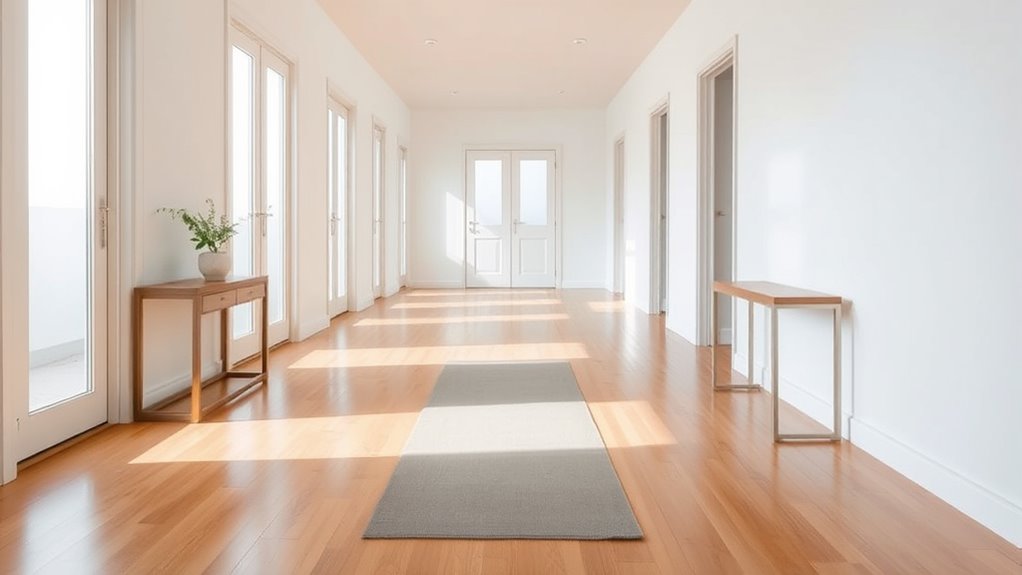
A cluttered space can make even simple tasks feel overwhelming, but creating clear pathways is easier than you might think. The key is to organize your belongings efficiently while maintaining a visually appealing environment. Start by evaluating your space and identifying areas where clutter tends to accumulate. Once you see where the clutter builds up, you can plan your storage solutions accordingly. Using smart storage options like baskets, bins, or shelves helps keep items out of sight but easily accessible. Vertical storage, such as wall-mounted shelves or hanging hooks, frees up floor space and creates a sense of openness. When choosing storage solutions, consider their functionality and how they blend with your decor. Incorporate decorative accents that complement your style to make storage units feel intentional rather than cluttered. Elegant baskets or decorative boxes can hide everyday items while adding visual interest to your space.
Next, focus on creating designated zones for different activities or items. Clear pathways should be unobstructed from entry to key areas, like the kitchen, living room, or bedroom. Keep frequently used items within reach but stored neatly. For example, place shoes in a stylish shoe rack or under a bench with hidden compartments, rather than scattering them across the floor. When you tidy up, remove items that don’t belong or aren’t used regularly. This minimizes visual clutter and makes your space feel more inviting and functional. Additionally, consistent organization can help reinforce your system and prevent clutter from returning quickly. Remember, less is more—eliminating unnecessary objects reduces clutter and enhances the overall flow of your space.
To maintain clear pathways, regularly evaluate your organization system. Clutter tends to creep back in over time, so it’s important to stay disciplined. Incorporate decorative accents like plants, artwork, or decorative lighting to add personality and warmth without crowding your space. These accents can serve as focal points that divert attention from cluttered areas. Keep pathways free by shifting furniture or accessories if they block movement, ensuring you can navigate easily from one part of your home to another. Simplifying your environment not only boosts your mood but also makes cleaning and daily routines less stressful.
Frequently Asked Questions
How Often Should I Declutter to Maintain Clear Pathways?
You should declutter every 1 to 3 months to keep pathways clear. Regularly tackle clutter hotspots, such as entryways and under the sink, using smart storage hacks to maximize space. By consistently maintaining these areas, you prevent buildup and guarantee your walkways stay open. Making decluttering a routine helps you stay organized and makes it easier to find what you need, all while keeping your home safe and inviting.
What Are the Best Storage Solutions for Small Spaces?
Creative shelving and multi-purpose furniture are your best bets for small spaces. These solutions maximize vertical storage and serve dual functions, freeing up floor space. Think wall-mounted shelves or fold-away beds with built-in storage. Studies show that smart furniture design boosts functionality without clutter, making your space feel larger. Embrace these ideas to keep pathways clear and your small space organized, ensuring every inch is both practical and stylish.
How Can I Organize Frequently Used Items Efficiently?
You can organize frequently used items efficiently by implementing labeling systems and color coding. Label shelves and containers clearly so you know where everything belongs, making it quick to find what you need. Use color coding to categorize items—like red for kitchen tools or blue for office supplies—so you can grab them instantly. This method keeps your space tidy, accessible, and guarantees your most-used items are always within reach.
What Are Quick Tips for Daily Clutter Prevention?
A place for everything and everything in its place. To prevent daily clutter, spend a few minutes each day tidying up. Keep your countertops neat and free of unnecessary items, and guarantee your entryway stays tidy with hooks or baskets for quick-stash essentials. Regularly return items to their designated spots, and avoid leaving things out. These small habits make a big difference in maintaining clear pathways and a clutter-free home.
How Do I Involve Family Members in Decluttering Efforts?
You can involve family members in decluttering by encouraging family participation and assigning shared responsibilities. Make it a team effort by setting a common goal and dividing tasks based on everyone’s strengths and schedules. Communicate openly, celebrate small wins together, and keep the process positive. When everyone feels involved and responsible, decluttering becomes easier and more sustainable, creating a cleaner, more organized space for the whole family.
Conclusion
Remember, a clear space leads to a clear mind. By keeping pathways free of clutter, you create a safer, more inviting environment where you can move effortlessly and think clearly. Don’t let unnecessary items block your way—simplicity is key. As the saying goes, “A place for everything, and everything in its place.” Embrace this idea, and you’ll enjoy a more organized, peaceful space that truly feels like home.