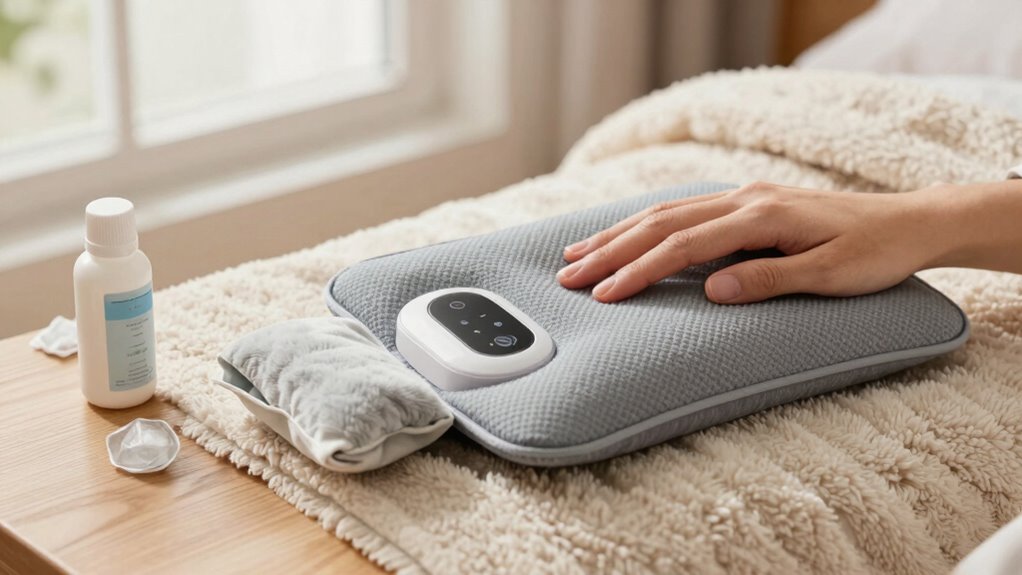

To set up effective everyday pain relief, use heating pads for muscle tension and stiffness by applying them for 15-20 minutes, ensuring the temperature isn’t too high. For fresh injuries or inflammation, apply a cold pack for 10-15 minutes, wrapped in cloth. Incorporate ergonomic adjustments like proper chair height and monitor position to prevent strain. Balancing these methods and self-care routines will help maintain comfort and prevent future pain—keep exploring for more helpful tips.

Get decor and gifts delivered free — and shop member deals
- Fast, free delivery on millions of items
- Access to Prime Big Deal Days deals on October 6–7
- Prime Video, Amazon Music and more included
Key Takeaways
- Use heating pads for 15-20 minute sessions to relax muscles and improve blood flow safely.
- Apply cold therapy for 10-15 minutes on acute injuries, ensuring ice is wrapped in cloth to prevent skin burns.
- Combine heat and massage techniques for effective muscle tension relief and enhanced circulation.
- Maintain proper ergonomics, like adjustable chair height and monitor position, to prevent muscle strain during daily activities.
- Incorporate self-care routines such as hydration, skin care, and stretching to support ongoing pain management.
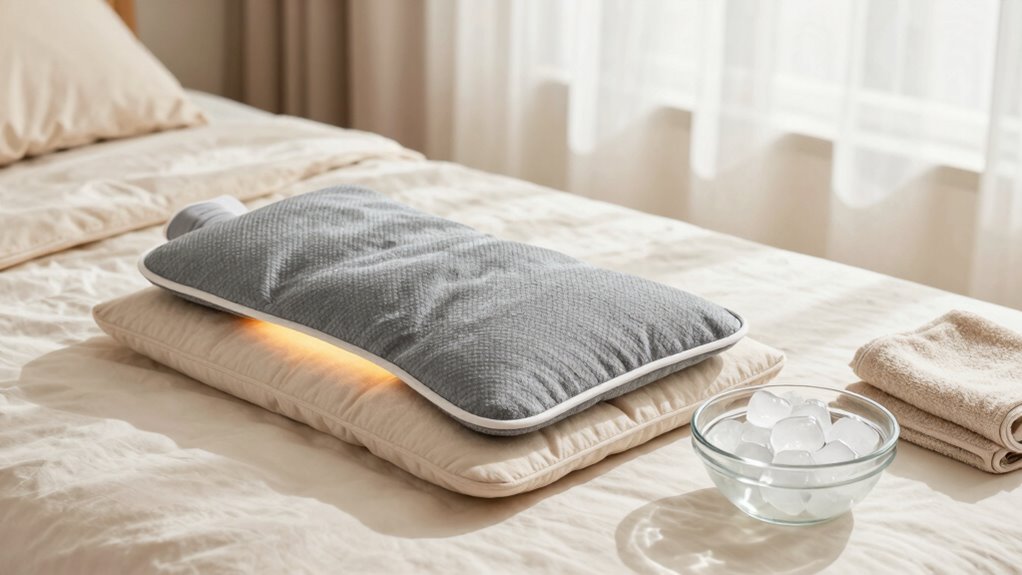
When you’re dealing with pain or soreness, understanding how to use heating pads and cold therapy effectively can make a significant difference in your relief routine. These methods are simple yet powerful tools to manage discomfort, especially when combined with proper techniques and adjustments. For instance, applying a heating pad can relax tense muscles and increase blood flow, but knowing the right time and duration to use it is key. Usually, heat works best for chronic pain or stiffness, such as lower back pain or muscle knots. Just ensure the temperature isn’t too high to prevent burns and limit your sessions to about 15-20 minutes. Cold therapy, on the other hand, is excellent for acute injuries, swelling, or inflammation. A cold pack applied for 10-15 minutes can reduce swelling and numb sharp pain. Remember, never put ice directly on your skin—wrap it in a cloth or use a gel pack to avoid frostbite.
In addition to temperature treatments, incorporating massage techniques can further ease soreness. Gentle massage helps break up muscle tension, improves circulation, and enhances the effectiveness of heat or cold therapy. You might try using your hands or a massage tool, applying steady, gentle pressure along the affected area. If you’re experiencing persistent pain, consider learning specific massage techniques tailored to your needs, such as kneading or circular motions, to target tight muscles more effectively. Combining massage with heat allows muscles to loosen before deep tissue work, making the relief more profound. Understanding muscle tension and how it affects pain can help you develop more effective self-care strategies. Additionally, being aware of proper pain management techniques can help prevent further injury or discomfort over time. Incorporating hydration and skin care as part of your routine can support your recovery and improve the effectiveness of heat or cold therapy, especially since skin health impacts how these treatments work. Maintaining a balanced approach to self-care routines ensures you don’t over-rely on any single method, which can be crucial for sustainable relief.
Ergonomic adjustments also play a crucial role in pain prevention and management. If you spend long hours sitting at a desk or working on a computer, make sure your workspace supports good posture. Adjust your chair height so your feet rest flat on the floor, and keep your monitor at eye level. This minimizes strain on your neck, shoulders, and back. Using ergonomic accessories, like lumbar support cushions or adjustable standing desks, can further reduce muscle fatigue and prevent pain from developing. When your body is properly aligned, your muscles don’t have to work as hard to support you, decreasing the likelihood of soreness and injury.
electric heating pad for muscle pain
As an affiliate, we earn on qualifying purchases.
As an affiliate, we earn on qualifying purchases.
Frequently Asked Questions
Can Heating Pads Be Used on Sensitive Skin?
Yes, you can use a heating pad on sensitive skin, but you should be cautious. Sensitive skin may react more easily to heat, so always set the heating pad to a low temperature and use a cloth or towel as a barrier. Check your skin frequently for redness or irritation, and avoid prolonged use. This approach helps you enjoy pain relief without irritating your sensitive skin.
How Long Should Cold Therapy Be Applied per Session?
You should apply cold therapy for about 15 to 20 minutes per session, balancing relief and safety. Duration guidelines emphasize short, frequent therapy intervals to prevent skin damage or frostbite. After each session, wait at least an hour before reapplying. This rhythm guarantees effective pain relief without risking tissue harm. Always listen to your body and adjust the timing if you notice numbness or discomfort.
Are There Age Restrictions for Using Pain Relief Methods?
Age considerations do matter when it comes to pain management methods. Children and older adults may need special guidance to safely use heating pads or cold therapy. You should always consult a healthcare professional before applying these remedies, especially for young kids or seniors. For effective and safe pain relief, follow age-specific recommendations and monitor for any adverse reactions. Proper supervision guarantees comfort without risking injury.
Can I Combine Heat and Cold Therapy Simultaneously?
Can you imagine trying to soothe your pain with both heat and cold at the same time? It’s generally not recommended because alternating therapy relies on controlled temperature timing. Using heat and cold simultaneously can cause skin damage or discomfort. Instead, switch between them according to your pain relief plan. This method helps reduce inflammation and relax muscles effectively without risking injury from improper application.
What Should I Do if I Experience Skin Irritation?
If you experience skin irritation, stop using the therapy immediately. For skin sensitivity, apply a barrier like a cloth or towel between the device and your skin to prevent irritation. Keep sessions short and avoid applying heat or cold directly to sensitive areas. If irritation persists, consult a healthcare professional. Always prioritize irritation prevention by monitoring your skin and adjusting your therapy routine accordingly.
Conclusion
By understanding how to effectively use heating pads and cold therapy, you naturally find relief when pain strikes. It’s almost like your body and these methods align perfectly, guiding you toward comfort without much thought. Sometimes, the simplest solutions appear just when you need them most, reminding you that a little knowledge can turn everyday discomfort into a manageable moment. Trust these tips, and you’ll discover relief often arrives precisely when you’re ready to embrace it.
Fall Picks
fall essentials
As an affiliate, we earn on qualifying purchases.