One common mistake that can throw off your home blood pressure results is incorrect cuff placement or choosing the wrong size. If the cuff isn’t snug against your bare skin, or if it’s too tight or too loose, your measurements won’t be accurate. Also, placing the cuff too high or over clothing can distort your numbers. To get trustworthy results, use proper techniques and routines. Keep reading to discover more tips to improve your measurements.

Get decor and gifts delivered free — and shop member deals
- Fast, free delivery on millions of items
- Access to Prime Big Deal Days deals on October 6–7
- Prime Video, Amazon Music and more included
Key Takeaways
- Incorrect cuff placement or size can lead to inaccurate blood pressure readings.
- Measuring over clothing instead of bare skin skews results.
- Talking or moving during measurement causes inconsistent and false readings.
- Not supporting the arm at heart level affects measurement accuracy.
- Using an uncalibrated or worn-out monitor can produce erroneous blood pressure results.
Monitoring your blood pressure at home has become an essential part of managing your health, especially if you have hypertension or other cardiovascular concerns. However, even with the best equipment, your readings can be thrown off by simple mistakes, like ignoring dietary influences or improper cuff placement techniques. Understanding how these factors affect your results is key to getting accurate, reliable measurements every time.
Proper technique and awareness of influences are essential for accurate home blood pressure readings.
Dietary influences play a significant role in your blood pressure readings. Consuming foods high in salt or caffeine shortly before measuring can cause temporary spikes. To avoid skewed results, try to maintain consistent eating habits and avoid heavy meals, alcohol, or stimulants for at least 30 minutes prior to taking your measurement. Hydration levels also matter; dehydration can lower blood pressure, while overhydration might increase it. So, aim for a stable diet and consistent routines around your measurement times. This consistency helps you track true changes rather than fluctuations caused by external factors.
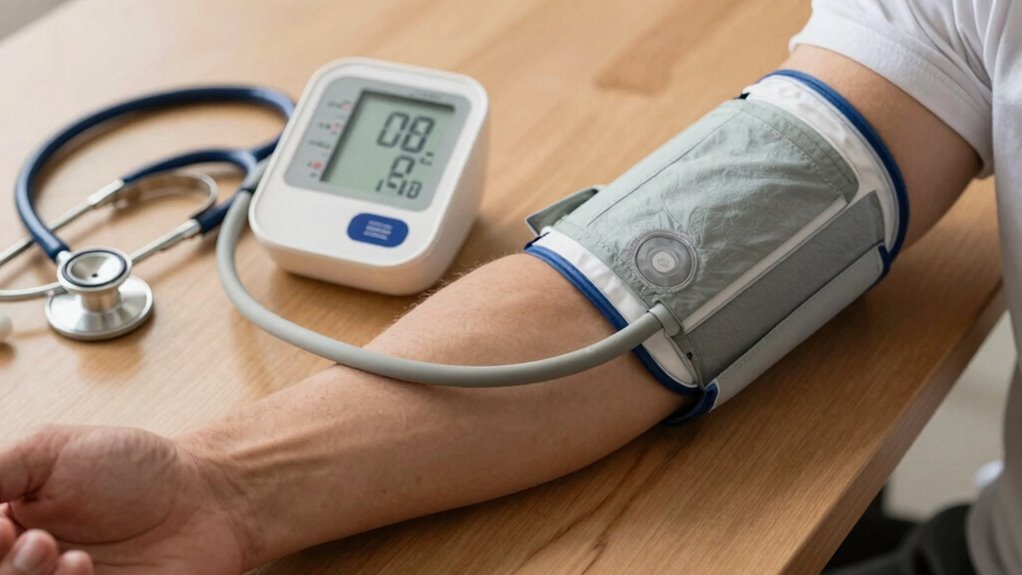
Cuff placement techniques are equally vital. A common mistake is positioning the cuff too loosely or unevenly on your arm. You want the cuff to be snug but not tight enough to restrict circulation. It should sit directly on your bare skin, about an inch above your elbow, with the cuff’s bladder centered over the brachial artery. Incorrect placement, such as placing the cuff over clothing or too high on the arm, can produce falsely low or high readings. Additionally, your arm should be supported at heart level, with your feet flat on the floor and back supported, to ensure proper blood flow and consistent results. Proper cuff size selection is also crucial, as using an incorrect cuff size can significantly impact your readings. Many people overlook the importance of cuff size, but it is a fundamental aspect of accurate measurement. Using a cuff that’s too small can overestimate your blood pressure, while a cuff that’s too large might underestimate it. Always choose a cuff that fits your arm circumference properly. Regularly check the cuff for wear and tear, as damaged cuffs can give inaccurate readings. When measuring, stay still and avoid talking, as movement or conversation can lead to inconsistent results. Taking multiple readings, waiting a minute or two between each, helps account for natural fluctuations and provides a more accurate assessment of your blood pressure. Being aware of your measurement environment, such as avoiding noisy or stressful settings, can also help improve the consistency of your results. Furthermore, knowing that proper cuff inflation techniques prevent unnecessary discomfort and ensure accurate readings can make a significant difference.
home blood pressure monitor cuff size
As an affiliate, we earn on qualifying purchases.
As an affiliate, we earn on qualifying purchases.
Frequently Asked Questions
How Often Should I Calibrate My Home Blood Pressure Monitor?
You should calibrate your home blood pressure monitor at least once every 1 to 2 years. Make certain to check cuff placement to guarantee accurate readings, and replace the batteries regularly to keep the device functioning properly. If you notice inconsistent readings, recalibrate sooner. Proper cuff placement and fresh batteries help maintain accuracy, but routine calibration ensures your monitor stays reliable over time.
Can Talking or Moving Affect My Blood Pressure Reading?
Talking or moving during your blood pressure measurement can definitely affect your readings. Speech interference can cause your blood pressure to appear higher or lower than it actually is, and movement effects can lead to inaccurate results. To get the most accurate reading, stay still and silent during the measurement. Sit comfortably, rest for a few minutes beforehand, and avoid talking or moving until you’ve recorded your blood pressure.
Are Wrist Monitors as Accurate as Upper Arm Monitors?
Wrist monitors can be accurate if used correctly, but upper arm monitors generally offer better reliability. Wrist accuracy depends heavily on proper positioning at heart level, which can be tricky. Upper arm monitors tend to provide more consistent readings because they measure closer to your heart naturally. If you want the most dependable results, opt for an upper arm monitor, but guarantee you’re following usage instructions precisely for both types.
What Is the Ideal Time of Day to Take Readings?
Imagine you notice your blood pressure spikes in the evening, but not in the morning. To get accurate readings, it’s best to measure at the same time daily, whether morning or evening, for timing consistency. Many experts recommend taking readings in the morning before breakfast and medications, and again in the evening before bed. Consistent timing helps you track trends accurately and manage your blood pressure effectively.
How Do I Store My Blood Pressure Monitor Properly?
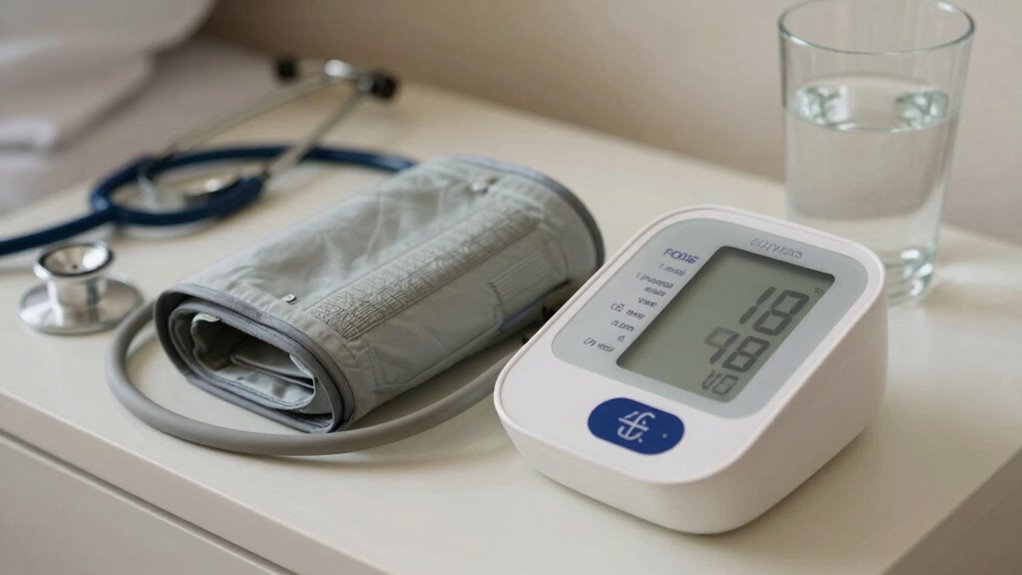
To store your blood pressure monitor properly, follow device maintenance and storage best practices. Keep it in a cool, dry place away from direct sunlight and humidity. Make sure the cuff is deflated and clean, and store the device in its case or a secure container to protect it from dust and damage. Avoid placing heavy objects on it, and check the batteries regularly to prevent leaks. Proper storage helps maintain accuracy and prolongs your monitor’s lifespan.
Conclusion
Remember, a stitch in time saves nine. By ensuring you use your blood pressure monitor correctly, you prevent misleading readings that could impact your health decisions. Take a moment to double-check your technique, sit calmly, and follow the manufacturer’s instructions. Accurate readings give you peace of mind and better control over your health. Don’t let small mistakes make a big difference—stay vigilant and keep your blood pressure in check with confidence.
Fall Picks
fall essentials
As an affiliate, we earn on qualifying purchases.