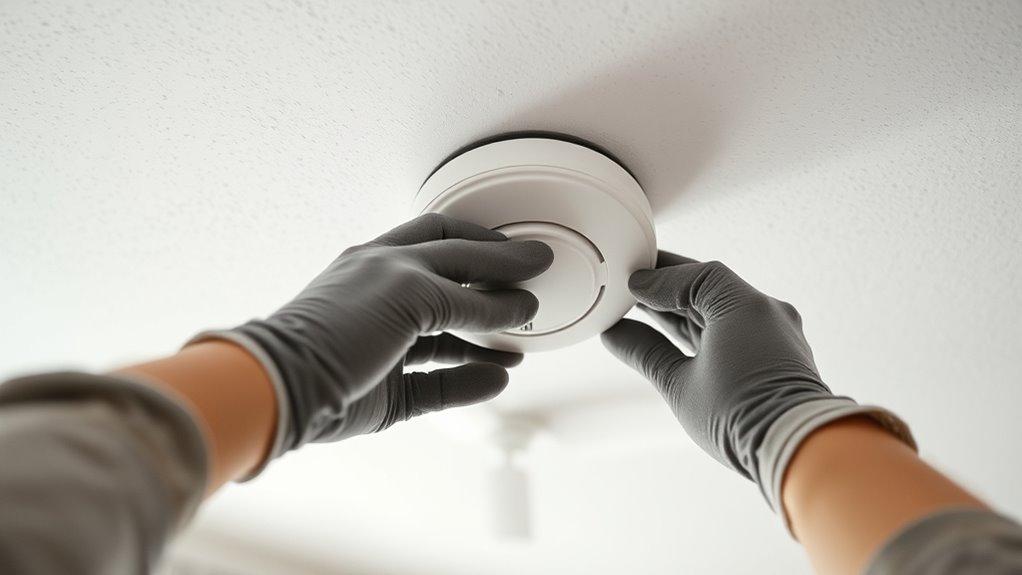

To install smoke and carbon monoxide detectors correctly, place them on every level of your home, especially near sleeping areas, and avoid drafts or obstructions. Mount smoke detectors on the ceiling or high on walls, about four inches from the ceiling, and install CO detectors outside bedrooms at waist level or on the ceiling. Regularly test your alarms and replace batteries as needed—proper placement and maintenance are crucial for early warnings. Keep learning to ensure maximum safety.
Key Takeaways
- Install detectors on every level, including basements and attics, and inside each bedroom or sleeping area.
- Mount smoke detectors on ceilings or high on walls, about four inches from the ceiling; place CO detectors at waist level or ceiling per manufacturer instructions.
- Keep detectors away from drafts, windows, doors, vents, kitchens, and bathrooms to prevent false alarms.
- Regularly test detectors monthly and replace batteries promptly, especially if using replaceable types.
- Ensure detectors are accessible for maintenance, cleaning, and battery replacement to maintain reliable operation.
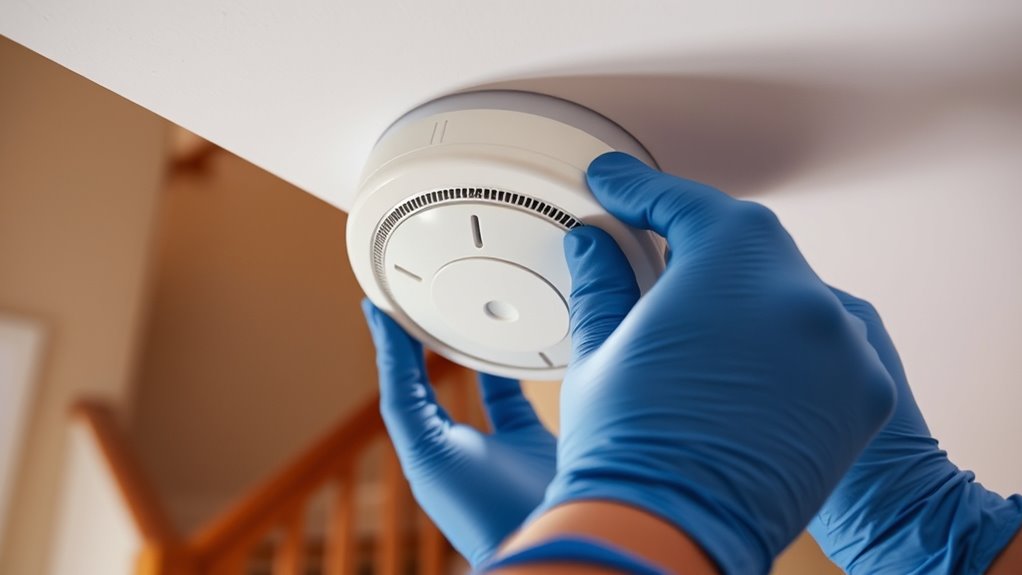
Installing smoke and carbon monoxide detectors correctly is essential for ensuring your home’s safety. Proper installation can mean the difference between early warning and dangerous delay, so taking the time to do it right is worth it. When it comes to choosing the right detectors, understanding battery types is crucial. There are primarily two options: 9-volt batteries, which are common and easy to replace, and sealed lithium batteries, which last up to ten years and eliminate the need for frequent changes. While sealed batteries might seem more convenient, you should still check the manufacturer’s recommendations to guarantee maximum performance. Whichever type you select, make sure your detectors have fresh batteries and test them regularly to confirm they’re functioning properly.
Detector placement plays a vital role in your home’s safety system. You need to install smoke detectors on every level, including the basement and attic, and inside each bedroom or sleeping area. It’s best to place detectors on the ceiling or high on the wall, about four inches from the ceiling. Because smoke rises, ceiling mounting allows for quicker detection. Avoid installing detectors near windows, doors, or vents, as drafts can interfere with their operation. Keep them at least ten feet away from kitchens and bathrooms to prevent false alarms triggered by cooking fumes or humidity. For carbon monoxide detectors, placement is equally important—they should be installed outside sleeping areas and on each level, but not in direct contact with fuel-burning appliances. Installing them at waist level on a wall or on the ceiling, following the manufacturer’s instructions, guarantees maximum detection of CO leaks. Proper detector placement also involves considering accessibility. You should be able to test and replace batteries easily, so avoid installing detectors in hard-to-reach places like high ceilings or behind furniture. Regularly check the detectors’ placement to make sure they haven’t been obstructed by dust, paint, or other debris, which can impair their function. Remember, the goal is to have detectors that are both accessible and effective, providing early warnings without false alarms. Keep a routine to test your detectors monthly and replace batteries as needed, especially if they use replaceable batteries. Additionally, understanding the importance of proper detector placement can significantly enhance your home’s safety and ensure reliable operation. By paying attention to battery types and detector placement, you’re creating a reliable safety net that guards your home and loved ones against fire and carbon monoxide hazards.
Frequently Asked Questions
How Often Should I Test My Smoke and CO Detectors?
You should test your smoke and CO detectors at least once a month to guarantee they’re working properly. Regular maintenance tips include pressing the test button and replacing batteries annually or when they indicate low power. Following safety protocols, like cleaning the units and replacing them every 7-10 years, helps keep your home safe. Staying proactive with these checks can prevent dangerous situations and keep your family protected.
Can I Install Detectors Myself or Should I Hire a Professional?
You can definitely do a DIY installation if you’re comfortable with basic electrical work, but hiring professional assistance guarantees it’s done safely and correctly. Professionals have the expertise to place detectors in ideal spots and handle wiring properly. If you’re unsure about electrical tasks or want peace of mind, it’s best to rely on a professional. Otherwise, with careful planning, DIY installation can be a cost-effective, straightforward option.
What Type of Batteries Are Best for Long-Term Use?
Picture a quiet night, your home safe and sound. For long-term use, you should opt for lithium batteries—they boast a longer lifespan and reliable power sources, often lasting 5-10 years. These batteries provide consistent energy, ensuring your detectors stay alert without frequent changes. By choosing lithium, you’re investing in peace of mind, knowing your smoke and carbon monoxide alarms will stand guard, night after night, with unwavering vigilance.
Are COmbo Smoke and CO Detectors More Reliable Than Separate Units?
Combo smoke and CO detectors are generally more reliable since they simplify detector maintenance and installation safety; you only need to monitor one device instead of two. This integration reduces the risk of neglecting either detector, enhancing overall safety. Just make sure you follow the manufacturer’s instructions for proper installation and regularly test the units to maintain their effectiveness. Proper maintenance keeps your home protected and ensures both detectors work when needed.
How Do I Know if My Detectors Are Properly Interconnected?
Think of your detectors like a choir singing in harmony. To check if they’re properly interconnected, test the wireless interconnection by pressing a test button on one unit and listening for alarms on the others. For wired connections, perform a wiring test to verify signals pass through all units. If all detectors sound off simultaneously during these tests, your system is properly interconnected, keeping your home safe and synchronized.
Conclusion
By following proper installation guidelines, you guarantee your home’s safety from smoke and carbon monoxide dangers. For example, imagine a family who installed detectors correctly in key areas—they alerted them early when a stove malfunction produced dangerous fumes, preventing tragedy. Proper placement and regular checks are your best defense. So, take the time now to install and maintain these devices properly—your safety and peace of mind depend on it.