
To use compression systems safely at home, choose the right type and size based on your needs and your healthcare provider’s instructions. Sit or lie down comfortably, elevate your legs, and gently put on the device, ensuring it fits snugly without causing pain or bunching. Start with short sessions and monitor for discomfort. Keep your skin clean, check for irritation, and follow safety guidelines to maximize benefits. If you’re curious about more tips, you’ll find helpful details ahead.

Get decor and gifts delivered free — and shop member deals
- Fast, free delivery on millions of items
- Access to Prime Big Deal Days deals on October 6–7
- Prime Video, Amazon Music and more included
Key Takeaways
- Choose the appropriate compression system (sleeves, stockings, wraps) based on your needs and healthcare provider’s recommendations.
- Ensure proper sizing by accurately measuring your legs and fitting the device snugly but comfortably.
- Apply the compression device while legs are elevated, and avoid bunching or wrinkles to ensure even pressure.
- Monitor for adverse sensations like tingling or pain; remove the device immediately if discomfort occurs.
- Follow a gradual usage schedule, maintain skin hygiene, and consult a healthcare professional for persistent issues.
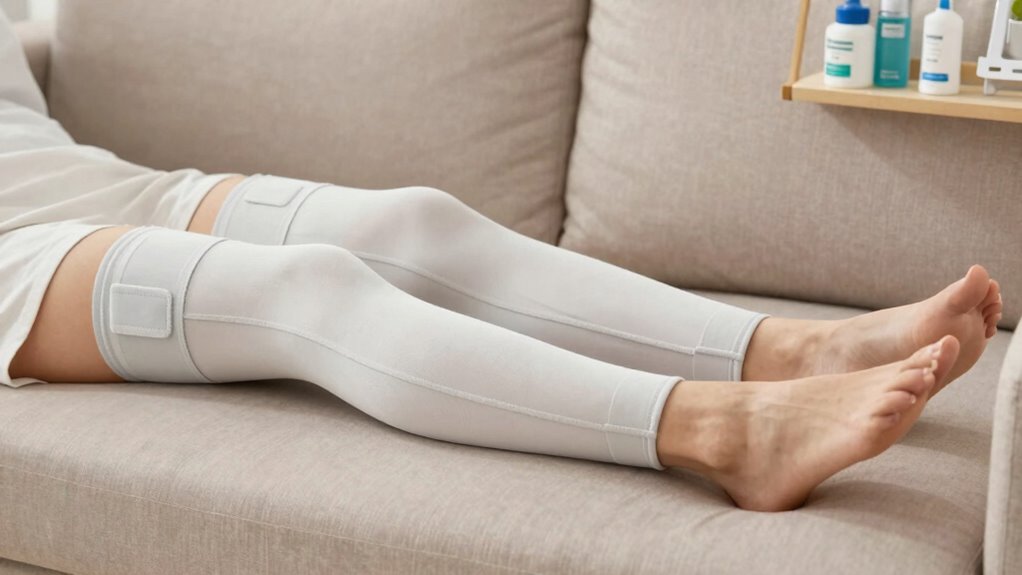
Compression systems for legs are designed to improve circulation, reduce swelling, and enhance recovery, making them essential for athletes, travelers, and those with circulation issues. When used correctly, these systems can markedly boost circulation improvement and swelling reduction, helping your legs feel lighter and less fatigued. At home, you have the convenience of managing your compression therapy, but it’s crucial to follow proper steps and safety guidelines to guarantee effectiveness and avoid discomfort.
First, make certain you choose the right compression system for your needs. There are various types, such as sleeves, stockings, and full-leg wraps, each providing different levels of compression. Check the pressure level recommended by your healthcare provider or the product instructions. Wearing too tight can restrict blood flow, while too loose won’t deliver the desired benefits. Always measure your legs accurately and select the correct size for maximum circulation improvement and swelling reduction.
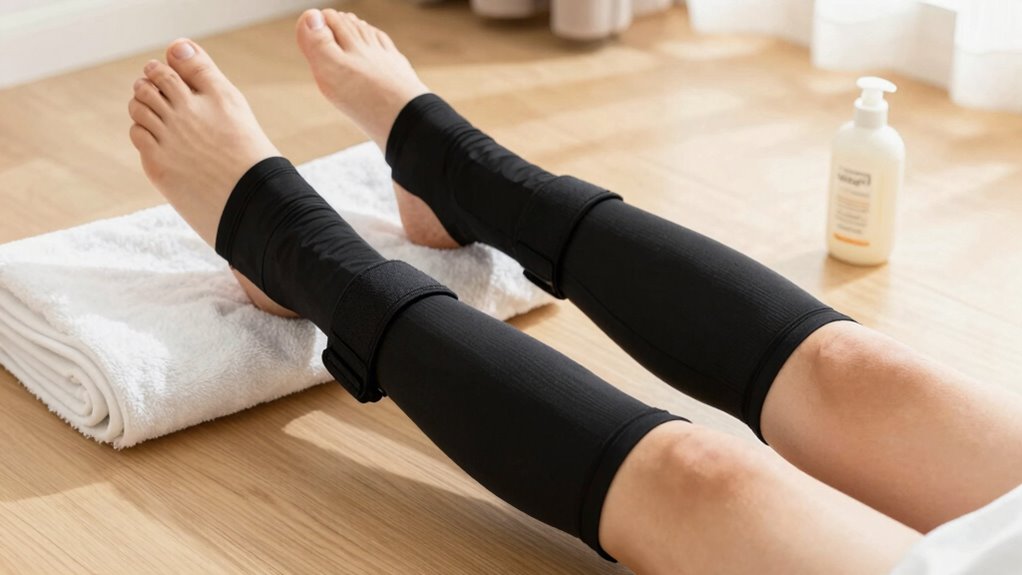
Before putting on the compression system, sit or lie down comfortably. Elevating your legs slightly can help your blood flow more easily and make the application more effective. When you’re ready, gently slide or pull the compression device onto your legs, starting from your toes and working upward. Ensure it fits snugly but not painfully tight. Comfortable fit is essential for safe use and maximum benefit. Avoid bunching or wrinkling the fabric, as this can cause uneven pressure and discomfort. Incorporating proper health practices can further enhance the safety and effectiveness of your compression therapy. Additionally, maintaining good hygiene and skin care can prevent irritation during prolonged use. Being aware of skin health and how it interacts with compression devices is key to avoiding potential issues. Proper skin care routines and regular monitoring can help prevent complications and ensure a comfortable experience.
While wearing the compression system, monitor how your legs feel. If you experience tingling, numbness, or increased pain, remove the device immediately. These sensations can indicate too much pressure or restricted blood flow. It’s best to start with shorter sessions, especially if you’re new to compression therapy, and gradually increase duration as tolerated. Typically, wearing the system for 15-30 minutes a few times daily can provide noticeable swelling reduction and circulation benefits.
After removing the compression device, take a moment to elevate your legs again. Hydrate well and gently massage your legs if needed to further boost circulation. Regularly inspect your skin for signs of irritation or pressure marks, and keep the devices clean to prevent skin issues. When used properly, compression systems can be a safe, effective way to support leg health at home. Remember, if you experience persistent discomfort or have underlying health conditions, consult your healthcare provider for personalized advice and guidance. Additionally, understanding biodiversity and sustainable practices can contribute to overall health and well-being by supporting a balanced environment.
leg compression sleeves for circulation
As an affiliate, we earn on qualifying purchases.
As an affiliate, we earn on qualifying purchases.
Frequently Asked Questions
Can Compression Systems Be Used During Sleep?
Yes, you can use compression systems during sleep to enjoy their nocturnal benefits. They help improve circulation, reduce swelling, and promote comfort overnight. To guarantee sleep comfort, choose a system that fits well and is designed for overnight use. Always follow the manufacturer’s instructions and consult your healthcare provider if you have any health concerns. Using compression systems safely at home can enhance your overall leg health while you rest.
How Long Should I Wear Compression Sleeves Daily?
For safe, soothing support, wear compression sleeves for about 6 to 8 hours daily. Make sure they fit properly to prevent skin irritation and discomfort. You might find relief with shorter durations initially, then extend as your skin adjusts. Remember, a snug but not tight fit is key to avoiding irritation. Regularly check for signs of skin redness or numbness, and remove the sleeves if any discomfort occurs.
Are There Specific Exercises to Do With Compression Systems?
Yes, you can do specific exercises with compression systems to enhance their benefits. Focus on low-impact activities like walking, ankle circles, or leg lifts, which promote circulation safely. Always prioritize exercise safety by avoiding strenuous movements that cause discomfort. Wearing compression sleeves during these exercises helps improve blood flow and reduces swelling. Remember to listen to your body and consult a healthcare professional if you experience pain or discomfort during exercise.
What Are Signs of Improper Compression Fitting?
Think of your legs as a garden needing just the right amount of water; too tight or loose, and trouble begins. Signs of improper compression fitting include fitting discomfort, like a too-tight grip, and skin irritation, such as redness or rash. If you notice these, loosen or adjust the system immediately. Proper fit guarantees comfort and effectiveness, preventing issues and keeping your legs healthy and happy.
Can Compression Systems Be Used Alongside Other Treatments?
Yes, you can use compression systems alongside other treatments, but it’s essential to consult your healthcare provider first. They may recommend combining compression therapy with alternative therapies like elevation or physical therapy. When choosing compression material options, make sure they’re compatible with your other treatments. Using the right compression system and integrating it properly can enhance your recovery, but always follow medical advice to avoid complications or ineffective results.
Conclusion
So, after all this, you now know that compression systems for legs are both a salvation and a challenge. Who would’ve thought that squeezing your legs could be so complicated? Just remember, as you master these devices at home, the real trick is not to turn your legs into overachievers—over-compression can do more harm than good. Ironically, the key to wellness might just be a gentle, cautious approach, not a relentless squeeze.
Halloween Picks
halloween
As an affiliate, we earn on qualifying purchases.