Simply increasing brightness isn’t enough to improve visibility for low-vision users. Bright lights can cause glare, shadows, and discomfort, making it harder to see clearly. You need lighting that enhances contrast, reduces glare, and offers comfort for your eyes. Adjustable and diffused lighting options help you customize the glow and prevent eye strain. If you keep exploring, you’ll discover how thoughtful lighting design can truly make a difference.
Key Takeaways
- Brightness alone can cause glare and shadows, reducing overall visibility for low-vision users.
- Effective reading lamps improve contrast and color accuracy, enhancing readability beyond just increasing light.
- Diffused, evenly distributed light minimizes reflections and glare, preventing eye strain.
- Adjustable features allow customization to suit individual visual needs and reduce fatigue.
- Proper lighting design addresses contrast, glare, and color quality, providing a comprehensive solution for better reading comfort.
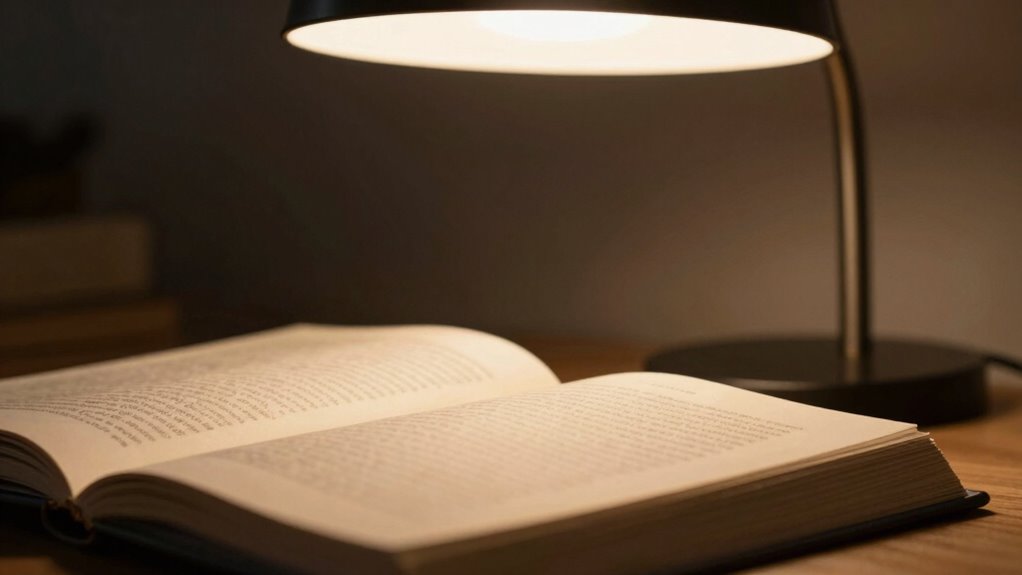
Have you ever struggled to see clearly in your own home? If so, you’re not alone. Many people with low vision find that simply increasing the brightness of their reading lamps isn’t enough. Brightness alone can sometimes worsen the problem, creating more glare and making it harder to focus. That’s why effective low-vision lighting needs to do more than just shine brightly; it must address key factors like color contrast and glare reduction to improve overall visibility.
When choosing a reading lamp, consider how color contrast can make a significant difference. Contrast helps your eyes distinguish objects from their background, making reading easier and more comfortable. For example, black text on a white background provides high contrast, but if your lamp’s light causes the page to appear washed out or creates shadows, your eyes will strain trying to see clearly. Adjustable lighting that enhances the natural contrast of text and images can help your eyes process information faster and with less fatigue. Using lamps that deliver a balanced, neutral color temperature—not too warm or too cool—also enhances contrast, making details stand out more sharply.
Glare reduction is equally important. Bright, direct light can cause reflections and harsh shadows, both of which make reading difficult. If your lamp produces excessive glare, your eyes may become tired or irritated quickly. Look for fixtures that diffuse light evenly across your reading material, reducing harsh reflections. Lamps with adjustable arms or dimmable features allow you to customize the light level, preventing it from becoming overpowering. Positioning your lamp properly—aimed directly at your reading material without shining into your eyes—also minimizes glare and improves comfort. Incorporating appropriate lighting design principles can further optimize your setup for better visual clarity. Additionally, selecting lamps with energy-efficient bulbs can help reduce heat output and prolong bulb life, contributing to a more comfortable reading environment. Properly designed lighting setups can also help mitigate visual fatigue, making your reading sessions more enjoyable and less tiring. Furthermore, choosing the right light quality can prevent color distortion, which may interfere with your ability to perceive details accurately.
low vision reading lamp with adjustable brightness
As an affiliate, we earn on qualifying purchases.
As an affiliate, we earn on qualifying purchases.
Frequently Asked Questions
How Can Lighting Reduce Eye Strain for Low-Vision Individuals?
You can reduce eye strain by optimizing your lighting with higher contrast sensitivity and appropriate ambient lighting. Use lamps that provide focused, adjustable light to enhance contrast on text, making it easier to see. Keep ambient lighting soft but sufficient to prevent glare and shadows. This combination helps your eyes work less hard, reduces fatigue, and improves reading comfort, especially for low-vision individuals who benefit from better contrast and balanced lighting.
Are There Specific Colors That Improve Reading Clarity?
Think of reading as a dance between your eyes and the page; choosing the right colors makes the steps smoother. You’ll find that high color contrast, like black text on a white background, sharpens clarity. Opt for hue selection that minimizes glare, such as warm tones like amber or soft yellow, which reduce eye strain. These choices create a vivid yet comfortable reading experience, transforming your sight into a clear, harmonious melody.
What Are the Best Lamp Placements for Optimal Illumination?
You should position your lamp slightly behind and to the side of your reading material to maximize effective lamp positioning. This placement creates even illumination, reducing shadows and glare. Focus on establishing illumination zones by ensuring the light covers both the text and your immediate workspace. Adjust the lamp height and angle until you achieve uniform brightness, making it easier to read comfortably without straining your eyes.
How Does Glare Affect Low-Vision Reading Comfort?
Glare can markedly reduce your visual comfort when reading with low vision. It causes eye strain and makes it harder to see clearly. To improve this, focus on glare reduction by choosing lamps with matte finishes, diffusers, or adjustable shades. Position your light source to minimize direct reflections and avoid harsh, direct light. These steps help create a more comfortable reading environment, reducing glare and enhancing your overall visual comfort.
Can Adjustable Lighting Prevent Visual Fatigue?
Sure, adjustable lighting can prevent visual fatigue, even if it sounds obvious. You just need to tweak color temperature and use lighting automation to suit your needs. Ironically, the more you control your light environment, the less your eyes strain. By customizing brightness and warmth, you create a comfortable reading zone tailored to your vision, making fatigue less of a foe and more a thing of the past.
Conclusion
In the end, choosing the right reading lamp isn’t just about brightness—it’s about creating a comfortable, glare-free environment. Imagine Sarah, who struggled with her old lamp, but after switching to a low-vision-friendly light with adjustable angles and color temperature, reading became enjoyable again. Small changes can make a big difference. By considering more than just brightness, you’ll enhance your reading experience and protect your eyes, making every page a pleasure rather than a strain.