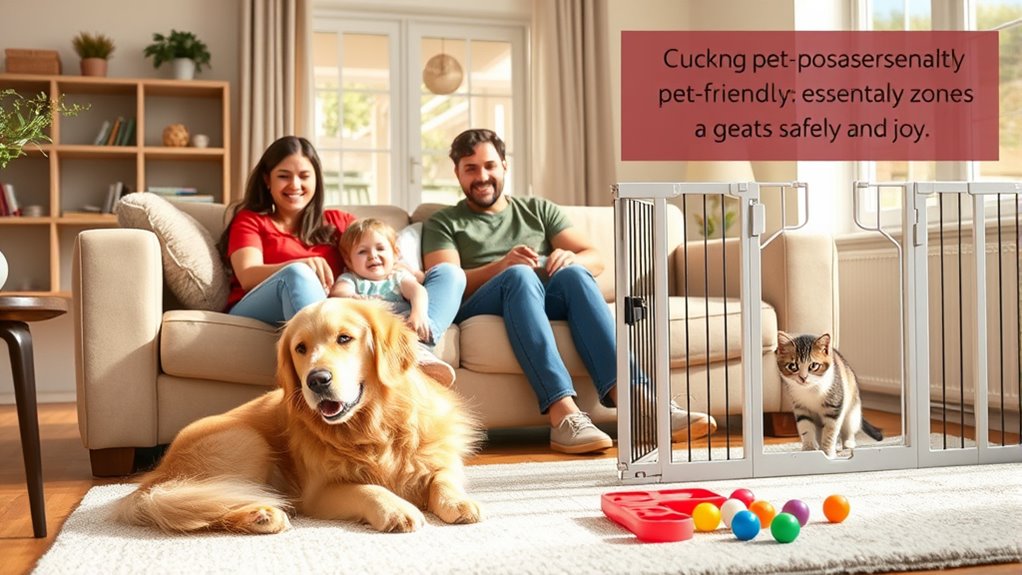

To manage your pets safely and foster companionship, establish consistent routines for feeding, grooming, and exercise to help them feel secure. Keep hazardous items out of reach, secure electrical cords, and inspect your home regularly for potential dangers. Provide a comfortable space and monitor their health with routine vet visits. Paying close attention to nutrition and grooming helps prevent health issues. Keep exploring ways to create a safe, loving environment your pets will thrive in.
Key Takeaways
- Establish a consistent routine for feeding, grooming, and exercise to promote security and well-being.
- Pet-proof your home by removing hazards, securing cords, and storing toxic substances out of reach.
- Regularly monitor pet health through vet visits and observe for signs of illness or discomfort.
- Maintain proper grooming to detect issues early and ensure comfort and hygiene.
- Provide a safe, comfortable space to foster emotional security and strengthen your bond.
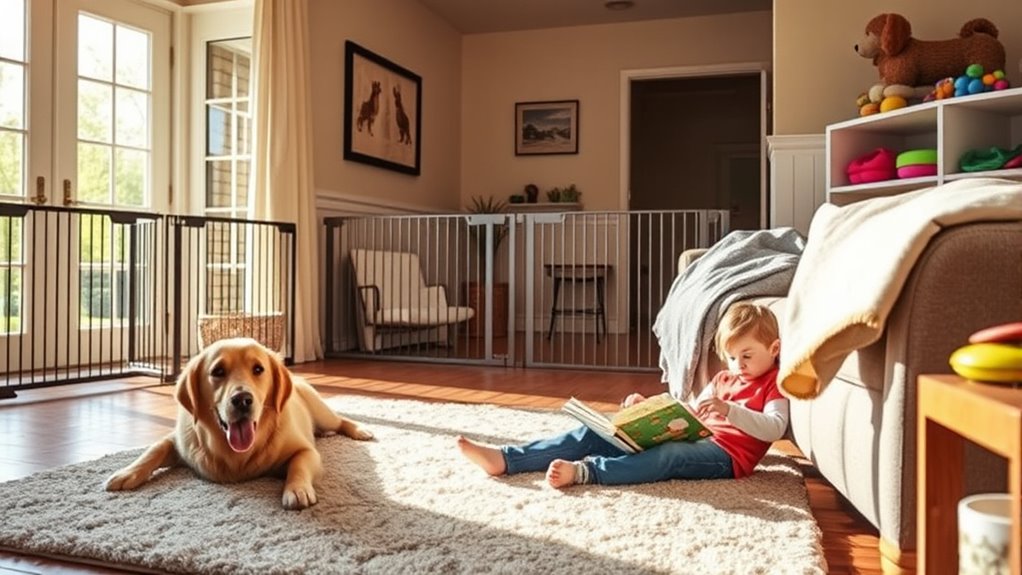
Having pets in your home can bring joy and companionship, but it also necessitates responsible management to ensure safety for everyone. One of the first steps you should take is paying close attention to pet nutrition. Providing your pets with a balanced diet isn’t just about keeping them healthy; it’s about preventing issues like obesity, digestive problems, and nutrient deficiencies. Read labels carefully and choose high-quality pet food suited to your animal’s age, breed, and health needs. Avoid giving them human food, especially toxic items like chocolate, onions, or grapes, which can cause serious health problems. Regularly consulting your veterinarian about your pet’s diet helps ensure they get the right nutrients and maintain a healthy weight.
Prioritize balanced pet nutrition and regular vet consultations to promote health and prevent common issues.
Equally important is establishing consistent grooming routines. Regular grooming isn’t just about making your pet look good—it’s essential for their health and safety. Brushing your pet’s coat removes dirt, loose fur, and parasites like fleas and ticks, reducing the risk of skin infections. Frequent grooming also helps you spot abnormalities such as lumps, wounds, or skin irritations early, so you can seek treatment promptly. For pets with longer hair, daily or weekly grooming prevents matting and keeps their coat clean and healthy. Bathing should be done as needed, using pet-specific shampoos that won’t irritate their skin. During grooming, check their ears, eyes, and teeth for signs of infection or dental issues. Keeping nails trimmed prevents discomfort and accidental scratches, especially if your pet tends to scratch furniture or people. Developing a grooming routine that fits your pet’s needs fosters a calm environment and helps prevent health issues that could compromise their safety or well-being. Additionally, being aware of Real Couples dynamics can remind us of the importance of mutual care and attentiveness in maintaining a harmonious household.
In addition to nutrition and grooming, creating a safe environment involves monitoring your pet’s interactions with household objects and other animals. Store hazardous substances like cleaning supplies, medications, and small objects out of reach. Keep electrical cords secured to prevent chewing, which could lead to electrical shock or burns. Regularly inspect your home for potential hazards and remove anything that might cause harm. Ensuring your pet has a comfortable, designated space promotes mental well-being and helps reduce stress.
Finally, maintaining a routine that includes scheduled feeding, grooming, exercise, and vet visits helps your pet feel secure and well cared for. When you stay attentive to their nutritional needs and grooming routines, you’re actively reducing health risks and fostering a safe environment. By manage these aspects diligently, you create a harmonious home where your pets can thrive alongside you, bringing ongoing joy and companionship.
Frequently Asked Questions
How Can I Train My Pet to Avoid Dangerous Household Items?
You can train your pet to avoid dangerous household items by using positive reinforcement, rewarding them when they stay away from household hazards. Consistently redirect their attention with commands like “leave it” or “no,” and provide safe alternatives. Keep hazardous items out of reach, and use deterrents if necessary. Regularly supervise your pet to reinforce pet safety, ensuring they learn which household hazards to avoid and stay safe.
What Are Signs of Stress or Anxiety in Pets at Home?
You’ll notice pet behavioral cues like pacing, pawing, excessive licking, or hiding when they’re stressed or anxious. Other signs include whining, growling, or loss of appetite. To help, observe these cues and apply stress relief techniques such as providing a quiet space, using calming scents, or offering gentle play. By recognizing their signals early, you can ease their anxiety and promote a more peaceful home environment.
How Do I Prevent My Pet From Damaging Furniture?
Think of your pet scratching as a storm that can damage furniture if unchecked. To prevent this, provide plenty of pet scratching posts and toys to redirect their energy. Use furniture protection like slipcovers or pet-proof sprays to safeguard your furniture. Regularly trim their nails, and train them with positive reinforcement. Consistency helps your pet understand what’s acceptable, keeping your furniture safe and your home peaceful.
What Are Safe Plants and Foods for Pets Indoors?
You should choose indoor plants known for their safety, like spider plants, Boston ferns, or areca palms, to guarantee indoor plant safety for your pets. When it comes to pet-friendly foods, offer safe options like cooked chicken, carrots, or blueberries, avoiding toxic foods such as chocolate, grapes, or onions. Always research and verify plant and food safety to keep your pets healthy and happy indoors.
How Can I Introduce a New Pet to Existing Household Pets?
You can make the introduction of your new pet a heartwarming success by starting with gradual introductions—think of it as easing two worlds into an exciting new chapter. Monitor initial interactions closely, watching for signs of comfort or stress. Keep the meeting short and positive, then slowly increase their time together. Patience is key; with consistent effort, your pets will soon be the best of friends, sharing love and companionship.
Conclusion
Having pets at home offers incredible companionship, but safety is key. Did you know that over 90% of pet-related injuries happen in the home? By pet-proofing your space, providing proper training, and close supervision, you create a safe environment for both your furry friends and family. Remember, a well-managed home guarantees your pets stay happy and healthy, enriching your life with their love and loyalty. Keep safety in mind, and enjoy the wonderful bond you share.