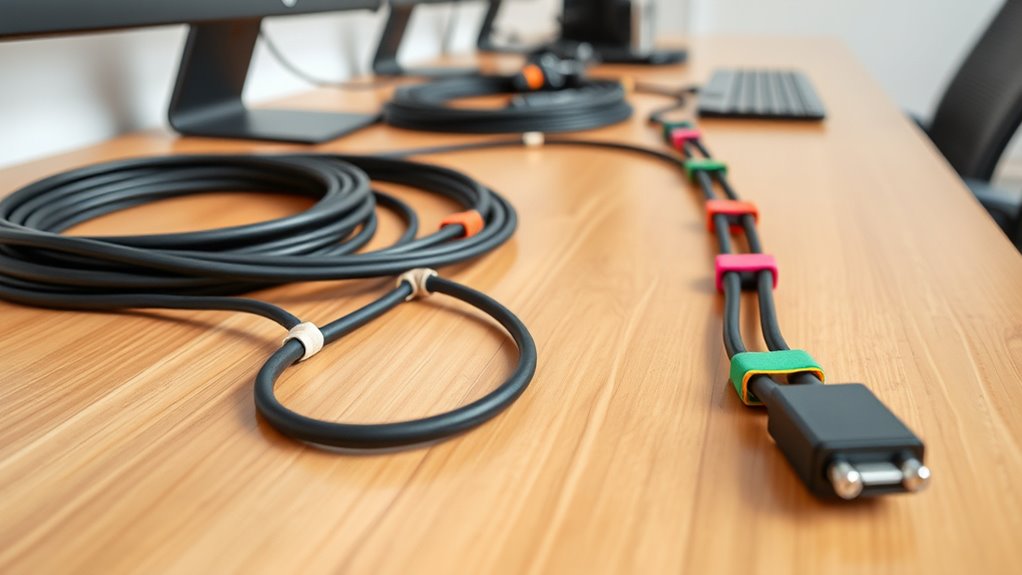

To prevent trips, start by evaluating your space and removing unnecessary cords. Use cable ties, Velcro straps, or sleeves to bundle wires neatly. Run cables behind furniture, along walls, or through conduits to hide them from view. Mount power strips on walls or under desks, and secure cords with clips or hooks. Regularly check and reorganize cables as your setup changes. Keep wires concealed and tidy—continue to explore tips that will help you create a safer environment.
Key Takeaways
- Use cable ties, Velcro straps, or clips to bundle and secure wires neatly along walls or furniture.
- Run cords behind furniture, along baseboards, or through raceways to conceal and organize them.
- Mount power strips on walls or under desks to keep cords off the floor and reduce tripping hazards.
- Regularly inspect and adjust cable arrangements to prevent tangling and ensure safety.
- Opt for wireless devices and surge protectors with multiple outlets to minimize clutter and hazards.

Have tangled cords and scattered wires ever frustrated your space? If so, you’re not alone. Cluttered wires not only look messy, but they can also pose serious safety hazards. Luckily, effective cable management can transform your environment, making it safer and more organized. The first step is understanding wire concealment—finding ways to hide or route wires out of sight. When you focus on cable management, you’re taking control of your space, reducing tripping hazards, and creating a cleaner look.
Start by evaluating your setup. Identify which cords are unnecessary or can be shortened. Use cable ties or Velcro straps to bundle wires together. Not only does this tame the chaos, but it also makes it easier to identify individual cords when needed. For longer cables, consider using cable sleeves or conduit to keep excess length hidden and prevent them from sprawling across floors. When wires are concealed behind furniture or along the edges of your walls, they become less likely to cause trips or accidental pulls.
Evaluate your setup, bundle cords, and hide excess cables for a safer, neater space.
Wire concealment is more than just hiding cords; it’s about integrating them into your space seamlessly. You can run cables behind furniture, along baseboards, or through cable raceways designed specifically for this purpose. These raceways come in various sizes and colors, allowing you to match your décor while keeping wires out of sight. Mounting power strips on the wall or under desks helps keep cords off the floor entirely. Use adhesive clips or hooks to secure cables along walls or furniture edges, preventing them from hanging loosely or snagging on objects.
Another smart tip is to use furniture with built-in cable management features. Desks with wire channels or holes make routing cords neat and accessible without cluttering the surface. For outlets, consider installing surge protectors with enough outlets to accommodate all your devices, reducing the need for multiple power strips scattered across the floor. When possible, choose wireless devices to cut down on cord clutter altogether. Additionally, choosing security cameras with better cable management options can help keep your entire setup tidy and secure.
Regular maintenance is key. Periodically check your cable management system and adjust as your setup changes. This habit prevents new cords from becoming tangled and ensures wires stay concealed and safe. Remember, the goal is to create a space where cords are neatly tucked away, reducing tripping hazards and enhancing the overall look. With thoughtful wire concealment and strategic cable management, your environment becomes safer, cleaner, and more organized—giving you peace of mind and a clutter-free space.
Frequently Asked Questions
What Are the Best Materials for Cord Covers?
The best materials for cord covers are durable, flexible options like rubber, thermoplastic, or silicone. These protective cord materials provide flexibility and strength, making them ideal for cable management accessories. They can withstand foot traffic and prevent tripping hazards. Look for cord covers with a sturdy surface that can handle wear and tear, ensuring safety and organization. Using these materials keeps your cords secure and reduces trip risks effectively.
How Do I Hide Cords Behind Furniture Effectively?
You can hide cords behind furniture easily by following simple cable management tips and furniture concealment strategies. Start by running cords along the back edges of your furniture, securing them with clips or adhesive cable sleeves. Tuck excess wiring behind the piece, keeping it out of sight and out of harm’s way. This way, you’re killing two birds with one stone — preventing trips while maintaining a clean, clutter-free look.
Are There Eco-Friendly Cord Organizing Solutions?
Yes, you can find eco-friendly cord organizing solutions. Look for biodegradable sleeves that wrap around cords, reducing plastic waste. You can also participate in cord recycling programs to properly dispose of old or damaged cords. These options help you organize safely while minimizing environmental impact, giving you peace of mind knowing you’re making sustainable choices. By combining biodegradable sleeves and cord recycling, you’re supporting a greener lifestyle.
How Often Should I Inspect My Cords for Damage?
You should inspect your cords for damage at least once a month to guarantee cord safety. Regular inspection frequency helps you catch frayed wires, cracks, or exposed conductors early, preventing potential hazards. If you notice any damage, replace or repair the cords immediately. Staying vigilant with your inspection routine keeps your environment safer and reduces the risk of electrical accidents, ensuring your cords remain in good condition over time.
Can Wireless Alternatives Reduce Wire Clutter?
Wireless alternatives can substantially reduce cord clutter, making your space safer and more organized. By switching to wireless devices like keyboards, mice, and chargers, you eliminate many cables, which helps prevent trips and tangles. This not only streamlines your workspace but also makes cleaning easier. While they might require initial investment, wireless options are a smart way to keep your environment tidy and free of unnecessary cord clutter.
Conclusion
Keeping cords organized is like tending a garden; when everything’s in its place, your space blooms with safety and ease. I once tripped over a tangled mess of wires and ended up with a bruised knee—an unwelcome reminder of what clutter can cause. By taking a few minutes to tame those cords, you create a safer, more inviting environment. Think of it as planting seeds for a clutter-free, trip-free home that’s ready to thrive.