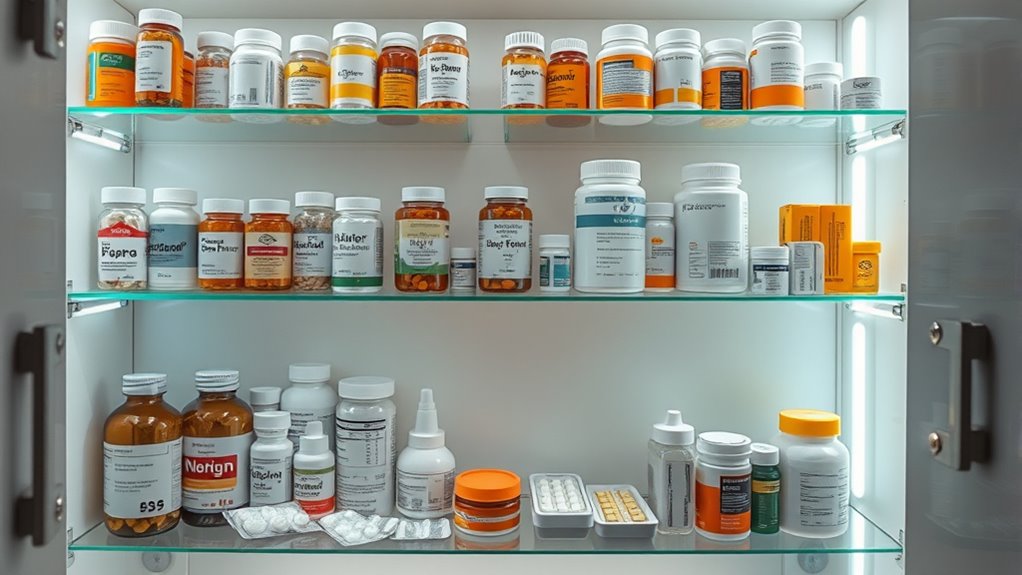

To organize your medications safely and securely, start by storing them in a cool, dry place away from moisture and heat, using cabinets or lockable containers. Label each medication clearly with the name, dosage, and expiration date, and consider using pill organizers for daily routines. Keep everything out of children’s reach with high shelves or locking boxes. Regularly check for expired drugs and dispose of them properly. Keep your system simple and consistent—more tips to help you stay organized await you.
Key Takeaways
- Store medications in a cool, dry place away from moisture, heat, and direct sunlight.
- Use childproof containers and high shelves to prevent accidental access by children.
- Label medicines clearly with name, dosage, and expiration date; update labels after refills.
- Organize medicines by usage frequency using pill organizers or dedicated storage areas.
- Regularly review and discard expired or unused medications to maintain safety and security.

Have you ever struggled to find the right medication when you need it most? That feeling of frustration can be avoided with a solid system for organizing your medicines. The first step is understanding the significance of proper pill storage and medication labeling. When you store pills correctly, you prevent accidental misuse and ensure your medicines stay effective longer. Clear, dedicated pill storage keeps your medications organized and easy to access, especially when you’re in a rush or caring for someone else. Using a labeled container or a designated drawer helps you quickly identify each medication without rummaging through clutter. Labeling is essential; it’s your safeguard against taking the wrong pill or dosage. Every container should have the medication’s name, dosage instructions, and expiration date clearly marked. This minimizes mistakes, especially if multiple medicines look similar. Make sure labels are legible and resistant to smudges or water, so they stay intact over time. When you set up your storage, consider dividing your medications into categories—such as daily essentials, as-needed medicines, or supplements—and store them accordingly. Keep frequently used pills within easy reach, but store less-used items in a secure, perhaps less accessible spot to avoid accidental ingestion. Temperature and humidity matter too; avoid placing medicines in bathrooms or near windows where they can be exposed to moisture or heat. Instead, choose a cool, dry place like a cabinet or a dedicated medication box. Childproofing your storage is vital if you have kids in the house. Use locking containers or high shelves to prevent accidental access. Regularly check expiration dates and discard expired medications properly. This keeps your collection safe and effective. When you refill prescriptions, update your labels immediately to reflect the new supply, so you’re never confused about what you’re taking. Consider using a pill organizer for daily doses, which can further streamline your routine and prevent missed doses. Consistency is key—by establishing a dedicated storage area with clear labels, you create a reliable system that reduces stress and errors. Taking just a few moments to organize and label your medications properly can make a significant difference in how safely and efficiently you manage your health. Remember, the goal is to keep everything accessible, understandable, and secure. Proper medication labeling enhances safety and helps prevent mistakes. With proper pill storage and precise medication labeling, you’re not only protecting yourself but also making your medication routine more straightforward and less prone to mistakes. It’s a simple step that offers peace of mind and ensures your medications work as intended when you need them most.
Frequently Asked Questions
How Often Should Medications Be Reviewed for Safety?
You should review your medications for safety at least every six months, or more often if your health changes. During these reviews, focus on medication adherence and discuss any concerns with your healthcare provider. Regular pharmacy consultations help guarantee your medications are still appropriate and safe. Staying proactive about these reviews reduces risks, improves effectiveness, and keeps you informed about any new side effects or interactions.
What Is the Best Way to Dispose of Expired Drugs?
To properly dispose of expired drugs, you should participate in medication take-back programs or follow local disposal guidelines. Proper disposal involves avoiding flushing medications down the toilet or throwing them in the trash, which can harm the environment. You can also use designated disposal containers at pharmacies or community collection events. Always check for specific instructions on medication labels or consult local authorities to guarantee safe, effective disposal.
How Can I Prevent Children From Accessing Medications?
You can prevent children from accessing medications by using childproof locks on your medication cabinets. Always keep medicines in their original containers, and store them high up or in a locked cabinet out of your child’s reach. Educate your children about the dangers of medications, and never leave pills unattended. Regularly check your storage areas to guarantee no medications are accessible, and teach your kids to ask an adult if they’re unsure.
Are There Specific Storage Conditions for Temperature-Sensitive Medicines?
You should store temperature-sensitive medicines in a cool, stable environment, ideally between 68-77°F (20-25°C). Use airtight storage containers to protect them from moisture and light, which can degrade their effectiveness. Avoid places like bathrooms or near windows. Regularly check the storage conditions with a thermometer, and follow any specific storage instructions on the label to guarantee medication efficacy and safety.
How Do I Identify Counterfeit or Tampered Medications?
Detecting counterfeit or tampered medications is like spotting a needle in a haystack, but it’s essential. You should compare labels for inconsistencies, check for unusual packaging, and verify holograms or security features. Look for tampering signs such as broken seals, discoloration, or strange odors. Always buy from reputable sources, and if anything seems off, consult a pharmacist. Staying vigilant helps protect your health from counterfeit detection risks.
Conclusion
By keeping your medications organized and secure, you create a fortress that shields your health from chaos and danger. Think of your medicine cabinet as a well-tuned orchestra, where each item plays its part in harmony. When you stay vigilant and systematic, you prevent accidents and guarantee you’re always ready when health issues arise. Remember, a little order today keeps confusion—and emergencies—at bay tomorrow. Your well-organized medications are the key to peace of mind.