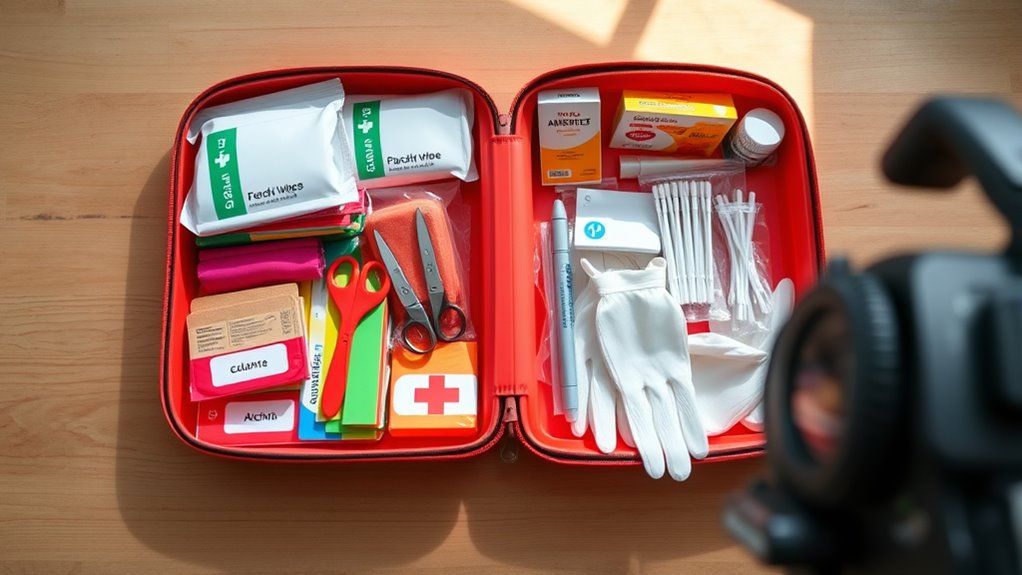

To prepare a home first aid kit for emergencies, gather essential supplies like bandages, antiseptics, pain relievers, and allergy medications, and organize them in a waterproof container. Include important documents such as emergency contacts and medical info, keeping them easily accessible. Regularly check expiration dates and restock supplies as needed. Proper organization and readiness can make all the difference—if you want to learn more tips on creating a detailed kit, keep exploring.
Key Takeaways
- Include essential supplies like bandages, antiseptics, pain relievers, and allergy medications for quick access.
- Organize medications and supplies in labeled, waterproof containers for easy identification during emergencies.
- Prepare a comprehensive emergency contact list with local services, healthcare providers, and family contacts.
- Regularly check and restock the kit, replacing expired medications and updating contact information.
- Store the kit in a visible, accessible location to ensure prompt response during emergencies.

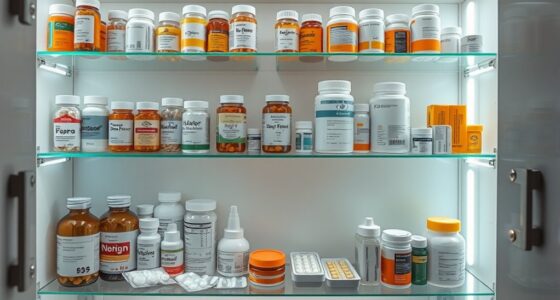
Having a well-stocked home first aid kit is essential because accidents can happen anytime, and being prepared guarantees you’re ready to respond quickly. One of the most important steps in assembling your kit is ensuring that you have a clear plan for medication management. This means organizing any prescription medications, over-the-counter drugs, and supplements your household may need. Keep these items in a designated, easily accessible container, and regularly check expiration dates to prevent using expired medicines. Including a small supply of pain relievers, antihistamines, and antacids can help address common issues until professional help arrives. If someone in your home has specific medical conditions, such as allergies or asthma, make sure their medications are prominently stored and easy to find. Labeling medication containers can also streamline treatment during stressful situations, ensuring you administer the right drug at the right time.
Another critical component is an up-to-date emergency contact list. You should keep a printed copy in your first aid kit and consider saving digital copies on your phone for quick access. Your list should include emergency services like police, fire department, and ambulance. Additionally, include contacts for your primary care physician, local poison control center, and any specialists relevant to your household members’ health needs. Don’t forget to add the contact information of nearby friends, family members, or neighbors who can assist or provide support if needed. Having these contacts readily available helps you act swiftly and confidently, even if you’re under stress. It’s also wise to review and update this list periodically—especially after moving or if someone’s health situation changes.
When preparing your first aid kit, ensure that these documents and medications are stored in a waterproof, easy-to-reach container. This way, during an emergency, you won’t waste precious time searching for vital information or medications. Remember to keep your medication management system simple and organized; the more straightforward it is, the faster you’ll be able to respond. Regularly reviewing your kit, checking expiration dates, updating contact information, and restocking supplies ensures that your kit remains effective and ready for any emergency. A well-maintained first aid kit with organized medications and an accessible emergency contact list provides peace of mind, knowing you’re prepared to handle unexpected incidents calmly and confidently.
Frequently Asked Questions
How Often Should I Update My First Aid Kit?
You should update your first aid kit at least once a year to ensure kit maintenance and check expiration dates on medications and supplies. Regularly review your kit after any use or if you notice items are damaged or expired. This keeps your supplies effective and ready for emergencies. Remember, keeping your first aid kit current and well-maintained is vital for providing timely help when needed.
What Are Common Mistakes to Avoid When Assembling a Kit?
Avoid common oversights like overlooking essential supplies or including incorrect supplies. Double-check expiration dates and avoid packing expired items, which can be ineffective. Don’t omit vital items like bandages, antiseptics, or gloves. Also, resist the urge to overstock with unnecessary gadgets. Keep your kit simple, specific, and well-stocked. Regularly review and replace supplies to prevent pitfalls like missing or outdated essentials, ensuring your kit’s preparedness for any predicament.
Are There Special Supplies Needed for Children’s Emergencies?
Yes, you should include child-proof supplies and pediatric medications in your first aid kit. Child-proof supplies like safety scissors, smaller bandages, and age-appropriate antiseptics help prevent accidents. Pediatric medications such as liquid pain relievers or antihistamines are essential for treating common childhood emergencies. Always check expiration dates and store these supplies safely out of children’s reach, ensuring you’re prepared for any child-related emergency that may occur at home.
How Do I Customize a Kit for Specific Health Conditions?
You should customize your first aid kit based on personal health considerations and injury-specific supplies. Consider any medical conditions you or family members have, like allergies or chronic illnesses, and include necessary medications. Add items tailored to common injuries, such as splints for fractures or burn ointments for burns. Regularly review and update your kit, ensuring all supplies are current and appropriate for your unique health needs.
What Should I Do if a Necessary Item Is Unavailable?
When a necessary item isn’t available, think of it as a puzzle missing a piece—you need to find alternative supplies or emergency substitutes. You can use items like clean cloths instead of gauze or saline solution instead of specialized cleansers. Be resourceful and adapt quickly, just like a seasoned sailor steering stormy seas. Always keep a list of alternatives handy, so you’re prepared for any unexpected shortages.
Conclusion
By assembling a well-stocked first aid kit, you’re turning your home into a fortress against emergencies—something even a superhero would envy. Remember, the unexpected can strike at any moment, but with the right supplies, you’ll be prepared to handle anything that comes your way. Don’t wait until disaster hits; take action now and ensure your loved ones are protected. A small effort today can save lives tomorrow—your peace of mind is worth it.