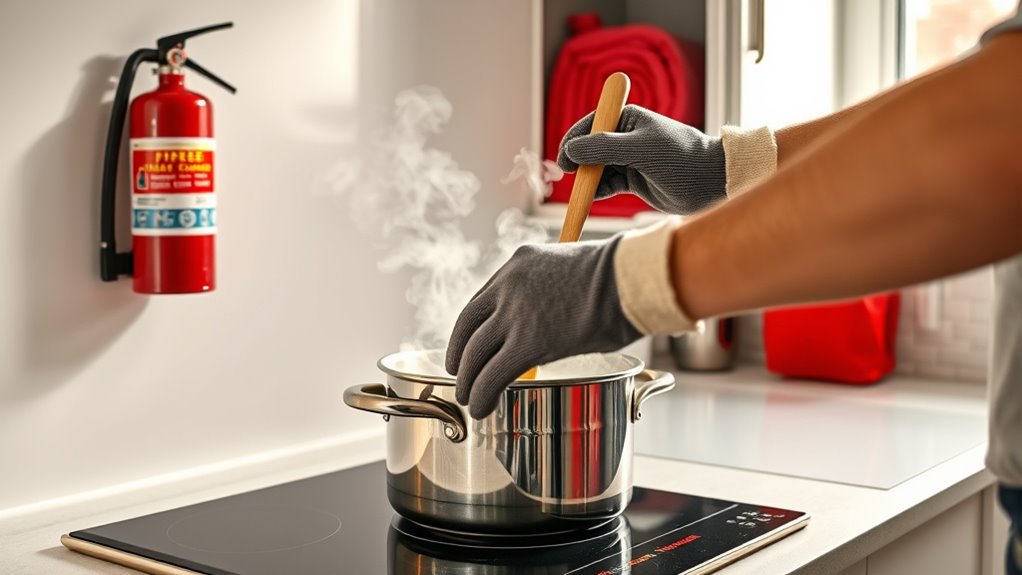

To avoid burns and fires in your kitchen, stay attentive while cooking and never leave food unattended on the stove. Keep flammable items away from heat sources, and turn pot handles inward to prevent spills. Use the right-sized burners and handle knives carefully, keeping fingers tucked away. Clean spills immediately and stay organized to prevent accidents. Regularly check safety devices like smoke alarms and fire extinguishers. Continue exploring these practical tips to keep your kitchen safe.
Key Takeaways
- Stay attentive and never leave cooking food unattended on the stove to prevent fires and burns.
- Keep flammable materials away from heat sources, and turn pot handles inward to avoid accidental spills.
- Use oven mitts or potholders when handling hot cookware to prevent burns.
- Turn off burners immediately after cooking and ensure all appliances are unplugged when not in use.
- Install and regularly test smoke alarms, and keep a fire extinguisher accessible in case of emergencies.
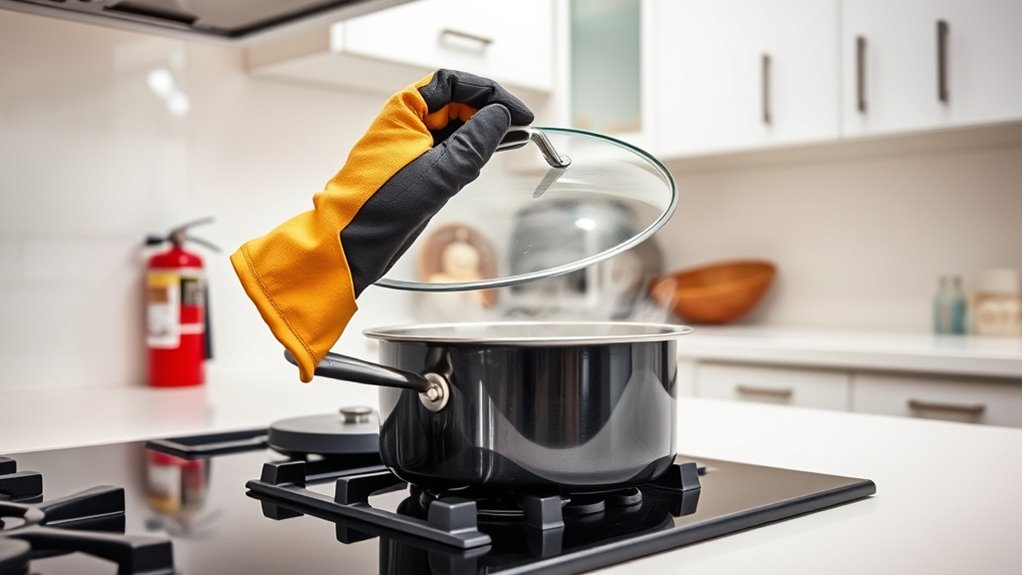
A safe kitchen is the heart of a healthy home, and practicing proper safety measures can prevent accidents and foodborne illnesses. When it comes to avoiding burns and fires, your awareness and habits play a crucial role. One of the most important safety practices involves knife safety. Sharp knives are safer than dull ones because they require less force and are less likely to slip. Always use a stable cutting surface and grip the knife properly, keeping your fingers tucked in and away from the blade. When chopping or slicing, maintain focus and avoid distractions. Store knives securely in a designated knife block or on magnetic strips, so they’re easy to access but out of reach of children. Never try to catch a falling knife; instead, step back and let it fall. Proper knife handling not only prevents cuts but also keeps your workflow smooth and safe, reducing the risk of accidents when preparing food. Incorporating sound safety habits like these can significantly reduce kitchen accidents and ensure a safer cooking environment.
Fire prevention is equally essential to maintaining a safe kitchen environment. Always stay attentive when cooking on the stove, and never leave pots or pans unattended, especially when frying or boiling. Keep flammable items like dish towels, paper towels, and loose clothing away from burners. Using the right-sized burner for your cookware helps prevent overheating and reduces fire hazards. Turn pot handles inward so they don’t extend over the edge of the stove, where they can be accidentally knocked over. Keep a fire extinguisher nearby and know how to use it in case of an emergency. If a grease fire starts, never try to extinguish it with water; instead, turn off the heat and cover the flames with a metal lid or a baking sheet to smother the fire. Install smoke alarms in and around the kitchen, testing them regularly to guarantee they’re working properly.
In addition to these precautions, always keep the kitchen clean and clutter-free. Clear away spills immediately to prevent slips and burns, and regularly check that electrical cords are in good condition and away from water sources. Proper ventilation, like using an exhaust fan or opening windows, helps dissipate smoke and fumes, reducing the risk of inhalation hazards. By practicing good knife safety and fire prevention techniques, you create a safer cooking environment that protects you and your loved ones from preventable accidents. These habits might seem small, but they considerably lower the chances of injuries and guarantee your kitchen remains a secure space for preparing nutritious meals.
Frequently Asked Questions
How Can I Prevent Grease Fires in My Kitchen?
To prevent grease fires, stay attentive while cooking and never leave hot oil unattended. Keep a fire extinguisher nearby and know grease fire safety techniques, like smothering flames with a metal lid or baking soda—never water. Practice kitchen fire prevention by maintaining clean stovetops, avoiding excess oil, and monitoring heat levels. These steps help you guarantee fire risk and ensure safe cooking environments.
What Should I Do if a Fire Starts on the Stove?
A fire on your stove can feel like an inferno, but stay calm and act fast. Turn off the heat immediately and grab the right fire extinguisher—preferably a Class K or multipurpose ABC. Never use water on grease fires, as it makes things worse. If the fire won’t go out quickly, evacuate immediately and call emergency services. Always have an emergency evacuation plan ready to keep everyone safe.
Are Cordless Electric Knives Safer to Use?
Cordless electric knives are generally safer to use because they eliminate the risk of electrical cords catching on things or causing tripping hazards. Their cordless design offers greater mobility and control, reducing the chance of accidental cuts or injuries. For electric knife safety, always handle the blade carefully, keep it away from children, and follow manufacturer instructions. The cordless knife’s advantages include convenience and decreased risk of electrical accidents, making it a safer choice overall.
How Often Should I Check Kitchen Smoke Detectors?
Think of your smoke detectors as silent guardians in your kitchen. You should check your smoke detector maintenance monthly and conduct thorough kitchen safety checks at least once a year. Regular testing guarantees they’re working when you need them most, acting like a vigilant watchdog. If the alarm sounds or the batteries are low, replace them immediately. Keeping these safety devices in top shape helps protect your home and loved ones from fire hazards.
What Are the Best Fire-Resistant Materials for Kitchen Countertops?
You should choose fire-resistant surfaces like granite, quartz, or concrete for your kitchen countertops. These materials offer excellent countertop safety by resisting heat and reducing fire risks. Granite is naturally fire-resistant, while quartz and concrete are engineered to withstand high temperatures. When selecting materials, prioritize those with high heat tolerance to ensure your kitchen remains safe and durable, especially around stove areas and open flames.
Conclusion
By following these safe kitchen practices, you turn your cooking space into a fortress against burns and fires. Remember, safety isn’t just a choice—it’s a shield protecting you and your loved ones. Don’t let carelessness be the silent thief of safety; instead, be the vigilant guardian of your kitchen. With mindful habits, you hold the power to prevent accidents—because a safe kitchen is a happy kitchen, where everyone can enjoy their culinary adventures without fear.