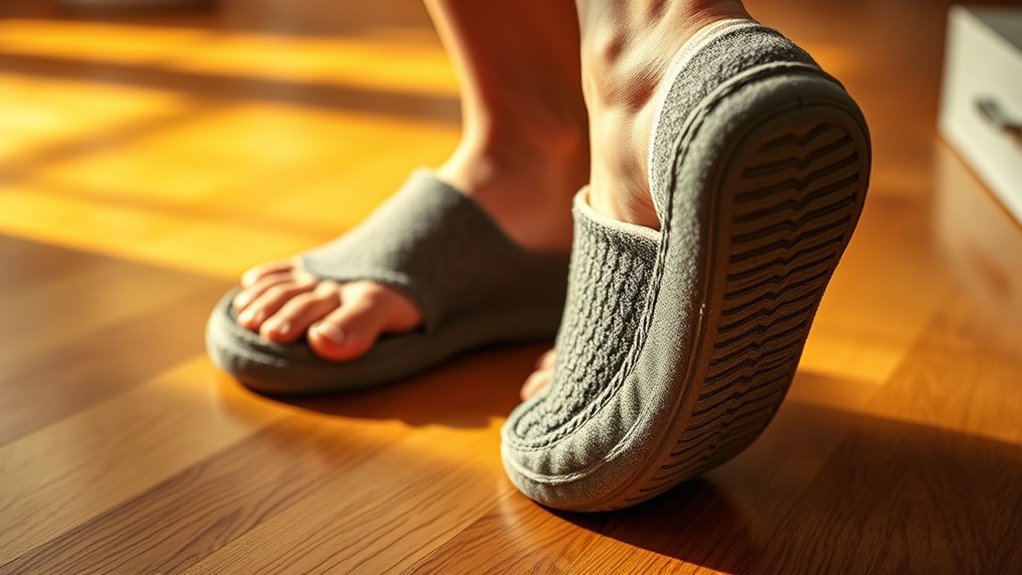

To select proper footwear for home safety, look for shoes with slip-resistant soles and supportive arches that help prevent slips and provide stability. Make certain they fit well without being too tight or loose, and choose styles with deep tread patterns for better grip on slippery surfaces. Closed-toe designs protect your toes, while good arch support reduces fatigue and improves balance. If you keep these tips in mind, you’ll be able to find footwear that keeps you safe around the house—and there’s more to consider!
Key Takeaways
- Choose shoes with slip-resistant soles and deep, multidirectional tread patterns for maximum grip on slick surfaces.
- Ensure footwear provides supportive arches to promote proper body alignment and reduce fatigue.
- Select well-fitting shoes that are neither too tight nor too loose to prevent slips and improve stability.
- Opt for closed-toe designs to protect against falling objects and accidental bumps at home.
- Prioritize comfort, stability, and support to enhance safety during everyday activities around the house.
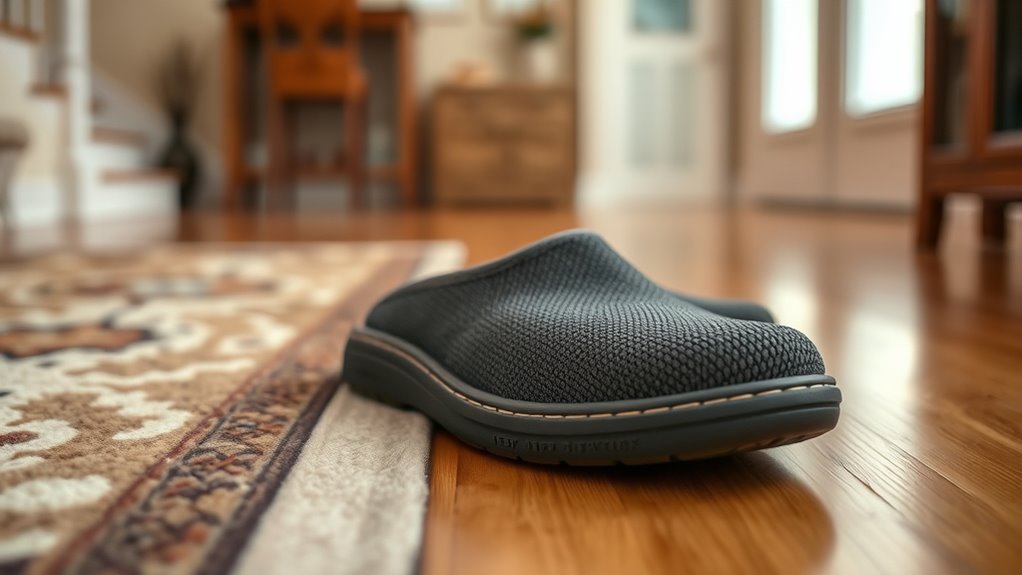
Choosing the right footwear is essential for maintaining safety around your home. When you walk barefoot or wear shoes without proper grip, you’re more vulnerable to slips and falls, especially on smooth or uneven surfaces. That’s why prioritizing footwear with slip resistant soles can make a significant difference. These soles are designed with special rubber compounds and tread patterns that grip the floor better, reducing the risk of slipping on wet, polished, or slick surfaces. Whether you’re moving across tiled kitchens, slippery bathroom floors, or hardwood hallways, footwear with slip resistant soles provides the stability you need to navigate safely.
In addition to slip resistance, paying attention to the supportive arch design of your shoes is equally important. Proper arch support helps maintain correct alignment and reduces fatigue, especially if you spend a lot of time on your feet. Shoes with a supportive arch design distribute your body weight evenly, alleviating stress on your ankles, knees, and lower back. This extra support not only improves comfort but also minimizes the chances of twisting an ankle or developing foot pain. When your footwear properly supports your arches, you’re less likely to lose balance or stumble, which is vital for preventing accidents around the house.
Choosing footwear that combines slip resistant soles with a supportive arch design creates a safer environment for you and your family. Look for shoes that fit well—not too tight or loose—as ill-fitting shoes can cause blisters or impair your balance. Also, consider opting for shoes with a closed-toe design for added protection against falling objects or accidental bumps. When shopping for house shoes or everyday sneakers, check the tread pattern for deep, multidirectional grooves that enhance grip, and verify that the shoe offers good arch support through a firm, contoured insole. If you have specific foot conditions or balance concerns, orthotic inserts can further improve support and safety.
Frequently Asked Questions
How Often Should I Replace My Home Footwear for Safety?
You should replace your home footwear every 6 to 12 months to maintain safety. Regular shoe maintenance and footwear hygiene help extend their lifespan, but worn-out shoes lose support and grip, increasing fall risk. Keep an eye out for worn soles, torn material, or decreased cushioning, and replace your shoes promptly. Doing so guarantees proper foot support, reduces injury risk, and keeps your home safe.
Are There Specific Materials Best for Slip-Resistant Shoes?
A wise person once said, “Better safe than sorry.” For slip-resistant shoes, look for non-slip soles made of rubber outsoles, which provide excellent grip on slick surfaces. Rubber is flexible, durable, and offers superior traction, making it ideal for home safety. When choosing footwear, prioritize these materials to prevent slips and falls, ensuring your home remains a safe haven.
Can Barefoot Walking Be Safe at Home?
Barefoot walking can be safe at home if you prioritize barefoot comfort and guarantee your flooring is slip-resistant. When your floors are smooth or slick, going barefoot might increase the risk of slips and falls. To maintain home safety, consider barefoot walking on carpeted areas or use non-slip rugs in high-traffic zones. Always assess your environment to balance barefoot comfort with safety effectively.
What Footwear Features Prevent Tripping Hazards?
To prevent tripping hazards, choose footwear with non-slip soles and a sturdy grip. These features help you stay stable on smooth or wet surfaces, reducing the risk of slips. Look for shoes with textured soles that provide traction, and verify they fit well so your feet don’t slide inside. Proper footwear with these features keeps you safer around the house, especially on slippery or uneven floors.
How Do I Choose Shoes for Different Household Tasks?
When choosing shoes for different household tasks, focus on slip prevention and arch support. For tasks that involve standing or moving around, pick footwear with a non-slip sole to prevent falls. Opt for shoes with good arch support to reduce fatigue and provide stability. For delicate tasks or when working on uneven surfaces, select shoes that fit well and offer grip. Remember, comfortable, supportive footwear helps you stay safe during any household activity.
Conclusion
Choosing the right footwear keeps you safe around the house. Remember, “A stitch in time saves nine,” so invest in supportive, non-slip shoes now to prevent falls and injuries later. Your comfort and safety depend on your choices, so don’t overlook the importance of proper footwear. By making smart decisions today, you’ll create a safer, more confident home environment tomorrow. Stay vigilant, and walk wisely — because safety starts from the ground up.