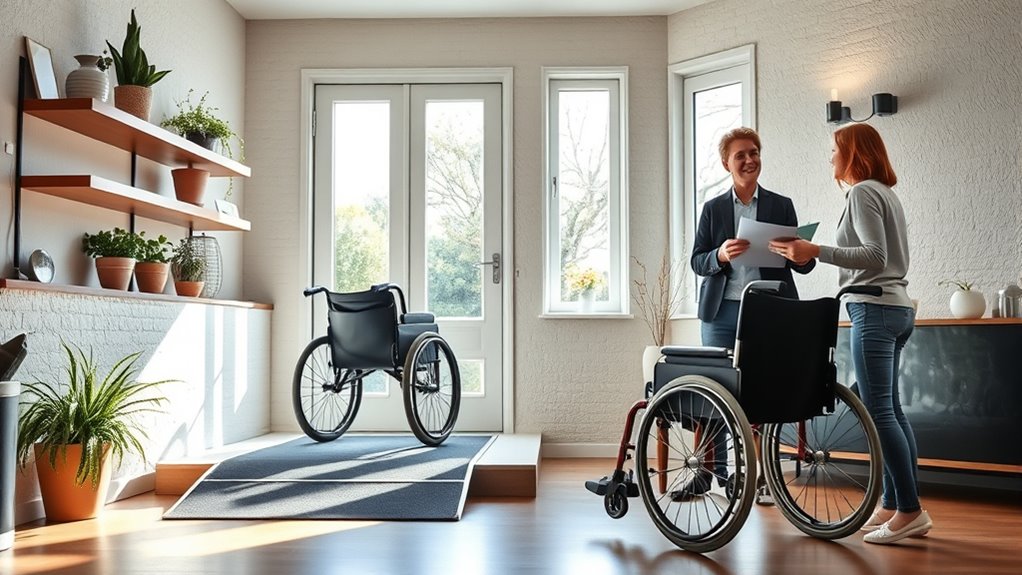

Understanding insurance options for home modifications is essential to making accessibility upgrades more affordable. Your health or disability insurance may cover things like ramps, grab bars, or stairlifts if you provide medical documentation. It’s important to review your policy details, contact your insurer, and keep receipts and estimates for claims. Additionally, explore government programs and private policies with riders for extra support. Keep exploring these options to find the best way to fund your necessary home improvements.
Key Takeaways
- Review your insurance policy carefully to identify coverage for home modifications and confirm any limitations or exclusions.
- Contact your insurer directly to clarify coverage options, required documentation, and process for claims related to modifications.
- Obtain medical necessity documentation from healthcare providers to strengthen reimbursement claims for accessibility upgrades.
- Keep detailed records, including receipts and estimates, to support claims and ensure smooth processing of reimbursement requests.
- Explore government programs, grants, and specialized insurance riders that may offer additional funding or coverage for home modifications.
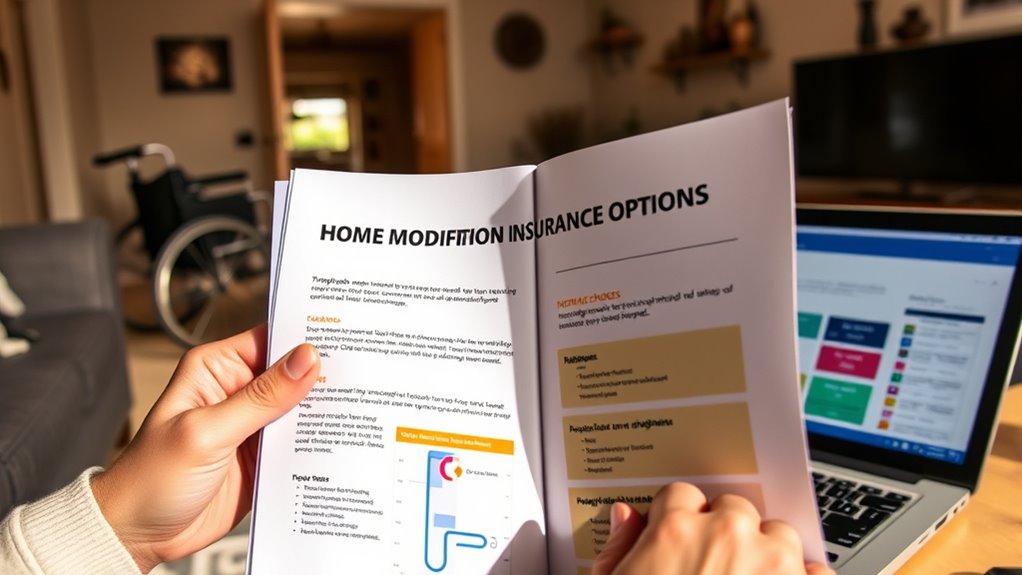
If you’re considering home modifications to improve accessibility or safety, understanding your insurance options can make the process more affordable. Many people overlook the potential coverage available for assistive devices and accessibility upgrades that can markedly enhance quality of life. Knowing what your insurance can cover helps you plan effectively and avoid unexpected expenses. Insurance policies vary widely, but some do include provisions for home modifications, especially when these changes are necessary due to medical conditions or disabilities. For example, certain health insurance plans or supplemental policies may reimburse you for installing ramps, grab bars, widened doorways, or stairlifts—things that fall under accessibility upgrades.
It’s essential to review your policy carefully and speak directly with your insurer to clarify what modifications are eligible for coverage. In some cases, you’ll need to submit documentation from your healthcare provider explaining why the modifications are medically necessary. This documentation can strengthen your case for reimbursement or partial coverage. Keep track of all receipts, estimates, and correspondence related to the modifications, as these can be helpful if you need to file a claim or appeal a decision. Some insurers may have specific requirements or limits on coverage, so understanding these details upfront saves you time and frustration later. Additionally, understanding your insurance policy coverage can help you identify additional benefits or exclusions related to home modifications.
In addition to health insurance, you might explore options through government programs or grants that support accessibility upgrades. Programs such as the Department of Veterans Affairs or local housing authorities often have funding available for assistive devices and home modifications for eligible individuals. These resources can considerably reduce out-of-pocket costs. Also, some private insurance policies, especially those designed for seniors or individuals with disabilities, may include riders or add-ons covering home modifications. It’s worth asking your agent about these options or considering a policy upgrade if accessible living is a priority.
Frequently Asked Questions
Do All Insurance Plans Cover Home Modifications Automatically?
No, not all insurance plans cover home modifications automatically. Coverage requirements vary depending on your policy and insurer, and many plans have specific limitations or exclusions. You need to review your policy details carefully and speak with your provider to understand what’s included. Sometimes, home modifications are only covered if they’re medically necessary or fall within certain policy limitations, so don’t assume they’re automatically covered.
How Can I Prove the Necessity of Home Modifications to My Insurer?
You can verify medical necessity by providing detailed documentation from healthcare professionals that clearly explain why the modifications are essential for your health and safety. Contrast this with generic requests—an expert evaluation offers concrete evidence, making your case stronger. Obtain a letter from your doctor or specialist, including specific recommendations, and guarantee it highlights how these modifications will directly improve your condition and daily living.
Are There Specific Insurance Providers Known for Better Coverage of Modifications?
Some specialized insurers are known for better modification coverage, especially tailored for home modifications. You should research providers that focus on adaptive living needs, as they often offer extensive policies that include modification coverage. Contact these insurers directly to ask about their policies, and compare their offerings to find one that best suits your needs. This way, you’ll guarantee your home modifications are adequately protected and financially covered.
What Documentation Is Required for Filing a Home Modification Claim?
Imagine you’re upgrading your home for accessibility. To file a claim, you’ll need documentation requirements like detailed invoices, photos of the modifications, and a doctor’s note if applicable. The claim submission process involves gathering these documents, filling out the insurance form accurately, and submitting everything promptly. Make sure to retain copies of all records, as they’ll support your case and help ensure a smooth claim process.
How Long Does It Typically Take for Insurance Approval and Reimbursement?
Approval process durations vary, but it usually takes between two to four weeks for insurance to approve your home modification claim. Reimbursement timelines depend on your insurer, often taking another two to four weeks after approval. To speed things up, guarantee you submit all required documentation promptly and follow up regularly. Keep in mind, some insurers may process claims faster, so check with your provider for specific timelines.
Conclusion
Don’t assume insurance won’t cover your home modifications; many policies do, especially for safety or mobility needs. It’s worth checking with your provider before investing. While it may seem complicated or expensive, understanding your options can save you money and improve your quality of life. Remember, proactive steps today can prevent costly repairs tomorrow. So, explore your coverage—you might be surprised at what’s available to help you create a safer, more accessible home.