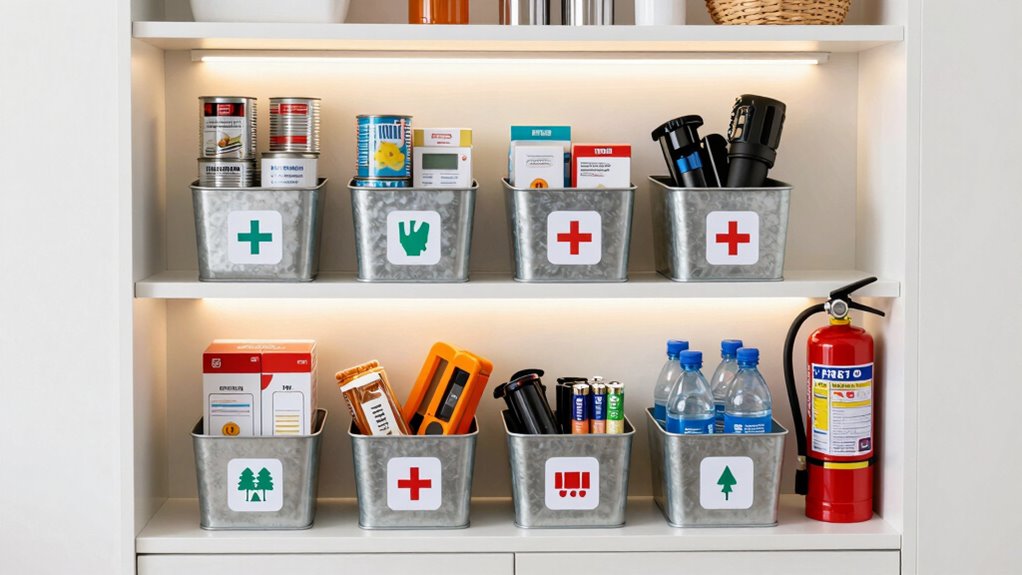

To build a better emergency prep shelf, start with long-lasting, nutritious non-perishable foods and regularly rotate them with clear labels. Keep essential first aid supplies, medications, and caregiving items in easy-to-access containers nearby. Store flashlights, batteries, important documents, and hygiene products in waterproof, organized spots for quick retrieval. Stay mindful of sustainable and environmentally friendly choices, and routinely review your supplies to guarantee everything remains in top condition. For more tips, explore proven strategies to enhance your emergency preparedness.
Open a free Amazon Business account
Business pricing, bulk buying and tax-exempt orders.
As an affiliate, we earn on qualifying purchases.
Key Takeaways
- Prioritize long-lasting, nutritious non-perishable foods and clearly label all items with purchase and expiration dates.
- Organize supplies with urgent items at the front for quick access, ensuring easy visibility and retrieval.
- Include essential first aid and medication supplies, periodically reviewing and replacing expired items.
- Store important documents and printed emergency plans in waterproof, accessible containers nearby.
- Regularly check, maintain, and update your prep shelf to ensure all supplies are functional and current.
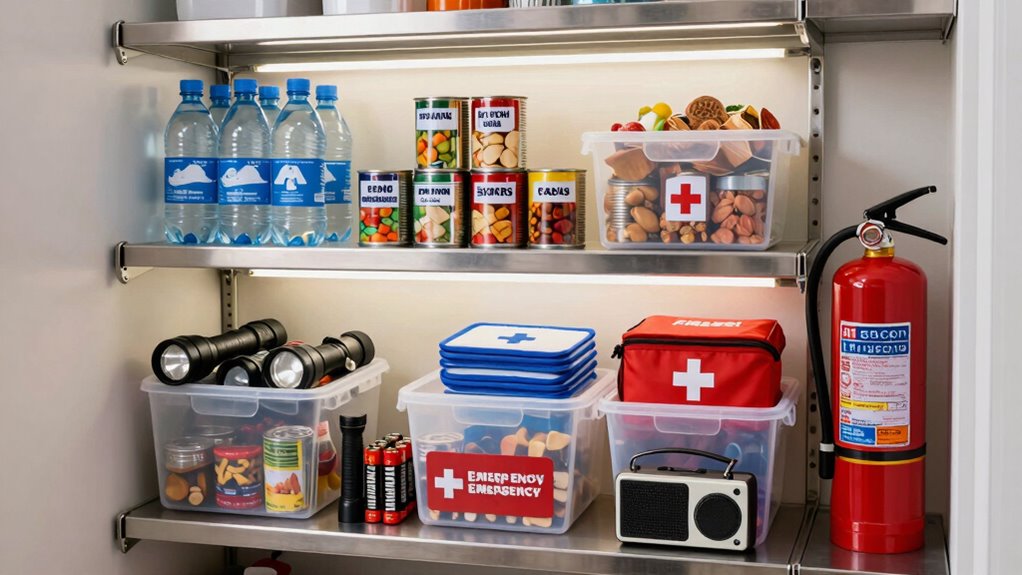
Have you ever considered how prepared you are for unexpected emergencies? Building a better emergency prep shelf is a crucial step in ensuring you’re ready for anything. It’s more than just stacking cans and bottles; it’s about creating a well-organized, accessible, and thorough resource that can support you and your loved ones during a crisis. Starting with food storage, you want to focus on non-perishable items that provide balanced nutrition and have a long shelf life. Think canned goods, dried grains, and freeze-dried meals. Rotate your stock regularly so nothing expires unnoticed. Label everything clearly with purchase and expiration dates, and keep a list of contents somewhere visible for quick reference. Consider including a manual can opener and utensils so you can access your food easily when needed.
Prepare your emergency shelf with organized, long-lasting, balanced foods like canned goods and dried grains for peace of mind.
Next, prioritize assembling a well-stocked first aid kit. Basic supplies like bandages, antiseptic wipes, adhesive tape, scissors, and gloves should be readily available. Think about any specific needs you or your family might have, such as medications, allergy remedies, or supplies for infants and pets. It’s wise to refresh your first aid kit periodically, replacing expired items and adding new supplies as necessary. Keep your first aid kit in a dedicated, easily accessible container, ideally near your food storage, so you can grab everything you need quickly in an emergency. Additionally, understanding the importance of food storage and how to properly store and rotate supplies can help prevent waste and ensure your food remains safe for consumption.
Beyond food storage and first aid, consider other essentials to add to your prep shelf, like flashlights, batteries, a multi-tool, and hygiene products. Store important documents in a waterproof container—think copies of IDs, insurance papers, and emergency contacts. Keep a basic manual or printed instructions for first aid procedures or emergency plans. As you build your shelf, think about accessibility; items you might need in a hurry should be front and center, while less urgent supplies can be stored in less prominent spots. Additionally, incorporating knowledge about biodiversity and sustainable resources can help you make environmentally conscious choices when selecting supplies or planning for long-term resilience. Regularly checking the condition of your supplies and replacing items as needed is essential to maintain readiness.
emergency prep shelf organization kit
As an affiliate, we earn on qualifying purchases.
As an affiliate, we earn on qualifying purchases.
Frequently Asked Questions
How Often Should I Update My Emergency Supplies?
You should update your emergency supplies at least once every six months. Regular supply rotation helps you replace expired items and guarantees everything stays fresh and functional. Incorporate seasonal updates by adjusting supplies for weather changes—like adding extra blankets or water in hot months. By staying proactive, you’ll keep your prep shelf reliable, and you’ll be ready for any emergency that comes your way.
What Are the Best Storage Containers for Emergency Shelves?
The best storage containers for your emergency shelf are sturdy, airtight food storage containers and water containers that prevent leaks and spoilage. Look for BPA-free plastic or metal options that are durable and stackable for easy organization. Use clear containers so you can quickly identify supplies, and guarantee water containers are designed for safe, long-term storage. Proper containers keep your food and water fresh and ready when you need them most.
How Do I Include Medications in My Prep Shelf?
To include medications in your prep shelf, start with proper prescription storage to keep drugs safe and organized. Use clearly labeled, airtight containers. Incorporate medication rotation by regularly checking expiration dates and replacing expired items. Keep a list of essential medications, dosages, and instructions. Store medications in a cool, dry place away from sunlight. This guarantees your medications stay effective and ready when you need them during emergencies.
Should I Customize My Shelf for Specific Family Members?
You should definitely customize your shelf for specific family members. Coincidentally, I once forgot my dad’s allergy medications until I personalized his section, and it made all the difference. Consider personalization considerations like age, health conditions, and dietary needs. Tailoring supplies guarantees everyone’s safety and comfort during emergencies. Think of your prep shelf as a reflection of your family’s unique needs—making it more effective and reassuring for everyone involved.
How Can I Organize Items for Quick Access During Emergencies?
To organize items for quick access during emergencies, place your emergency kit at the front of your shelf, guaranteeing essentials like water, first aid, and flashlights are easy to grab. Use clear containers and label everything with a safety checklist to identify items at a glance. Keep frequently used items in smaller, portable containers, and regularly update your kit to guarantee everything’s ready when needed.
Conclusion
So, after all this planning, you’ve built the perfect emergency prep shelf—just in time to realize you’ve actually never needed it. The irony? Your meticulous setup might never get used, yet it’s your peace of mind when chaos strikes. Life’s unpredictable, after all. So, enjoy the quiet confidence of being prepared, even if you never get to show off your organized shelf. Because sometimes, the best emergency is knowing you’re ready for the unexpected.
Flea & tick season Picks
flea and tick prevention
As an affiliate, we earn on qualifying purchases.