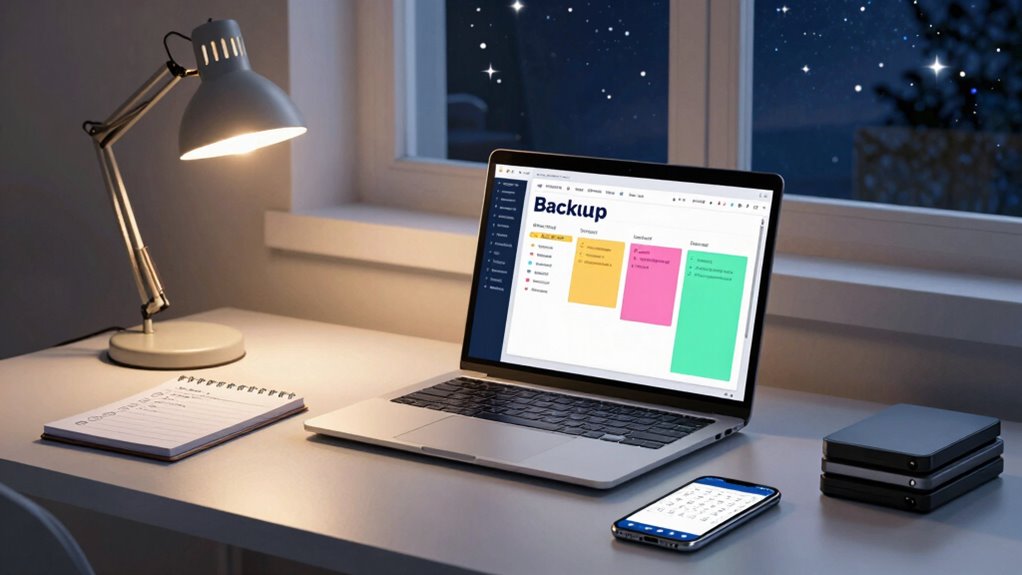

To build better backup plans for nights, weekends, and emergencies, identify your most critical data and prioritize regular backups. Use a combination of local backups on external drives and cloud storage to guarantee off-site protection and quick recovery. Test your backups frequently and create clear recovery procedures so you’re prepared for unexpected events. Keep everyone trained on these protocols, and you’ll minimize downtime. Continue exploring for more tips on strengthening your backup strategy.

Get decor and gifts delivered free with Prime
- Fast, free delivery on millions of items
- Prime Video, Amazon Music and more included
- Member-only deals all year
Key Takeaways
- Identify and prioritize critical data to ensure the most important information is backed up regularly.
- Implement automated, off-site cloud backups for continuous data protection outside business hours.
- Test backup and recovery processes frequently to confirm data integrity and quick restore capabilities.
- Use a hybrid backup approach combining local and cloud storage for redundancy and rapid access.
- Document procedures, assign roles, and train team members to ensure effective emergency response and data recovery.

Having reliable backup plans is fundamental for nights, weekends, and emergencies when your usual resources might not be available. When unexpected issues arise, you need a strategy that guarantees your data remains safe and accessible. This means understanding the importance of data recovery options and leveraging cloud storage solutions. A solid backup plan isn’t just about copying files; it’s about creating a resilient system that you can rely on anytime, anywhere.
Reliable backup plans ensure your data stays safe and accessible during nights, weekends, and emergencies.
Start by identifying your most critical data. Whether it’s client information, project files, or personal documents, prioritize backing up these assets regularly. Cloud storage plays a key role here because it offers off-site protection, meaning your data isn’t vulnerable to local hardware failures or physical damage. Services like Google Drive, Dropbox, or specialized enterprise solutions provide automated backups and easy access, so you can retrieve files quickly during an emergency. When selecting a cloud storage provider, consider factors like security, storage capacity, and ease of recovery, ensuring your data remains protected and accessible even outside normal business hours.
Next, establish a routine for your data recovery process. Test your backups periodically to confirm that they’re complete and functional. If your backup system fails or data gets corrupted, knowing how to perform a swift data recovery is essential. Make sure your backups are not only automated but also stored in multiple locations if possible. This redundancy minimizes risk, especially if one backup source becomes compromised. For nights and weekends, when you might not have immediate technical support, having a clear, step-by-step recovery plan can save you valuable time and reduce stress. Additionally, understanding the role of disaster recovery strategies can help in preparing for various unforeseen circumstances. Incorporating regular testing of backup systems ensures you’re prepared for potential failures before an actual emergency occurs. Utilizing cloud-based backup solutions that support quick restoration can further streamline your recovery efforts. Moreover, selecting solutions with rapid recovery features enhances your ability to restore operations swiftly during critical times.
It’s also smart to incorporate different backup methods. Relying solely on cloud storage isn’t enough; consider local backups on external drives or network-attached storage (NAS) devices. These options provide quick access and restore speeds, which are critical during emergencies. Keep these backups up-to-date and stored securely, so you’re prepared for unforeseen circumstances. Combining on-site backups with cloud storage creates a hybrid approach that maximizes data safety and recovery options.
Finally, establish clear protocols for emergency situations. Document your backup procedures, assign responsibilities, and train team members if needed. The goal is to guarantee everyone knows how to initiate data recovery, access cloud backups, and restore operations without delay. By planning ahead, you’re not only securing your data but also creating peace of mind that your information can be recovered efficiently, regardless of the time or day. Building such resilient backup plans keeps you prepared for nights, weekends, and any unforeseen emergencies.
Products Worth Considering

Bose SoundLink Plus Portable Bluetooth Speaker, Black

Bose SoundLink Flex Bluetooth Speaker (2nd Gen), Black

Blueair Blue Pure 511i Max Smart Air Purifier
As an affiliate, we earn on qualifying purchases.
Frequently Asked Questions
How Often Should Backup Plans Be Reviewed and Updated?
You should review your backup schedule and update your backup plan at least quarterly, or more often if your data or systems change frequently. Regular review ensures your backup plans remain effective during nights, weekends, and emergencies. Set a consistent review frequency to catch any issues early, keep your backups current, and guarantee quick recovery when needed. Staying proactive helps you avoid data loss and minimizes downtime.
What Specific Tools Are Best for Emergency Backups?
Did you know that 60% of small businesses experience data loss during emergencies? For emergency backups, cloud storage tools like Backblaze and CrashPlan are top choices, offering reliable, off-site protection. Make certain they use strong encryption methods like AES-256 to keep your data secure. These tools enable quick recovery and ensure your critical information stays safe, even during unexpected crises.
How Do I Ensure Data Security During Backups?
You guarantee data security during backups by implementing strong encryption protocols to protect your data both in transit and at rest. Additionally, set access controls to restrict who can view or modify backups, reducing the risk of unauthorized access. Regularly update your security measures and monitor backup activities. This way, you keep your data safe, even during critical backup processes, giving you peace of mind during nights, weekends, and emergencies.
What Are Common Pitfalls in Backup Planning?
You often overlook the pitfalls of backup planning, like ignoring cloud storage options, neglecting automation protocols, and underestimating testing routines. These mistakes lead to incomplete or unreliable backups, risking data loss. You might forget to verify backups regularly, rely solely on manual processes, or assume cloud solutions are infallible. To avoid these pitfalls, you need to incorporate cloud storage, automate protocols, and schedule consistent testing, ensuring your backups are resilient and trustworthy.
How Can I Test Backup Restorations Effectively?
You should regularly perform backup testing to guarantee your restoration verification process works smoothly. Start by restoring backups to a test environment, checking data integrity, and confirming applications function correctly. Schedule these tests periodically, especially after updates or changes. Document each test, noting any issues, and refine your backup procedures accordingly. Effective backup testing helps catch problems early, giving you confidence that your data can be restored quickly during emergencies.
Conclusion
Remember, having a solid backup plan is like building a sturdy bridge over unpredictable waters—you’ll cross safely no matter what comes your way. By preparing for nights, weekends, and emergencies, you guarantee your data stays protected when it matters most. Don’t wait for a storm to hit before you secure your ship. With a little planning now, you’ll be ready to sail smoothly through life’s unexpected rough patches. Stay prepared and keep your peace of mind intact.