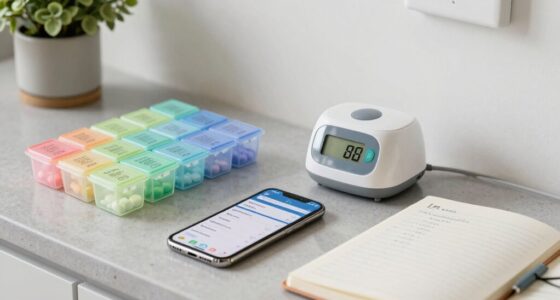
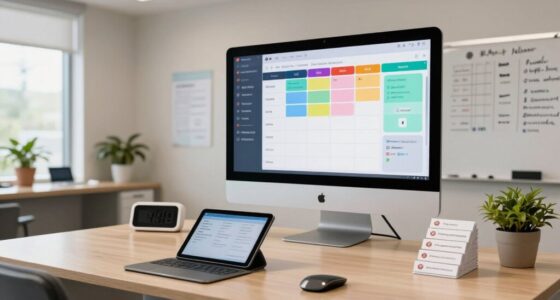
To organize medications, appointments, and questions clearly, use pill organizers or digital apps for reminders, label medications, and store them consistently in one spot. Use digital calendars to schedule appointments with alerts, and keep a dedicated notebook or digital file for questions. Update health records regularly and review them often. Setting up reliable reminder systems helps you stay on track. Keep everything accessible and up-to-date — you’ll find more tips to improve your system ahead.

Get decor and gifts delivered free with Prime
- Fast, free delivery on millions of items
- Prime Video, Amazon Music and more included
- Member-only deals all year
Key Takeaways
- Use labeled containers or digital apps to organize medications by type and dosage.
- Maintain a centralized digital calendar for all appointments, with reminders and time buffers.
- Keep a dedicated notebook or digital document for questions and concerns to track during visits.
- Update health records immediately after appointments, noting changes and follow-up actions.
- Set automated reminders for medication intake and upcoming appointments to ensure consistency.
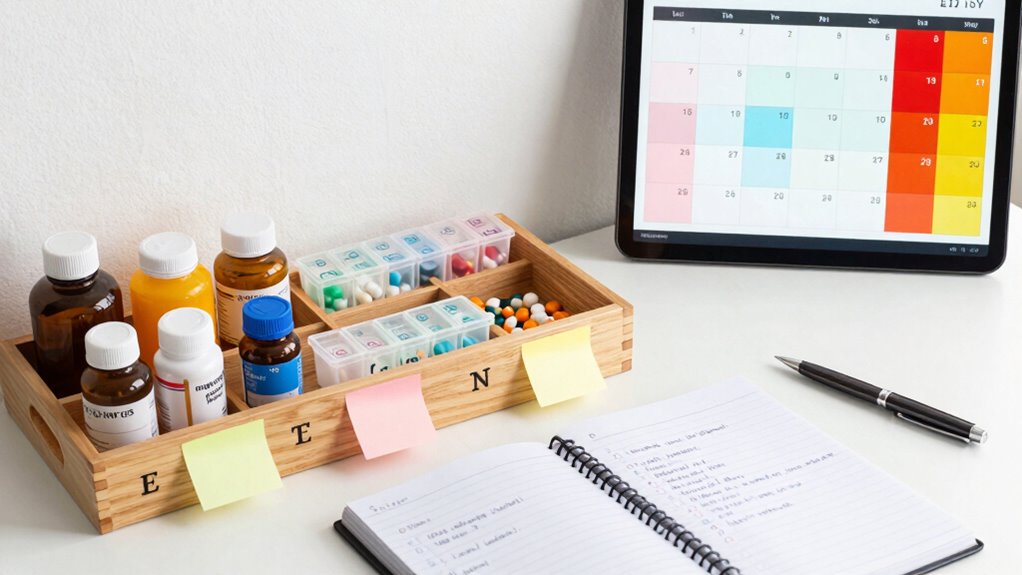
Keeping track of medications, appointments, and questions can quickly become overwhelming, especially when your schedule is busy. To stay organized, start by establishing a clear system for medication management. Use a pill organizer or a digital app that reminds you when to take each dose. Label your medications with their names and dosages to avoid confusion, and keep them in a designated spot so you always know where they are. Regularly review your medication list to guarantee you’re not missing doses or taking expired medicines. This proactive approach reduces errors and helps you feel more in control of your health. Incorporating ergonomic organization principles can further streamline your system and make it easier to maintain.
When it comes to appointment scheduling, the key is consistency. Use a digital calendar or planner that syncs with your phone so you get reminders ahead of time. Block out enough time for travel, check-ins, or follow-up questions. If you see multiple healthcare providers, create a centralized calendar that consolidates all appointments, preventing overlaps or missed visits. Before each appointment, jot down specific questions or concerns you want to discuss. This preparation makes your visits more productive and assures you don’t forget important topics. Also, confirm appointments a day in advance to minimize no-shows or last-minute cancellations.
To make your system even more efficient, consider a dedicated notebook or digital document for questions you think of throughout the day. When you’re at a healthcare visit, referencing this list helps you cover everything without forgetting crucial concerns. After appointments, update your medication list and note any changes or instructions from your healthcare provider. This habit keeps your records current and easily accessible for future reference or emergencies. Using digital tools can also help you stay organized and on top of your health management. Additionally, setting up reminder systems can help ensure you stay consistent with your medication and appointment schedules. Regularly updating and reviewing your health records is essential for maintaining an accurate overview of your health status and upcoming needs.
Products Worth Considering

Dyson Car+Boat Cordless Handheld Vacuum

Blueair Blue Pure 511i Max Smart Air Purifier

Dyson V8 Cyclone Cordless Vacuum
As an affiliate, we earn on qualifying purchases.
Frequently Asked Questions
How Often Should I Review and Update My Organization System?
You should review and update your organization system at least once a month. Regularly using digital tracking tools and calendar synchronization helps you stay current with medications, appointments, and questions. This routine guarantees you catch any changes or missed tasks early. Additionally, set reminders to review your system so it remains effective and tailored to your evolving needs, keeping everything organized and manageable.
What Tools Are Best for Organizing Medications for Multiple Family Members?
You’re better off using a digital family organizer or dedicated medication tracking app to keep everything in check. These tools help you assign specific schedules, set reminders, and avoid mixing up doses. Look for apps that allow multiple profiles to manage medications for each family member separately. This way, you can stay on top of everything without pulling your hair out, making medication management a breeze rather than a chore.
How Can I Prevent Missing Appointments Due to Disorganization?
To prevent missing appointments, set up medication reminders on your phone or a dedicated app, so you get alerts beforehand. Use an appointment calendar—digital or paper—to track all upcoming commitments clearly. Regularly review your schedule and update it as needed. Establish a routine of checking your calendar daily, and sync reminders across devices to guarantee you stay on top of both medications and appointments, reducing the risk of oversight.
What Should I Do if I Lose Track of a Medication Schedule?
Did you know that missing doses can reduce medication effectiveness by up to 50%? If you lose track, use medication reminders like alarms or apps to get back on schedule. Check your pill organizer and set up alerts. If you’re unsure or need assistance, contact your emergency contacts or healthcare provider. Staying organized helps you maintain your health and guarantees you don’t miss essential doses.
How Can I Ensure My Questions Are Remembered for Doctor Visits?
You can guarantee your questions are remembered for doctor visits by using medication reminders and question tracking tools. Write down your questions beforehand and keep them in a dedicated notebook or digital app. Set reminders on your phone to review your questions before appointments. During the visit, refer to your list to make certain all concerns are addressed. This way, you stay organized, and nothing important slips your mind.
Conclusion
By staying organized with your medications, appointments, and questions, you take control of your health and reduce stress. Remember, nearly 60% of adults forget to take their medications at least once a week, which can lead to serious health issues. So, keep your schedules clear, ask questions when unsure, and use tools that work for you. When you stay on top of your health, you’re investing in a happier, healthier future.