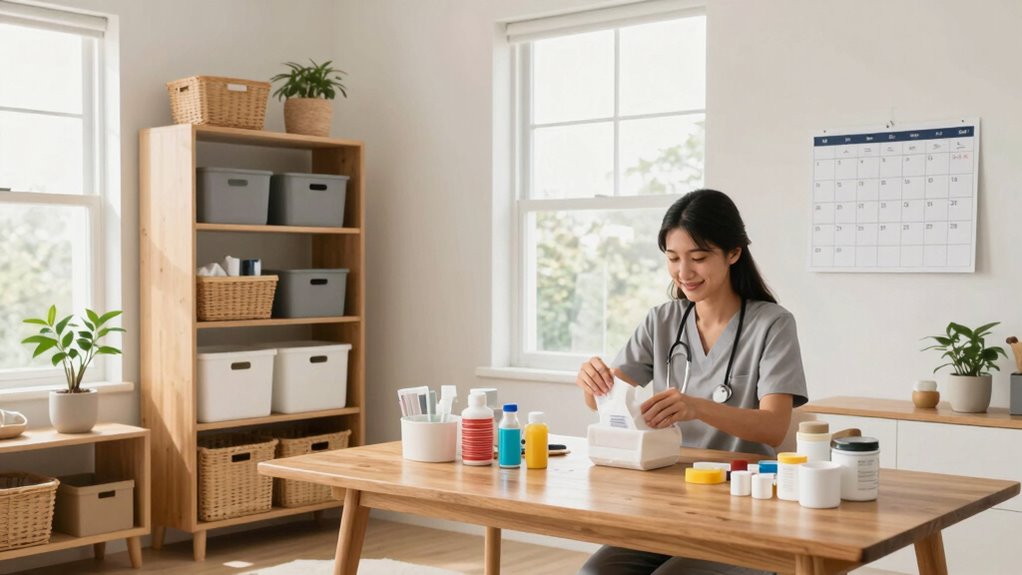

To reduce caregiver stress with better home organization, start by decluttering and using clear storage bins with labels to keep essentials within easy reach. Create designated zones for caregiving tasks, relaxation, and personal time to promote routine. Use visual tools like calendars and checklists to track appointments and medication schedules. Prioritize self-care by carving out moments for rest and hobbies. A well-organized home can boost your mood and focus—learning more can help you create a calmer, more supportive environment.

Give the gift of listening to the book lover on your list
- Choose a 1-, 3-, 6- or 12-month membership
- They pick the audiobooks they love
- Easy to send by email
Key Takeaways
- Implement designated zones for caregiving, relaxation, and personal activities to create a structured, calming environment.
- Use clear storage solutions and labels to easily access essential items and reduce daily chaos.
- Maintain a clutter-free space to minimize distractions and promote mental clarity.
- Utilize visual tools like calendars and checklists to manage appointments and medication schedules efficiently.
- Prioritize self-care by carving out specific times for relaxation and hobbies within organized home spaces.
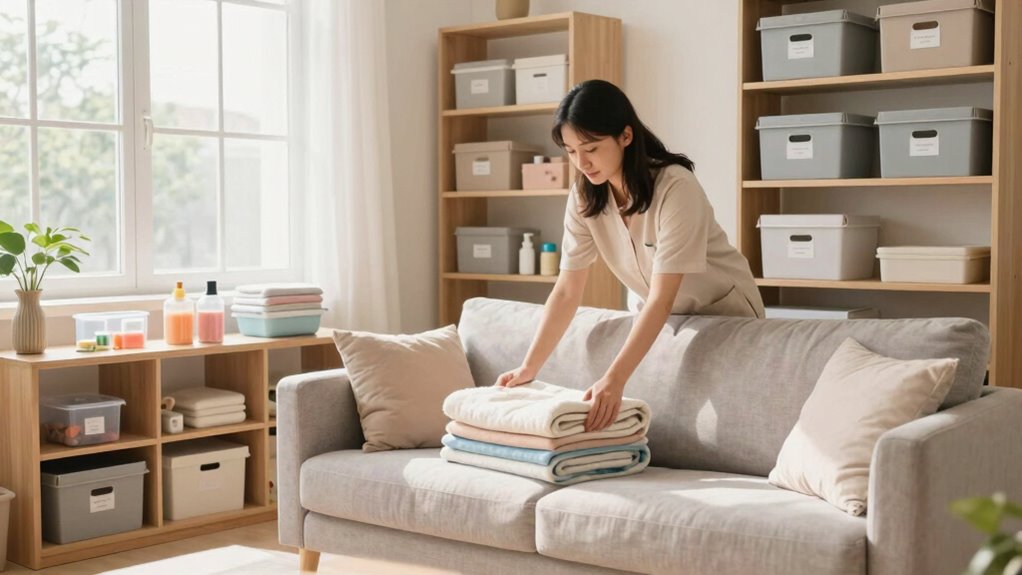
Are you feeling overwhelmed by the demands of caregiving? Managing a loved one’s needs can quickly become exhausting, especially when chaos takes over your home. One effective way to reduce this stress is by improving your home organization, which directly supports better time management and helps you implement self-care strategies. When everything has its place, you spend less time searching for essentials and more time focusing on your well-being and quality care.
Start by decluttering your space. Remove items that no longer serve a purpose or bring unnecessary clutter. A tidy environment creates a calming atmosphere and minimizes distractions, making it easier to prioritize daily tasks. Keep frequently used items within reach—medications, medical supplies, and personal care products—so you don’t waste time hunting for them. Use clear storage bins and labels to organize supplies systematically, which streamlines routines and frees up mental space. Additionally, incorporating effective storage solutions can help maximize space and maintain order more easily.
Creating designated zones within your home can also make a significant difference. Assign specific areas for caregiving tasks, relaxation, and personal time. For example, set up a dedicated corner for medications and health records, keeping everything in one accessible spot. This not only simplifies daily routines but also helps you stay on top of appointments and medication schedules, boosting your time management skills. When your environment is structured, you’ll find it easier to stick to routines and maintain consistency, which benefits both you and your loved one. Additionally, incorporating efficient organization methods can further enhance your ability to manage caregiving responsibilities effectively.
Furthermore, utilizing home organization techniques can help create a more manageable and less stressful caregiving environment, supporting overall well-being. Incorporating visual tools like wall calendars, checklists, or digital reminders can also make a big difference in keeping track of important dates and tasks. These tools help you keep track of appointments, medication times, and self-care activities. By visualizing your schedule, you can plan your day more effectively, reducing the stress of last-minute surprises. Furthermore, understanding the importance of biodiversity and conservation can inspire you to create a healthier, more balanced home environment that supports overall well-being. Prioritize self-care by setting aside specific times for relaxation, exercise, or hobbies. When your home is organized, it’s easier to carve out these moments without feeling guilty or overwhelmed.
Products Worth Considering

Ring Alarm 5-Piece Home Security Kit

Ring Alarm 14-Piece Home Security Kit

Bose Home Speaker 500 Smart Speaker with Alexa, Black
As an affiliate, we earn on qualifying purchases.
Frequently Asked Questions
What Are the Best Storage Solutions for Caregiving Supplies?
You should opt for labeled, stackable bins for caregiving supplies, making medication management and mobility aids easy to find. Use wall-mounted shelves for frequently used items and small drawer organizers for pills and ointments. Incorporate clear containers so you see contents instantly, reducing stress. Keep a dedicated, accessible spot for mobility aids like walkers, and guarantee medicines are stored safely but within easy reach to streamline your caregiving routine.
How Can I Involve the Person I Care for in Organization?
You can involve the person you care for by creating personalized routines that suit their preferences and abilities. Encourage them to participate in organizing their belongings or decorating their space, which fosters independence and control. Involving them in decision-making makes the process more engaging and respectful. This approach helps reduce caregiver stress, promotes the care recipient’s sense of autonomy, and creates a more harmonious home environment.
What Safety Measures Should I Consider in Home Organization?
You should prioritize home safety by securing loose rugs, installing grab bars, and ensuring good lighting. Use organization essentials like labeled storage and clear pathways to prevent accidents. Regularly check for hazards, like clutter or faulty equipment, and keep emergency contacts accessible. By creating a safe environment through thoughtful organization, you reduce risks and caregivers’ stress, making daily routines smoother for everyone involved.
How Often Should I Reorganize the Home to Maintain Efficiency?
You should reorganize your home every few months to maintain efficiency and support time management. Regular updates help prevent clutter buildup, reducing stress and making daily routines smoother. Keep an eye on areas that tend to get disorganized quickly, like kitchens or bathrooms, and address issues promptly. This proactive approach promotes stress relief, guarantees safety, and keeps your environment functional, making caregiving duties more manageable.
Are There Specific Tools That Help Reduce Caregiver Stress?
Yes, there are specific tools that help reduce caregiver stress, especially in medication management and emergency preparedness. Using digital pill organizers or apps guarantees timely medication, preventing errors and anxiety. Emergency kits with essential supplies and easy-to-follow plans give you peace of mind during crises. These tools streamline tasks, minimize chaos, and help you stay organized, making caregiving less overwhelming and more manageable every day.
Conclusion
Remember, a well-organized home can make a world of difference in reducing your stress. By simplifying daily routines and creating a calm environment, you’ll find it easier to care for your loved one and yourself. Don’t forget, “A place for everything, and everything in its place”—it’s a simple truth that can bring peace and clarity. Take small steps today, and soon you’ll notice a lighter, more manageable caregiving journey ahead.