Gait belts are essential for assisting patients safely while preventing back strain for you. Always secure the belt snugly around the patient’s waist and position yourself close, bending your knees to maintain good posture. Use a firm grip and encourage the patient to participate. Mistakes, like improper sizing or lack of training, can lead to accidents. By following proper techniques, you’ll enhance safety for both you and the patient, and there’s more to explore on this topic.
Key Takeaways
- Always bend at the knees instead of the waist to maintain proper posture during patient transfers.
- Keep your feet shoulder-width apart for improved balance and stability while using a gait belt.
- Engage your core muscles to help reduce back strain when lifting or assisting patients.
- Position yourself close to the patient to minimize the distance and strain during transfers.
- Communicate clearly with the patient to ensure their participation and reduce anxiety during movement.
What Is a Gait Belt and Why Is It Important?

A gait belt is an essential tool used in healthcare settings to assist patients with mobility. Its history dates back to the early 20th century when caregivers recognized the need for safer patient transfers. Using a gait belt not only enhances safety but also boosts your confidence as a caregiver. Proper caregiver training is vital; it guarantees you understand how to use the belt effectively, reducing the risk of injury to both you and your patient. By securing the belt around the patient’s waist, you gain better control during transfers, helping to prevent falls. Remember, using a gait belt isn’t just about convenience; it’s about providing safe, dignified support for those in your care.
How to Choose the Right Gait Belt?
When choosing a gait belt, you’ll want to take into account both the material and durability to guarantee it meets your needs. Additionally, size and adjustability are essential for proper fit and comfort. Let’s explore these factors to help you make the best choice.
Material and Durability
Choosing the right gait belt hinges on understanding the materials and durability that suit your needs. You’ll find various fabric types like cotton, polyester, and nylon, each offering different levels of comfort and strength. Cotton is soft and breathable, great for short-term use, while nylon and polyester provide enhanced durability and are typically more robust. When considering belt strength, check the weight capacity to guarantee it can safely support your patient. A stronger belt can prevent accidents during transfers, giving you peace of mind. Additionally, look for reinforced stitching, which adds to the overall durability. Vetted options for quality gait belts include those made with durable materials tested for safety and longevity. By selecting the right material, you can guarantee both safety and comfort for yourself and those you assist.
Size and Adjustability
Selecting the right gait belt also involves considering size and adjustability. You want a belt that fits snugly without being too tight, guaranteeing comfort and safety for both you and the patient. Here are some sizing guidelines to help you choose:
- Measure the waist: Use a tape measure around the patient’s waist to find the correct size.
- Consider gait belt types: Different types may have varying lengths, so choose one that suits your needs.
- Check adjustability: Look for belts with adjustable buckles or clips for a secure fit.
- Test it out: Before use, verify the belt fits properly and allows for easy movement without slipping.
A well-fitted gait belt makes all the difference!
Proper Techniques for Using Gait Belts Safely

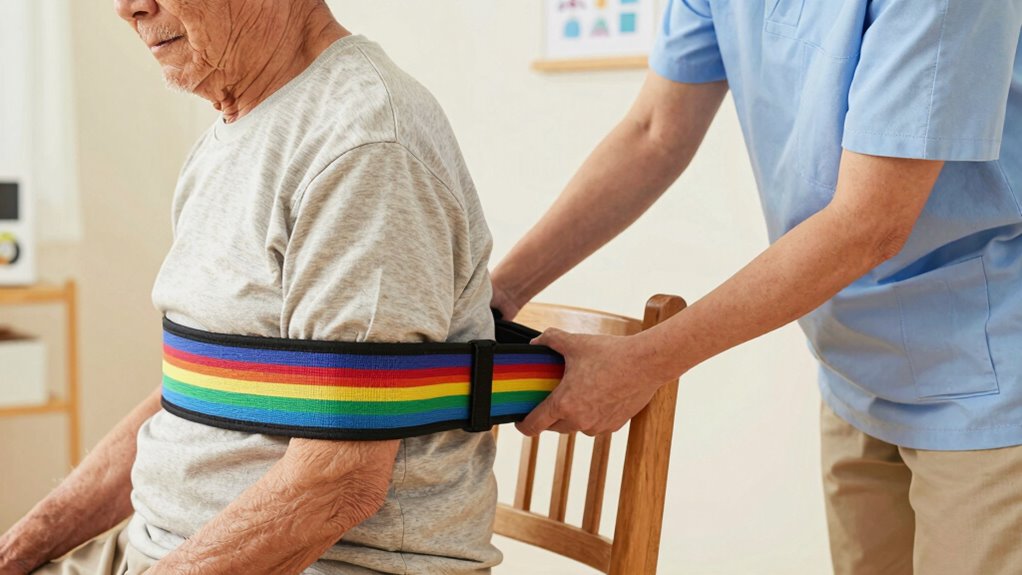
Using gait belts correctly is essential for ensuring safety and stability during patient transfers. First, make sure the gait belt fits snugly around the patient’s waist, allowing enough space for you to grip it securely. When lifting or moving a patient, position yourself close to them and keep your knees bent to reduce strain on your back. Use a firm grip on the belt, and encourage the patient to assist as much as they can. Always communicate clearly with them, letting them know what to expect. Remember, proper gait belt techniques not only enhance caregiver safety but also foster a sense of security for the patient. By following these steps, you’ll promote a safer transfer process for everyone involved.
Top 5 Mistakes Caregivers Make With Gait Belts

While gait belts are invaluable tools for safe patient transfers, caregivers often make critical mistakes that can compromise safety. Here are the top five mistakes to avoid:
- Not securing the belt properly: Always make sure the belt is snug but not too tight to prevent slippage. Proper fit is essential for comfort and security, which can be enhanced by understanding the importance of ergonomics principles in transfer techniques.
- Using the wrong size belt: A poorly fitting belt can lead to accidents and discomfort for the patient.
- Neglecting caregiver training: Proper training is essential for understanding how to use gait belts safely and effectively.
- Forgetting to communicate with the patient: Always explain the process to the patient to keep them informed and calm.
- Ignoring the importance of proper technique: Failing to use correct safety protocols can increase the risk of injury for both caregiver and patient.
How to Prevent Back Strain When Using Gait Belts

Caregiver safety is just as important as patient safety when using gait belts. To prevent back strain, focus on proper lifting techniques. Always bend at your knees, not your waist, to maintain a strong, upright posture. Keep your feet shoulder-width apart for better balance, and engage your core muscles while lifting. Incorporating ergonomic practices into your routine can also make a significant difference. Use your legs to lift rather than your back, and remember to pivot your feet instead of twisting your torso. When positioning the gait belt, make sure it’s snug but not too tight, allowing for better control without excessive strain. Additionally, choosing pet-friendly equipment that supports ergonomic safety can enhance caregiver comfort during patient handling. Being aware of potential hazards like dust and microplastics in the environment can also help prevent respiratory discomfort for caregivers. Maintaining awareness of ergonomic safety principles can further reduce the risk of injury during patient transfers. Proper training on lifting techniques can also help caregivers develop safer handling habits. Regularly assessing workplace ergonomics can identify areas for improvement and reduce injury risks. By following these guidelines, you’ll protect your back while providing safe assistance to your patients.
Signs You Need Professional Help With Mobility?

How can you tell when it’s time to seek professional help with mobility? If you’re facing mobility challenges, it’s essential to recognize the signs that indicate a need for a professional assessment. Here are four key indicators:
Recognizing when to seek professional help for mobility challenges is crucial for your safety and well-being.
- Frequent falls or near-misses: If you’re regularly losing your balance, it’s time to get help. Recognizing personalized in-home care options can support maintaining safety and independence. A mobility assessment can identify specific areas needing improvement and guide appropriate interventions.
- Increased pain during movement: Pain that hinders your mobility isn’t normal and needs addressing.
- Difficulty with daily tasks: Struggling to perform basic activities, like walking or climbing stairs, signals a need for assistance.
- Changes in gait or posture: Noticeable shifts in how you walk or stand could indicate underlying issues. Understanding mobility aid usage can help prevent further complications.
Don’t wait—seeking help early can lead to better outcomes.
Frequently Asked Questions
Can Gait Belts Be Used on Patients With Specific Medical Conditions?
Yes, gait belts can be used on patients with specific medical conditions, but you need to take into account their unique needs. Before using a gait belt, assess any limitations or concerns related to their condition. Always follow safety protocols to guarantee both you and the patient are secure. Communicate clearly with the patient and any caregivers involved, making adjustments as necessary to provide effective support while prioritizing their safety and comfort.
How Do I Clean and Maintain a Gait Belt?
You might think keeping a gait belt clean is no big deal, but neglecting it could lead to unexpected messes. To maintain yours, start by checking its materials—most are either cotton or nylon. For cleaning, hand wash with mild detergent and warm water. Rinse thoroughly and air dry. Avoid harsh chemicals to keep it sturdy. Regular maintenance not only guarantees hygiene but also prolongs its life, making your job a bit easier!
What Is the Weight Limit for Gait Belts?
The weight limit for gait belts typically ranges from 150 to 300 pounds, depending on the specific model. It’s essential to check the manufacturer’s guidelines to guarantee you’re within the weight capacity for safety standards. Using a belt that exceeds its limit can compromise safety and effectiveness. Always prioritize the user’s safety by selecting the appropriate gait belt based on their weight and needs. That way, you can provide the best support possible.
Are There Alternative Tools to Gait Belts for Mobility Assistance?
Yes, there are several alternative tools to gait belts for mobility assistance. You can use transfer aids like slide sheets or transfer boards, which help move individuals safely and comfortably. Mobility devices such as walkers, rollators, and wheelchairs also provide support and stability. Each option has its advantages, so consider the specific needs of the person you’re assisting to choose the best tool for the situation.
Can Gait Belts Be Used for Pediatric Patients?
Absolutely, you can use gait belts for pediatric patients, but let’s not pretend they’re magic. Your top priorities should be pediatric safety and patient comfort. While they can help with mobility, it’s essential to verify the belt fits properly and doesn’t pinch or restrict. Kids aren’t mini-adults; they need extra care. So, use your skills wisely, and remember, a little humor goes a long way when working with young ones!
Conclusion
Using gait belts correctly is like learning to ride a bike—once you grasp the technique, it becomes second nature. By understanding their importance, choosing the right one, and employing safe methods, you can support mobility without risking your own back. Avoid common mistakes and keep an eye out for signs that professional help is needed. Remember, with a little practice and mindfulness, you can make a positive impact on someone’s mobility journey while protecting yourself.