Incorporating remote health monitoring into your daily routine is simple and empowering. Wear devices during workouts, sleep, and daily activities to track essential signs like heart rate, activity, and sleep patterns continuously. Sync the data with your phone or computer for trend analysis and personal feedback. Stay consistent and update your device regularly to guarantee accuracy. By doing this, you’ll gain better control over your health and see how technology can support your wellness goals—learn more to optimize your routine.
Key Takeaways
- Integrate wearable devices into daily activities like workouts, sleep, and walking for consistent health data collection.
- Sync devices regularly with smartphones or computers to track trends and set realistic health goals.
- Use secure networks and update device software to protect personal health information during data transmission.
- Combine wearable data with remote health tools such as telehealth apps for comprehensive ongoing health monitoring.
- Review privacy policies and be cautious when sharing health data to ensure personal information remains protected.

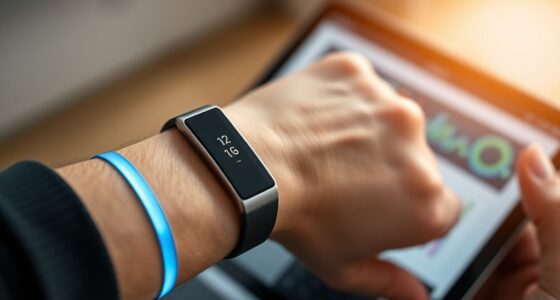
Have you ever wondered how technology is transforming healthcare? One of the most exciting advancements is the rise of wearable devices that seamlessly integrate into your daily routine. These gadgets, like fitness trackers, smartwatches, or even specialized health monitors, collect real-time data on your heart rate, activity levels, sleep patterns, and more. By wearing these devices throughout the day, you gain immediate insights into your health without needing frequent visits to a doctor. They’re designed to be user-friendly, so you can easily check your stats on the go, set health goals, or track progress over time. Incorporating wearable devices into your routine allows you to stay proactive about your health, catching potential issues early or maintaining good habits consistently.
Wearable devices help you monitor your health easily and stay proactive every day.
However, with the convenience of continuous health monitoring comes a significant concern: data privacy. These devices gather a vast amount of personal health information, which is stored either locally on your device or transmitted to cloud servers. It’s essential to understand how your data is handled and protected. Reputable manufacturers prioritize data security through encryption and strict access controls, but not all companies follow the same standards. When choosing wearable devices, you should review their privacy policies carefully, ensuring your sensitive information isn’t shared without your consent or vulnerable to breaches. Being aware of data privacy measures empowers you to make informed decisions about what information you share and how it’s used.
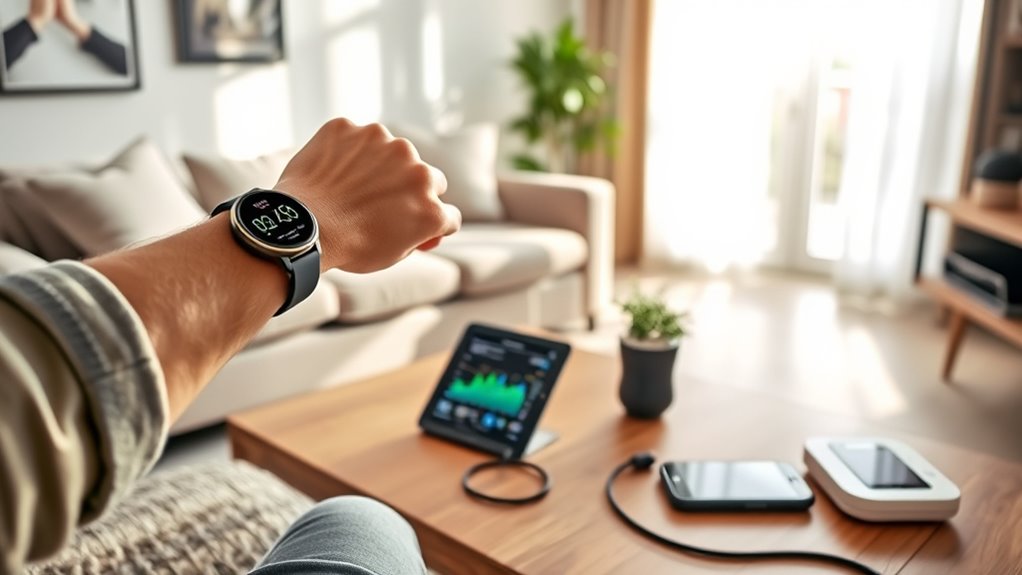
Integrating wearable devices into your daily routine also involves establishing consistent habits. For example, wearing your device during workouts, sleep, or even throughout the day helps generate thorough data that paints a clear picture of your overall health. Many devices sync with your smartphone or computer, allowing you to view trends and receive personalized feedback. This ongoing feedback can motivate you to make healthier choices, like improving sleep hygiene or increasing physical activity. The key is consistency—wearing your device regularly and ensuring it’s properly calibrated so the data remains accurate. Over time, this continuous stream of information can help you identify patterns, set realistic goals, and stay accountable.
Moreover, combining wearable devices with other remote health monitoring tools, such as telehealth consultations or health apps, enhances your ability to manage chronic conditions or monitor ongoing health concerns. It creates a thorough system that keeps you connected to healthcare providers without frequent in-person visits. Just remember, as you embrace this technology, prioritize data privacy. Keep your device’s software updated, use secure networks, and be cautious about sharing your health data. Additionally, staying informed about remote health monitoring options and advancements can help you optimize your health management. With mindful use, integrating wearable devices into your routine can empower you to take control of your health while safeguarding your personal information.
Frequently Asked Questions
How Secure Is My Health Data During Remote Monitoring?
Your health data during remote monitoring is generally secure, thanks to data encryption that safeguards your information during transmission and storage. However, it’s also essential to review the privacy policies of your monitoring provider to understand how your data is used and shared. Stay informed about the security measures in place, and don’t hesitate to ask questions to ensure your sensitive health information remains private and protected.
Can Remote Health Monitoring Replace Regular Doctor Visits?
Sure, remote health monitoring can seem like a magic pill, but it won’t replace real doctor visits anytime soon. Virtual doctor consultations and personalized health insights are handy, but they lack the human touch and nuanced understanding only a doctor provides. Think of remote tools as helpful sidekicks, not substitutes. You still need those in-person visits for holistic exams, accurate diagnoses, and that personal reassurance only a doctor can give.
What Devices Are Compatible With Existing Health Apps?
Many devices are compatible with existing health apps through seamless device compatibility and easy app integration. You can connect fitness trackers, smartwatches, and blood pressure monitors to popular health apps like Apple Health, Google Fit, or Fitbit. Before purchasing, check the device specifications to guarantee compatibility and smooth app integration, enabling you to monitor your health data effortlessly and keep everything synchronized within your preferred health management platform.
How Do I Troubleshoot Connectivity Issues With Devices?
Sometimes, device pairing can be tricky due to signal interference. To troubleshoot, start by resetting your device and ensuring it’s within range of your smartphone or hub. Turn off other electronics that could cause interference, and make sure your Bluetooth or Wi-Fi is enabled. Restart your device if needed. If issues persist, update the app and device firmware, and re-pair them to establish a stable connection.
Are There Cost Considerations for Long-Term Remote Monitoring?
Yes, there are cost considerations for long-term remote monitoring. You should consider insurance costs, as some plans may cover or partially reimburse device expenses. Device affordability is also key, since high upfront costs can be a barrier. Over time, savings from better health management might offset expenses, but it’s important to evaluate these factors and discuss options with your provider to guarantee sustainable, cost-effective monitoring.
Conclusion
Imagine waking up each morning, sunlight filtering through your window, your health data seamlessly syncing with your device. As you go about your day, you feel confident knowing your essential signs are being monitored quietly in the background, like a caring companion. Incorporating remote health monitoring into your routine isn’t just technology—it’s a gentle, constant reassurance, turning everyday moments into opportunities for better health. Embrace this future, where wellness is always within your reach.