
To keep everyone on the same page during your weekly care meetings, establish a clear routine with a set agenda focused on patient updates, safety concerns, and upcoming tasks. Encourage open dialogue and active participation, making sure team members feel valued. Use visual aids like charts to highlight key metrics and keep discussions concise. Regular scheduling and follow-up actions boost accountability. Stay flexible and gather feedback to improve continuously—discover how these tips can transform your meetings by exploring further.

Get decor and gifts delivered free with Prime
- Fast, free delivery on millions of items
- Prime Video, Amazon Music and more included
- Member-only deals all year
Key Takeaways
- Establish a consistent schedule and clear agenda to ensure everyone prepares and stays aligned.
- Use visual aids and dashboards to quickly communicate key patient data and safety concerns.
- Assign a dedicated facilitator to keep discussions focused and time-efficient.
- Encourage active participation and open dialogue to foster engagement and shared ownership.
- Send follow-up summaries with action items to reinforce accountability and sustain progress.
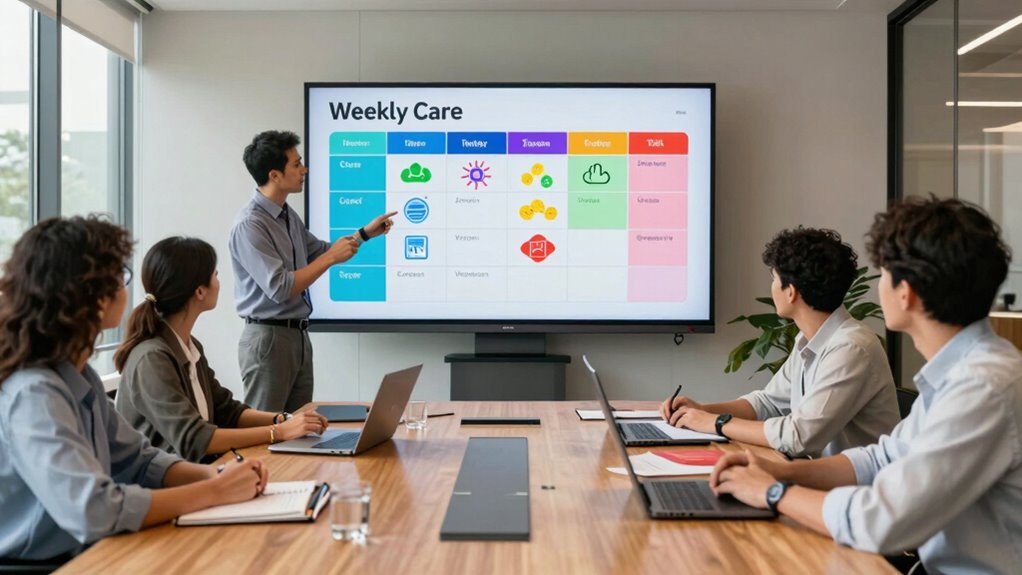
Ever wonder how to make your weekly care meetings more effective and engaging? The key lies in creating a routine that fosters genuine collaboration and keeps everyone aligned. When your team feels involved and informed, patient engagement naturally improves, and staff coordination becomes seamless. To achieve this, start by setting a clear agenda that covers the most important topics—things like patient updates, safety concerns, and upcoming tasks. This helps keep discussions focused and ensures nothing gets overlooked, saving time and reducing confusion.
Effective care meetings foster collaboration, keep teams aligned, and improve patient engagement through clear agendas and open communication.
Next, encourage active participation from everyone. Instead of just reporting from the top down, invite team members to share their insights and concerns. This creates a two-way dialogue, making each person feel valued and heard. When staff members are engaged in the conversation, they’re more likely to take ownership of their roles, which directly benefits patient engagement. Patients pick up on this collaborative energy, leading to better care experiences and stronger trust.
Another trick is to incorporate visual aids like charts or dashboards during the meeting. These tools give everyone a quick snapshot of key metrics, patient statuses, or safety issues. Visuals make complex information easier to grasp and help identify areas needing attention immediately. When staff can see the bigger picture clearly, staff coordination improves because everyone stays on the same page. This also reduces misunderstandings and miscommunications that can arise from scattered information. Additionally, integrating sustainability practices into your team’s workflow can inspire innovative solutions that promote environmental responsibility alongside quality care. Incorporating environmental awareness can further motivate teams to adopt eco-friendly practices that benefit both the community and the planet.
Timing is crucial. Keep meetings concise and stick to a regular schedule so staff knows what to expect. When meetings are predictable, team members can prepare better, making discussions more productive. You should also designate a facilitator to keep the conversation on track, ensuring that discussions stay relevant and efficient. After the meeting, send out a brief summary highlighting action items and responsibilities. This reinforces accountability and keeps momentum going throughout the week.
Finally, foster a culture of continuous improvement by asking for feedback on the meeting itself. Find out what works and what doesn’t, and be willing to adapt. Incorporating knowledge about biodiversity and sustainability practices can also inspire innovative approaches to care that benefit both patients and the environment. When your team feels their input shapes the process, engagement deepens, and staff coordination strengthens. By implementing these simple yet effective strategies, your weekly care meetings will become powerful tools for enhancing patient care, boosting team morale, and maintaining everyone on the same page.
Products Worth Considering

Dyson V8 Cordless Vacuum

Dreame L50 Ultra Robot Vacuum and Mop

Levoit Vital 100S-P Air Purifier with Washable Pre-Filter
As an affiliate, we earn on qualifying purchases.
Frequently Asked Questions
How Long Should Each Weekly Care Meeting Last?
Your weekly care meetings should last about 30 to 60 minutes. This meeting duration helps you balance thorough discussion with good time management, preventing fatigue or disengagement. Keep the agenda focused, and allocate specific time slots for each topic. By managing your meeting time effectively, you guarantee everyone stays on the same page without wasting time, making your meetings productive and engaging for all participants.
What Tools Are Best for Virtual Care Meetings?
Think of virtual collaboration as a well-oiled engine; the right digital tools fuel its efficiency. You should prioritize platforms like Zoom or Microsoft Teams for seamless video calls, combined with shared digital whiteboards like Miro or MURAL for real-time brainstorming. These tools keep everyone connected, foster clear communication, and guarantee your virtual care meetings run smoothly. With the right digital tools, your team stays aligned and engaged, no matter where they are.
How Do You Handle Conflicting Opinions During the Meeting?
When conflicting opinions arise, you should focus on conflict resolution by actively listening to each perspective. Encourage opinion balancing by asking clarifying questions and highlighting common goals. Stay calm and neutral, ensuring everyone feels heard. Summarize the points of disagreement and suggest possible compromises. By fostering open dialogue and emphasizing shared objectives, you create a productive environment where conflicts are addressed constructively, keeping the meeting on track.
Who Should Be Responsible for Taking Meeting Notes?
You should assign a dedicated note taker for each meeting to guarantee consistency and clarity. This responsibility often falls to a team member who uses effective note-taking techniques, such as concise bullet points and highlighting key decisions. Taking clear notes boosts team motivation by providing everyone with a reliable record of action items and discussions, which keeps the team aligned and accountable. Rotating this role can also foster shared responsibility and engagement.
How Often Should the Meeting Agenda Be Updated?
You should update your agenda as often as necessary—ideally, at least weekly—so nothing slips through the cracks. The right agenda frequency and update timing keep everyone aligned and prevent chaos. If you wait too long, important details get lost in the shuffle, causing confusion and frustration. Regular updates guarantee the meeting stays relevant, efficient, and focused, making your team unstoppable and well-informed every step of the way.
Conclusion
By implementing this weekly care meeting trick, you keep everyone aligned and informed effortlessly. For example, imagine a care team that struggled with miscommunication. After adopting this routine, they quickly noticed fewer errors and happier clients. Consistent updates foster trust and clarity, making teamwork smoother. So, give this a try — it’s a simple change that can dramatically improve your team’s cohesion and care quality, ensuring everyone stays on the same page every week.