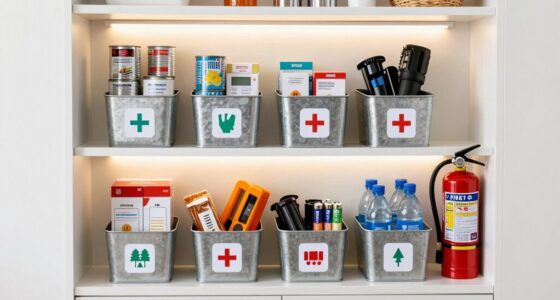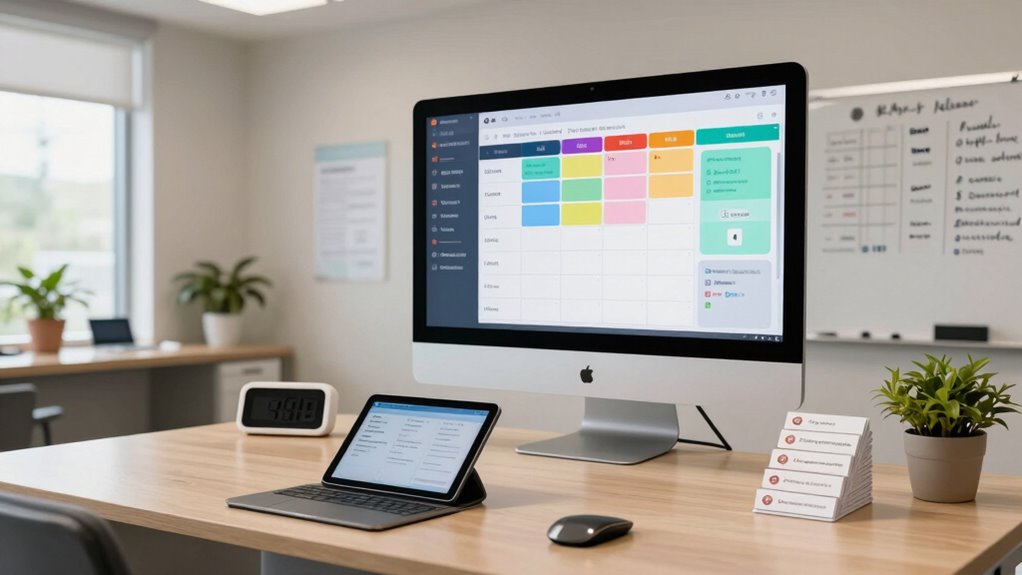
In your caregiver command center, keep a well-organized medication list with clear labels and storage, along with emergency medications like inhalers or EpiPens within reach. Stock an emergency kit with essentials such as water, snacks, flashlights, and a first aid kit. Organize important documents—medical history, insurance, emergency contacts—in waterproof folders or digital files. Display emergency procedures and contact numbers visibly, and develop a solid communication plan. Keep supplies current and guarantee all info is easily accessible—an organized system like this makes preparation simple and efficient.

Get decor and gifts delivered free with Prime
- Fast, free delivery on millions of items
- Prime Video, Amazon Music and more included
- Member-only deals all year
Key Takeaways
- Organized storage for medications, medical supplies, and emergency kits for quick access during crises.
- Updated, easy-to-access copies of important documents like medical history and legal papers.
- Clear signage and instructions for emergency procedures and safety protocols.
- Designated space for communication plans, including emergency contacts and caregiver instructions.
- Visual reminders and labeled containers to ensure proper medication management and adherence.
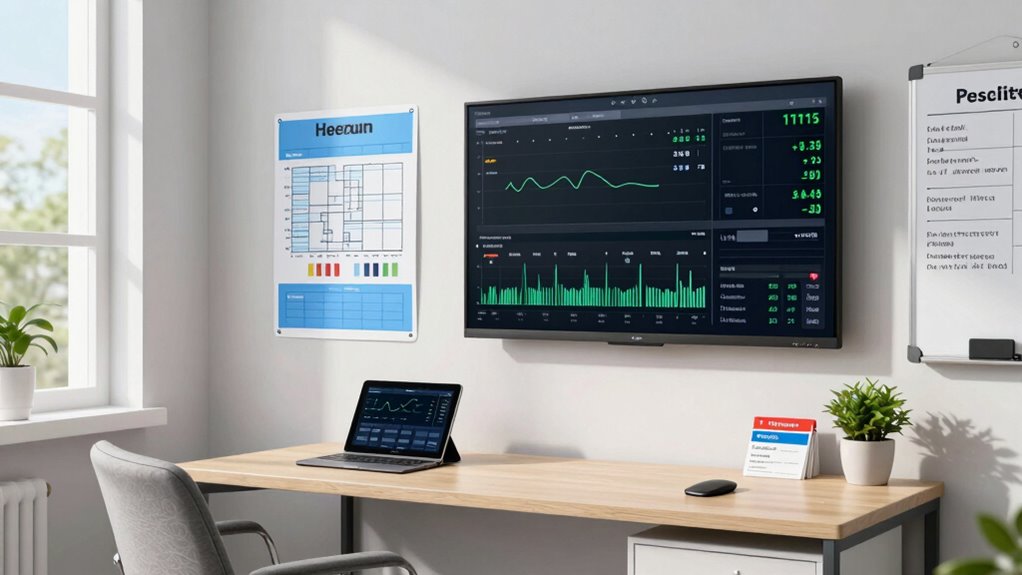
Creating a Caregiver Command Center at home can streamline your daily routines and help you manage your loved one’s needs more effectively. This dedicated space becomes your go-to hub for organizing essential information, supplies, and tools, ensuring nothing gets overlooked. One of the most crucial elements to include is a well-organized medication management system. Keep a clear, updated medication list, including dosages, schedules, and any special instructions. Use labeled containers or pill organizers to sort medications by day and time, making it easy to administer them correctly. Having a visual reminder helps prevent missed doses or accidental double doses, which is essential for your loved one’s health. Additionally, store emergency medications, like EpiPens or inhalers, within reach and clearly labeled for quick access during a crisis.
Emergency preparedness should be a top priority in your command center. Keep a dedicated emergency kit stocked with essentials such as bottled water, non-perishable snacks, flashlights, batteries, a first aid kit, and a multi-tool. Have copies of important documents—medical history, insurance information, emergency contacts, and legal papers—organized in a waterproof folder or digital file for quick retrieval. A laminated list of emergency procedures and local emergency contact numbers should be displayed prominently. This way, if an urgent situation arises, you’ll be ready to act swiftly and confidently. Consider adding a communication plan that includes how to reach family members, neighbors, or caregivers if you’re unavailable. Ensuring all relevant medical supplies are accessible and organized can further enhance safety and response time. Regularly reviewing and practicing emergency procedures can help everyone involved stay prepared and calm during a crisis. Incorporating emergency plans into your routine ensures everyone knows their role in case of an incident. Additionally, having clear signage or instructions within the command center can assist visitors or new caregivers in quickly understanding essential protocols.
Products Worth Considering

Bose Lifestyle Ultra Wireless Home Speaker

eufy Security eufyCam C37 4-Camera Kit with 360° Pan and Tilt

Philips Hue Bridge Pro Smart Lighting Hub
As an affiliate, we earn on qualifying purchases.
Frequently Asked Questions
How Do I Ensure Privacy in a Caregiver Command Center?
To guarantee privacy in your caregiver command center, implement strict privacy protocols like limiting access to authorized personnel and using secure passwords. You should also enable data encryption on all devices and communication channels to protect sensitive information. Regularly update software and monitor access logs to detect any unauthorized activity. These steps help safeguard your loved one’s privacy and maintain a secure environment for caregiving tasks.
What Emergency Contacts Should Be Included?
Think of your emergency contacts as the backbone of your caregiver command center. You should include local emergency services, your primary care doctor, and poison control. Also, add contacts for medication management and emergency procedures, like family members, neighbors, and pharmacists. Keep these details easily accessible, ensuring quick action when needed. Having the right contacts on hand empowers you to respond swiftly and confidently during any crisis.
How Can Technology Improve My Caregiver Command Center?
Technology can considerably enhance your caregiver command center through smart home integration and remote monitoring. With smart devices, you can automate lighting, temperature, and security, making caregiving more efficient. Remote monitoring allows you to keep an eye on your loved one’s safety and health from anywhere, ensuring prompt responses to emergencies. Embracing these tools simplifies caregiving, giving you peace of mind and better support for your loved one’s needs.
What Legal Considerations Are Involved in Setting up a Command Center?
You need to guarantee legal compliance and prioritize data protection when setting up your caregiver command center. This means understanding privacy laws like HIPAA, securing sensitive health information, and obtaining necessary consents. Keep records of data handling procedures, and use secure, encrypted systems to prevent unauthorized access. Staying informed about legal requirements helps you protect your loved ones’ privacy and avoids potential legal issues, making your command center both effective and compliant.
How Often Should I Update the Information in the Center?
Think of your caregiver command center as a living, breathing map that must stay current. You should update caregiver communication details and emergency preparedness info at least once a month, or whenever there’s a change. Regular updates ensure essential information is accurate, so you can respond swiftly in emergencies. Keeping your center fresh helps everyone stay connected and prepared, turning chaos into coordinated care.
Conclusion
Creating a caregiver command center is like building a lighthouse—it guides you through the storm with clarity and calm. When you keep essential tools and information organized, you can navigate daily challenges more confidently. I once heard of a caregiver who, amidst chaos, found solace in her command center, where everything she needed was at her fingertips. Just as a lighthouse keeps ships safe, your home command center keeps your loved ones and yourself secure and supported.