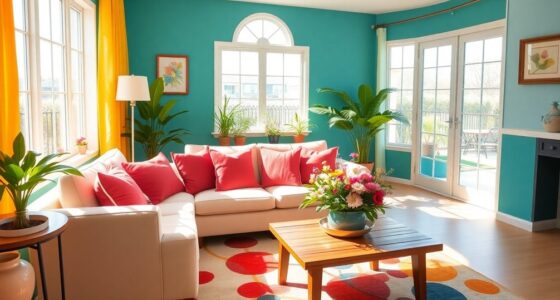
To create a serene monochromatic room, choose a calming color family like soft grays or gentle beiges, and incorporate varied tones to add depth. Use textures and finishes that contrast subtly, such as plush velvet with sleek leather, to keep the space visually rich. Select furniture that aligns with your chosen palette but offers slight contrasts in shape or material. Layer lighting to enhance the hues, and keep decor simple with elegant accessories. Continue exploring for more tips to perfect your peaceful retreat.
Key Takeaways
- Select a cohesive color palette with harmonious shades, tints, and tones within one color family to promote tranquility.
- Incorporate varied textures and finishes in furniture and decor to add visual interest without disrupting serenity.
- Use layered lighting—natural, ambient, and accent—to highlight subtle color variations and create a calming ambiance.
- Choose simple, elegant accessories within the same color scheme to maintain cohesion and avoid visual clutter.
- Ensure furniture placement and scale support balance, comfort, and a peaceful, uncluttered environment.
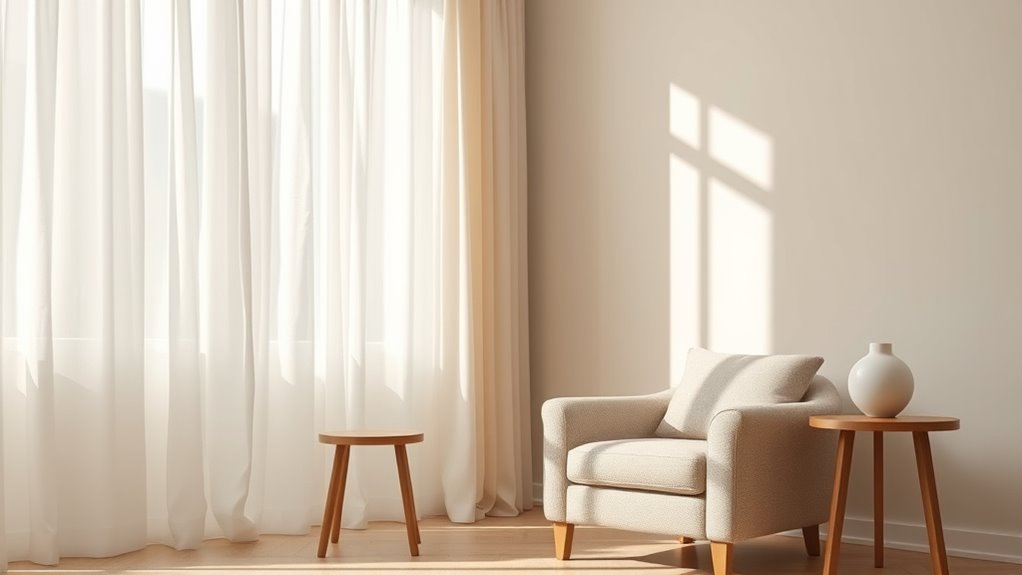
Creating a monochromatic room is an effective way to achieve a stylish, cohesive space that feels both calming and sophisticated. The key to success lies in carefully selecting a color palette that resonates with your personal taste while maintaining harmony throughout the room. When choosing your palette, opt for shades that are variations of a single color, such as soft grays, warm beiges, or muted blues. This approach creates a unified look that exudes tranquility. To guarantee your space doesn’t feel flat or dull, incorporate different tones, tints, and shades within your chosen color family. This variation adds depth and interest without disrupting the overall serenity. Incorporating varied textures and finishes into your decor can further enhance the visual richness of the monochromatic scheme. Furniture coordination plays a vital role in elevating your monochromatic design. Your furniture pieces should complement the color palette but also stand out subtly through texture, shape, or material. For instance, if you’re working with a gray palette, a plush velvet sofa paired with sleek leather accent chairs can create a pleasing contrast. Keep your furniture’s colors aligned with your chosen shades, but don’t shy away from mixing different textures and finishes. This contrast adds visual interest without breaking the cohesive feel. Additionally, consider the scale and proportion of your furniture; selecting pieces that fit well within the space ensures a balanced and inviting environment. Lighting is another essential element when designing a monochromatic room. Natural light will highlight the subtle variations within your color palette, making the space feel more dynamic. Use layered lighting—ambient, task, and accent—to emphasize different areas and textures. Warm lighting can enhance beige and cream tones, while cooler lights work beautifully with blues and grays. The right lighting can make your monochromatic scheme appear more vibrant and nuanced, preventing the room from feeling monotonous. Accessories and decor are where you can add personality without overwhelming the serene aesthetic. Think simple, elegant accents such as monochrome art, textured cushions, or sleek vases. Keep these accessories within your color palette to maintain cohesion. A few well-chosen pieces can provide visual focal points and prevent your room from feeling too uniform. Remember, the goal is to evoke a sense of calm and sophistication, so avoid clutter and overly busy patterns. Instead, focus on clean lines and subtle contrasts to keep your room feeling serene yet alluring.
Frequently Asked Questions
How Do I Add Variety Without Breaking Monochrome Harmony?
To add variety without breaking monochrome harmony, incorporate monochrome accessories in different textures and finishes. Use contrasting accents like cushions or artwork in subtly different shades to create visual interest. Mix matte, glossy, and textured surfaces to keep the space dynamic while maintaining unity. Small variations in tone and material help prevent monotony, ensuring your room feels lively yet cohesive.
Which Lighting Options Enhance Monochromatic Room Serenity?
Think of your room as a tranquil pond—you want gentle, soothing light. Use soft ambient lighting to create an even, calming glow, like moonlight on water. Add accent lighting to highlight textures or architectural details, giving depth without disrupting harmony. Dimmer switches can modify the mood effortlessly. Combining these options ensures a serene monochromatic space that feels both balanced and inviting, much like a peaceful retreat.
Can Monochrome Schemes Work in Small Spaces?
Yes, monochrome schemes work well in small spaces because they create a seamless, calming environment. You can use color psychology to select soothing shades that make the room feel larger and more serene. Incorporate monochrome accessories to add texture and interest without cluttering the space. Stick to lighter tones to maximize openness, and keep the decor simple to enhance the tranquil vibe, making your small room feel spacious and peaceful.
How Do I Incorporate Textures for Depth?
To incorporate textures for depth, start with texture layering by adding different fabrics, such as plush rugs, soft throws, and smooth curtains. Use material contrast like matte walls with glossy accessories or rough wood with sleek metal accents. Mix these elements thoughtfully to create visual interest and dimension. This approach keeps your monochromatic scheme lively while maintaining a serene atmosphere, making your space feel more inviting and multi-dimensional.
Are There Color Combinations Best for Relaxation?
You should focus on soft, muted colors like blues, greens, and neutrals, which are known for their calming effects based on color psychology. These hues create a peaceful environment and reduce stress, enhancing the emotional impact of your space. Avoid harsh or overly vibrant shades that can stimulate rather than soothe. By choosing these relaxing color combinations, you’ll craft a serene atmosphere that promotes relaxation and mental clarity effortlessly.
Conclusion
By choosing a monochromatic color scheme, you create a space that’s calm, cohesive, and effortlessly elegant. You simplify decision-making, enhance visual harmony, and foster a sense of tranquility. You embrace consistency, invite serenity, and elevate your environment. Ultimately, monochromatic rooms offer clarity, comfort, and timeless beauty. By focusing on one hue, you craft a sanctuary that nurtures your soul, refreshes your spirit, and transforms your home into a peaceful retreat.