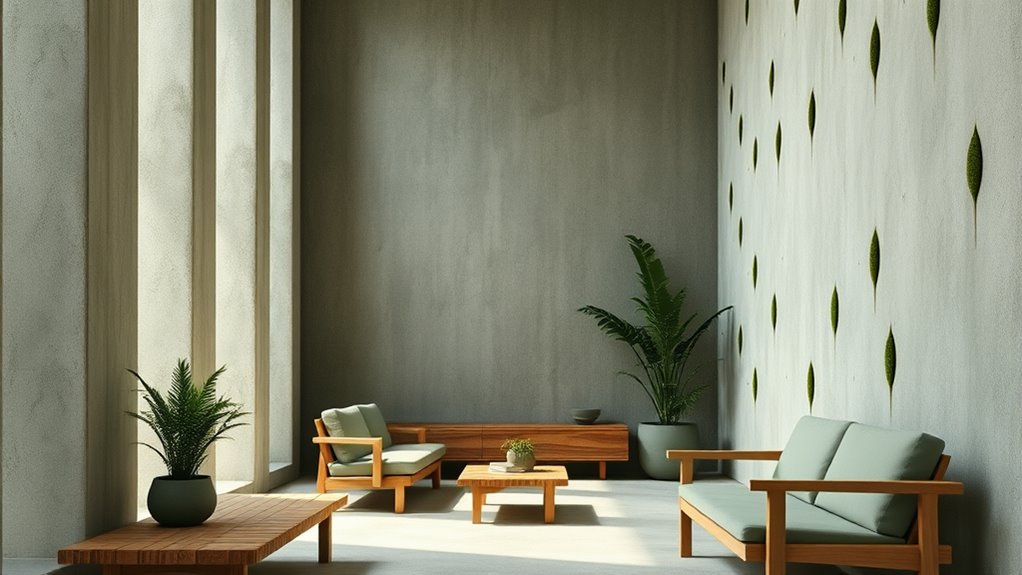

When designing with desaturated greens and moss tones, focus on creating a calming, natural environment that promotes relaxation. Incorporate textures like wood, linen, and matte stone finishes to add warmth and depth. Balance these earthy hues with understated materials to foster serenity and refinement. Keep the palette restrained to avoid overwhelming the space while emphasizing harmony. If you want to learn how to craft this tranquil aesthetic, exploring the details will help you achieve a timeless, balanced look.
Key Takeaways
- Use natural materials like wood, stone, and linen to enhance the earthy, calming qualities of desaturated greens and moss tones.
- Focus on a restrained color palette with subtle variations to create a tranquil, sophisticated environment.
- Incorporate textures such as matte finishes, soft textiles, and rough surfaces for visual and tactile depth.
- Balance modern elements with natural accents, like wooden furniture or metal fixtures, to deepen the organic aesthetic.
- Prioritize lighting and material interaction to emphasize the soothing and restorative qualities of moss and desaturated green hues.

When you choose desaturated greens and moss tones for your design, you create a calming, sophisticated atmosphere that feels both natural and understated. These hues evoke a sense of tranquility, grounding your space while adding an element of subtle elegance. Understanding color psychology is essential here; desaturated greens are known to promote relaxation, reduce stress, and foster a peaceful environment. They subtly connect your space to nature, which helps in creating restorative atmospheres ideal for homes, offices, or wellness centers. The muted quality of moss tones prevents the space from feeling overwhelming, instead encouraging a sense of serenity and balance. Incorporating natural materials like wood, stone, and linen further enhances this earthy aesthetic, creating a harmonious environment. Material pairing plays a vital role in enhancing the impact of these colors. To keep the look refined and cohesive, opt for natural materials like wood, stone, and linen. Light oak or reclaimed wood can amplify the earthy vibe, while matte stone finishes add texture without overpowering the subtle color palette. Linen or cotton textiles in neutral shades complement the desaturated greens, offering softness and comfort. Combining different textures—smooth wood, rough stone, and soft fabrics—adds visual interest while maintaining harmony. When selecting materials, think about their tactile qualities and how they interact with light, as this influences the overall mood of your space. Carefully curated material pairing can elevate the natural palette and deepen the tranquil atmosphere of your design. Incorporating these tones with the right material pairing also influences the perceived depth and richness. For example, pairing moss green walls with warm wooden furniture or accents enhances the organic feel. Conversely, mixing moss tones with cool metal fixtures like brushed nickel or black matte can introduce a contemporary edge, balancing nature-inspired colors with modern design elements. The key is to keep the palette restrained; too many contrasting materials can disrupt the calm aesthetic. Instead, focus on a few well-chosen textures and finishes to create a layered, inviting environment. Color psychology guides you to select hues that support your desired mood, but material pairing solidifies that intention. When you combine desaturated greens and moss tones with thoughtfully chosen materials, you craft a space that’s not only visually appealing but emotionally grounding. These elements work together to foster a sense of stability and comfort, making your environment both stylish and welcoming. Whether you’re designing a cozy retreat or a professional setting, understanding how color psychology and material pairing intertwine will help you achieve a timeless, balanced look rooted in natural simplicity.
Frequently Asked Questions
How Do Desaturated Greens Affect Room Lighting?
Desaturated greens soften room lighting effects, creating a calm, subtle atmosphere. They reduce glare and harsh shadows, making the space feel more inviting. These tones influence your color perception by adding a muted, natural vibe that promotes relaxation. When you choose desaturated greens, you’ll notice how the lighting feels more balanced and soothing, helping you enjoy a peaceful environment without overwhelming brightness or vivid color distractions.
Can Moss Tones Be Used in Modern Minimalist Designs?
Yes, moss tones work well in modern minimalist designs. You can pair moss tones with neutral shades like whites, grays, or blacks to create a calming, cohesive look. These tones add subtle texture and depth without overwhelming the space. Incorporate moss tone pairing through furniture, accents, or walls, enhancing minimalist color schemes with a touch of nature-inspired serenity. This approach keeps your space fresh and sophisticated.
What Are Complementary Colors to Desaturated Greens?
Ever wonder what colors make desaturated greens pop? Complementary colors for desaturated greens include warm tones like muted reds and soft terracottas, which create striking color pairing. These hues enhance visual harmony without overwhelming your design. Using these complementary shades helps balance your palette and emphasizes the natural, calming vibe of moss tones. Do you see how strategic color choices can elevate your minimalist aesthetic effortlessly?
How Do These Tones Influence Mood and Atmosphere?
These tones create a calming, soothing atmosphere by leveraging nature’s calming effect and the psychological impact of greens. They promote relaxation, focus, and tranquility, making spaces feel peaceful and grounding. You’ll find that desaturated greens and moss tones evoke a connection to nature, reducing stress and fostering a sense of stability. Using these hues intentionally can enhance mood and atmosphere, helping you craft environments that feel serene and inviting.
Are There Eco-Friendly Materials Suitable for Moss-Inspired Decor?
Imagine stepping into a lush forest where every element is eco-friendly. You’ll find sustainable wall coverings like cork, bamboo, and reclaimed wood, perfect for moss-inspired decor. Biodegradable decor options, such as moss panels made from natural fibers, allow your space to breathe with nature. These materials help reduce environmental impact, making your design not only beautiful but also responsible. Embrace eco-conscious choices that blend seamlessly with moss-inspired aesthetics.
Conclusion
By embracing desaturated greens and moss tones, you subtly invite a calming, timeless vibe into your space. These gentle hues whisper serenity and sophistication, gently guiding your surroundings toward understated elegance. When you delicately weave these colors into your designs, you create a soothing environment that feels both grounded and refined. It’s a quiet way to evoke nature’s grace without overwhelming, allowing your space to flourish with understated charm and quiet confidence.