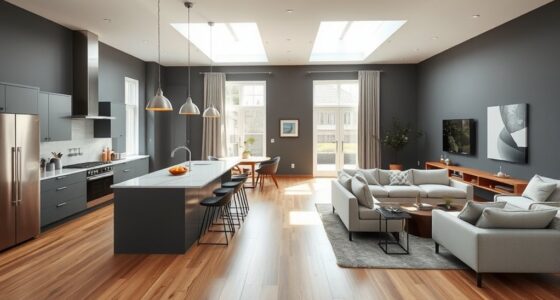
Using accent walls is an effective way to define open-plan spaces by creating visual boundaries and focal points. You can choose bold or calming colors that suit each zone, making them feel more organized and inviting. Position your furniture to reinforce these boundaries and highlight different areas like dining or lounging. With thoughtful color choices and strategic placement, you’ll turn open spaces into purposeful, stylish environments—learn more to master the art of accent wall use.
Key Takeaways
- Use contrasting or bold paint colors on one wall to visually separate different zones within an open-plan layout.
- Place furniture to face or align with the accent wall, reinforcing the boundaries of each designated area.
- Incorporate lighting and decor accents that complement the wall color, enhancing the sense of distinct spaces.
- Choose accent wall colors based on the desired mood of each zone, guided by color psychology principles.
- Utilize accessories like rugs or artwork near the accent wall to further define and personalize different open-plan areas.
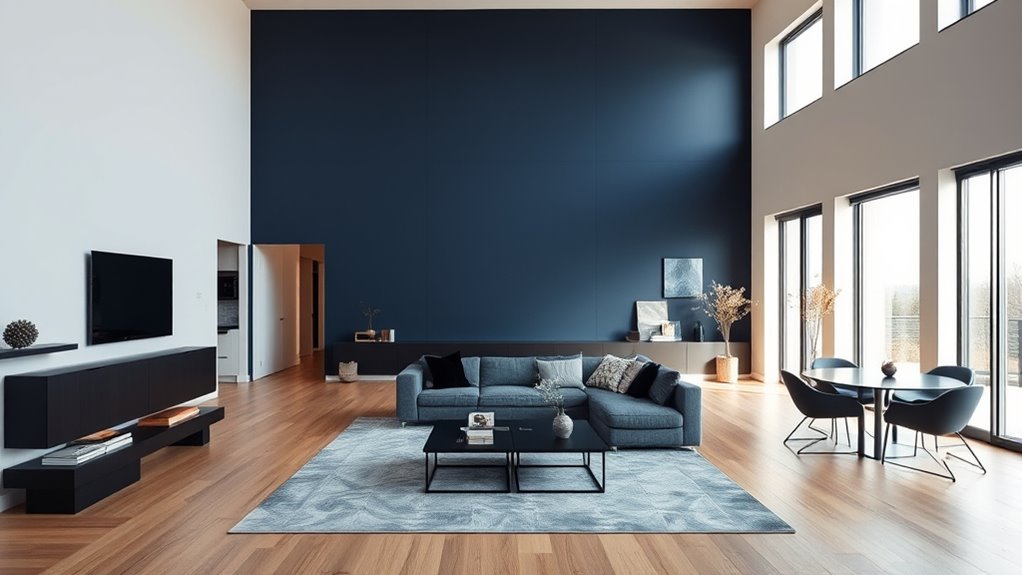
In open-plan spaces, accent walls offer a simple yet effective way to define areas and add visual interest. When you choose a bold or contrasting color for one wall, you create a natural focal point that visually separates different zones without the need for walls or partitions. This technique allows you to carve out distinct areas for dining, lounging, or working, making your space feel more organized and purposeful. To maximize this effect, consider the principles of color psychology. For example, calming blues and greens can make a living area feel serene, while energetic reds or yellows can invigorate a dining space. Your choice of hue influences how you and your guests perceive and use each zone, subtly guiding behavior and mood. **Understanding color psychology can help you select an accent wall hue that enhances the desired ambiance.** Equally important is furniture placement when working with an accent wall. How you arrange your furniture can reinforce the separation created by the wall, making the distinction clear and intentional. Position a sofa facing or perpendicular to the accent wall to draw attention and anchor the seating area. Use rugs, lighting, and accessories to further emphasize the boundaries. For instance, a statement light fixture hanging over the dining table can highlight that zone, complementing the color psychology of the accent wall. Keep in mind that furniture placement should also respect flow and functionality; avoid blocking pathways or creating cluttered spaces that diminish the visual impact of your accent wall. The color you select for your accent wall should resonate with the overall mood you want your space to evoke, while also harmonizing with your furniture and decor. If your furniture features neutral tones, a vibrant or deep-colored accent wall can bring energy and depth to the room. Conversely, if your furnishings are already colorful, opting for a more subdued or monochromatic wall can provide balance and sophistication. Think about how the wall’s color interacts with your furniture placement—does it highlight certain pieces or create a backdrop that makes everything pop? Ultimately, the key is to be intentional with your choices. An accent wall isn’t just about adding a splash of color; it’s about shaping the space’s identity. When you combine thoughtful color psychology with strategic furniture placement, you’ll craft a cohesive environment that feels both spacious and inviting. This approach helps you make your open-plan space feel more structured and personalized, turning what could be a chaotic area into a well-defined, visually appealing home.
Frequently Asked Questions
Can Accent Walls Improve Room Acoustics in Open-Plan Spaces?
Accent walls can help improve room acoustics by providing sound absorption, reducing echoes, and minimizing noise transfer. They also create visual separation, making open-plan spaces feel more defined and less chaotic. By choosing materials like textured paint or fabric-covered surfaces, you enhance sound quality while adding style. So, yes, accent walls are a practical way to boost acoustics and define different zones in your open-plan area effectively.
What Are the Best Materials for Creating Durable Accent Walls?
Think of choosing wall treatments like picking armor for your walls—durability matters. For a lasting accent wall, opt for materials like ceramic tiles, textured wallpaper, or reclaimed wood, which stand up to wear and tear. These materials offer surface durability, preventing chips and scratches. Just like a sturdy shield, they protect your space and keep your accent wall looking fresh for years to come.
How Do I Choose the Right Color for My Accent Wall?
You choose the right color for your accent wall by considering color psychology and how it influences mood. Think about the atmosphere you want—calm, energetic, or cozy—and select shades that reflect that. Also, guarantee your accent wall’s color coordinates well with the surrounding walls and furniture. Test small swatches first, and visualize how different hues will work together to create a balanced, inviting space that highlights your style.
Are There Eco-Friendly Options for Accent Wall Materials?
Yes, you can choose eco-friendly options for your accent wall. Look for paints made with recycled materials or natural finishes like clay, lime, or milk paint, which are low in volatile organic compounds (VOCs). You might also consider reclaimed wood or bamboo panels, which add texture and sustainability. These choices help reduce environmental impact while creating a beautiful, distinctive focal point in your open-plan space.
How Often Should I Update or Change My Accent Wall?
Like the tides of decorating trends, your accent wall should evolve with your style. You might update it every 1-3 years, or whenever your taste shifts. Keep maintenance tips in mind: if the paint chips or stains, it’s time for a refresh. Regularly reassessing your space helps keep your décor fresh and relevant, ensuring your accent wall continues to make a striking statement without overwhelming your open-plan area.
Conclusion
By choosing the right accent wall, you define your space, add personality, and create focus. By selecting bold colors, you make a statement; by opting for textures, you add depth; by matching decor, you bring harmony. An accent wall isn’t just a design feature—it’s your opportunity to express your style, enhance your space, and make a lasting impression. Embrace the power of accents to transform your open-plan into a personalized, inviting haven.