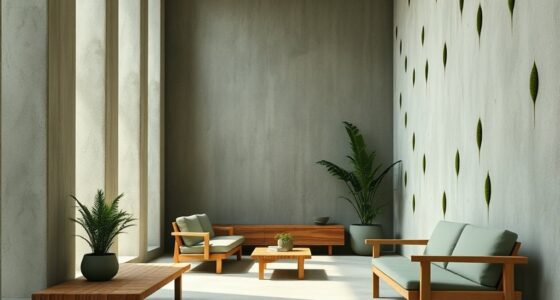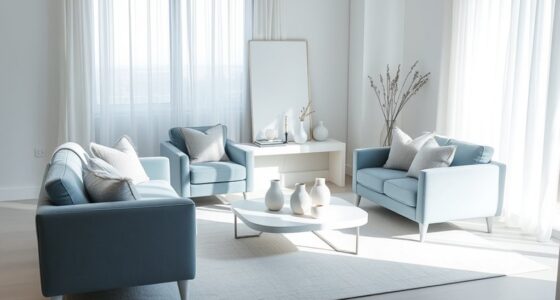

To make your small space brighter and feel more open, choose light-reflective colors like whites, creams, and pastels. These colors bounce natural light, creating an airy atmosphere. Incorporate glossy or semi-gloss finishes and mirrors to amplify light further. Light hues help reduce visual clutter, making the room appear larger, while reflective accents add brightness. Keep exploring ways to optimize your space—there’s more to discover that can transform your environment even further.
Key Takeaways
- Choose light, reflective colors like whites, creams, or pastels to maximize natural light dispersion.
- Use glossy or semi-gloss finishes to enhance light reflection and brighten small spaces.
- Incorporate mirrors and metallic accents to bounce sunlight and amplify brightness.
- Opt for neutral, light hues as wall colors to create an open, airy atmosphere.
- Combine light colors with natural materials and reflective elements to further enhance space perception.

In small spaces, maximizing natural light can make a significant difference, and choosing the right colors plays a crucial role. When you select colors thoughtfully, you can influence how light interacts with your environment, making your space feel brighter and more open. Understanding color psychology helps you pick hues that evoke feelings of spaciousness and positivity, while also enhancing light reflection to bounce more daylight around the room. Light colors, especially whites, creams, and soft pastels, are excellent choices because they reflect more light, creating an airy atmosphere that visually expands the space. Conversely, darker shades tend to absorb light, making a room feel smaller and more enclosed.
Maximize natural light in small spaces with light colors like whites and pastels to create an airy, spacious feel.
By applying light-reflective colors strategically, you can maximize the natural illumination from windows and other light sources. For example, painting walls in shades like off-white or pale beige allows sunlight to bounce off surfaces, dispersing brightness evenly throughout the room. This not only brightens the space but also highlights other design elements, such as furniture or artwork. You might consider incorporating glossy or semi-gloss finishes, which reflect more light than matte paints, further amplifying the effect. When choosing colors, keep in mind that the tone and undertones matter; cool hues like light blues or soft greens can add a sense of calm and openness, while warm shades such as light yellows or peach can create a cozy, inviting atmosphere without sacrificing brightness.
Color psychology also guides your choices by helping you understand how certain hues influence mood and perception. Light, neutral colors tend to make small spaces feel less cluttered and more expansive. Bright colors, used sparingly as accents, can energize a room without overwhelming it. You can enhance light reflection by using mirrors or metallic finishes that bounce light around the room, but the foundation still lies in your wall colors. Keep in mind that natural light changes throughout the day; what looks luminous in the morning might appear duller in the evening, so selecting versatile, reflective colors ensures your space remains lively and inviting at all times. Additionally, incorporating natural materials like wood and linen can amplify the warm, welcoming feel of your space, especially when paired with reflective color choices.
Ultimately, the goal is to choose colors that complement the natural light your space receives, amplifying its presence rather than competing with it. By understanding how color psychology influences perception and leveraging light reflection, you transform small rooms into bright, welcoming retreats. Your choice of hues can make the difference between a cramped, dark space and a cheerful, open environment that feels much larger than it is.
Frequently Asked Questions
How Does the Direction of Windows Affect Color Choices?
Your window orientation and sunlight angles directly influence your color choices. For south-facing windows, opt for warm, vibrant hues that enhance the abundant sunlight. East-facing windows bring gentle morning light, so soft pastels work well, while west-facing windows highlight afternoon warmth, making bold colors appealing. North-facing windows receive diffused light, so cooler tones help reflect light better. Adjust your color palette based on window orientation to maximize natural light and create a balanced space.
Can Reflective Surfaces Improve Natural Light in Small Rooms?
Mirrors can definitely boost natural light in small rooms, especially when you place them strategically. Position a mirror opposite a window to reflect sunlight and brighten the space. Matte surfaces diffuse light softly, while glossy ones reflect it sharply, creating a more luminous feel. You might find that a well-placed mirror with a glossy finish amplifies daylight, making your room feel larger and more inviting.
Which Colors Are Best for Enhancing Natural Light During Different Seasons?
During different seasons, you should choose seasonal color palettes that reflect natural light changes. In summer, opt for light, reflective hues like whites and pastels to maximize brightness. In winter, incorporate warm, light-absorbing hues like deep reds and browns to add coziness. Spring and fall benefit from soft, neutral tones that adapt to shifting light. These choices help enhance natural light year-round, making your space feel brighter and more inviting.
How Do Ceiling Colors Influence the Perception of Space and Light?
Your ceiling color greatly influences how you perceive space and light. A lighter ceiling color, especially with a matte or satin sheen, can make your ceiling seem higher, creating a more open feel. If your ceiling is low, avoid dark hues that shrink the space visually. Bright, reflective sheens bounce light around, enhancing natural brightness, while matte finishes absorb light, making the room feel cozier but potentially smaller.
Are There Specific Color Combinations That Maximize Natural Light Effects?
Think of your space as a canvas, ready for a masterpiece. You’ll want to choose color pairings that reflect and amplify light, like soft whites with pale blues or warm neutrals with gentle yellows. Opt for hue contrast to create depth without overpowering, and avoid dark or overly saturated colors that absorb light. These combinations make natural light bounce around, making your small space feel brighter and more inviting.
Conclusion
So, next time you struggle with a tiny, dim room, just slap on some bright paint and pretend you’ve solved all your problems. Who needs big windows or clever design when a splash of color can magically turn darkness into daylight? Just remember, if your space still feels gloomy, maybe it’s time to admit that no shade can truly replace good architecture—or a little honesty about your decorating skills. Cheers to bright ideas!