
TL;DR
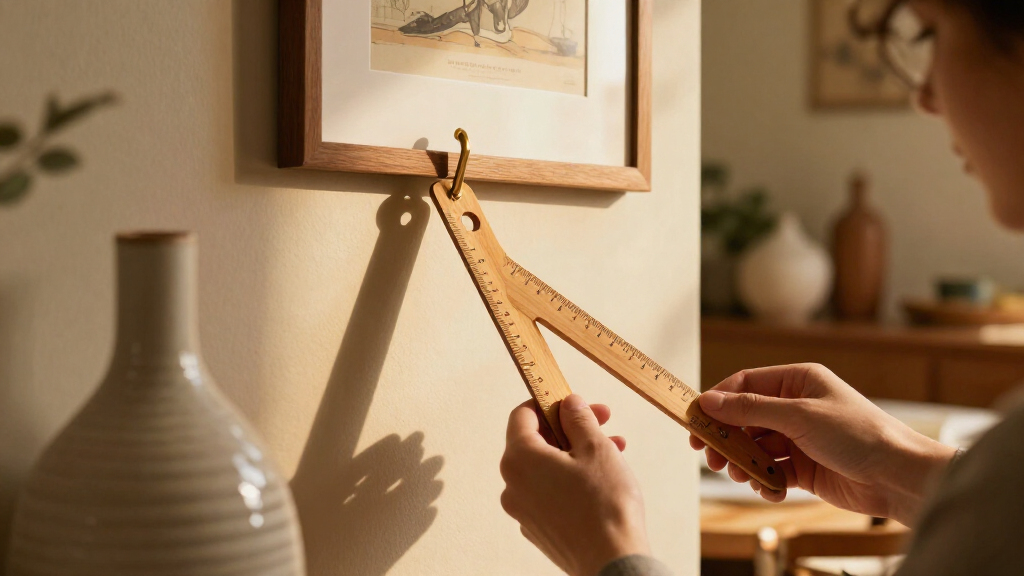
The hole near the end of many rulers is primarily a storage feature, letting users hang the ruler on a hook or peg. Family Handyman reports that students once used holes to tie on cloths for cleaning slate boards; rulers with multiple or specially placed holes may also support other tasks.
The hole near the end of many rulers is mainly there to make the tool easier to hang and store, according to a report by Family Handyman. The feature also has a reported historical connection to students’ slate boards, while holes on some modern rulers serve additional purposes such as binder storage or craft marking.

Get decor and gifts delivered free with Prime
- Fast, free delivery on millions of items
- Prime Video, Amazon Music and more included
- Member-only deals all year
A hole lets a ruler hang from a hook, nail or pegboard rather than being left in a drawer or on a workbench. The report says this can be especially useful for long metal rulers that may not fit easily in a toolbox. For ordinary measuring, the hole does not change the ruler’s accuracy: a ruler without one can measure just as accurately.
Family Handyman also describes an earlier use tied to slate boards, which students used for writing before paper notebooks became common in schools. According to the report, some students passed string through the ruler’s hole to attach a damp cleaning cloth, keeping it close at hand. The report says this practice faded as schools moved away from slate, while the hole remained useful for storage.
Other holes depend on the ruler’s design. Some school rulers have three holes spaced to match a three-ring binder. Certain specialty rulers have openings that can help draw circles, mark quilting patterns or guide craft work. These features are not standard across all rulers; their purpose depends on the model and placement.
A Small Feature With Practical Uses
For most people, the hole is a simple way to keep a ruler visible and accessible, particularly in a classroom, workshop or craft area. Hanging a long ruler can also free drawer or toolbox space. The explanation helps distinguish this practical feature from a measurement function: the hole itself does not improve measuring precision.
On specialty tools, openings can support particular tasks, but users should not assume every hole is intended for the same purpose. A circle-drawing method may work for a ruler designed with suitable openings, while quilting or stitching rulers can use holes and slots as guides. For precise circles, the report says a compass remains the better choice.
Products Worth Considering

Shark Pet Cordless Stick Vacuum, Up to 40-Minute Runtime, Lightweight, Ocean Blue, IX141

Dyson Cyclone V10 Origin Cordless Vacuum

Bose TV Speaker (2nd Gen) Compact Soundbar with Bluetooth, HDMI-ARC, and Remote
As an affiliate, we earn on qualifying purchases.
From Slate Boards to Storage Hooks
The report links the ruler hole’s historical use to classroom writing on reusable slate boards. Students could erase their work with a damp cloth and write again; attaching the cloth to a ruler meant it was available when needed. Family Handyman presents this as a past use, not as the main reason rulers are made with holes today.
Modern ruler designs vary. Some have no holes, some have one near an end, and longer metal models may have one at each end. The source material also references product information from STAEDTLER, Kapro and Westcott, as well as an object-history resource from the University of Wisconsin–Madison. The report’s central point is that manufacturers’ choices reflect how a particular ruler is expected to be stored or used.
“The hole at the end of a ruler is mainly there for storage.”
— Family Handyman report
The Purpose Depends on the Ruler
The supplied report does not establish that every ruler hole originated for the same reason, or that slate-cleaning cloths explain the design of every modern ruler. The historical account is presented as one earlier use; the main current purpose identified is hanging and storage.
Nor can the function of every opening be inferred from its appearance alone. Multiple holes may align with binder rings, support a drawing technique or serve a specialized craft task, but the report does not give a complete catalog of designs. For a particular ruler, its manufacturer’s instructions or product description are the best source for intended uses.
Check the Ruler’s Intended Use
There is no policy change or pending development described in the report. For readers, the practical next step is to use the end hole for hanging or storage when convenient, and to check the model’s documentation before using other openings as drawing or cutting guides.
People using a specialty ruler for quilting, paper crafts or stitching can follow its instructions to identify which holes or slots match the task. For precise circles, the report recommends a compass rather than relying on a ruler’s holes.
Key Questions
What is the hole near the end of a ruler for?
Its main purpose is hanging and storage. It can be placed on a hook, nail or pegboard so the ruler does not have to sit in a drawer or on a work surface.
Did students use ruler holes with slate boards?
Family Handyman reports that some students tied a damp slate-cleaning cloth to their rulers with string through the hole. The source describes this as a historical use, not the main purpose today.
Do the holes make a ruler more accurate?
No. The report says a ruler without holes can measure just as accurately as one with them.
Why do some rulers have several holes?
It depends on the design. Three holes on some school rulers align with three-ring binders; openings on specialty models may help with circle drawing, quilting, marking or other craft tasks.
Can a ruler hole replace a compass for drawing circles?
Some specialty rulers can help draw circles, but Family Handyman says a compass is still better when exact measurements matter.
Source: familyhandyman.com