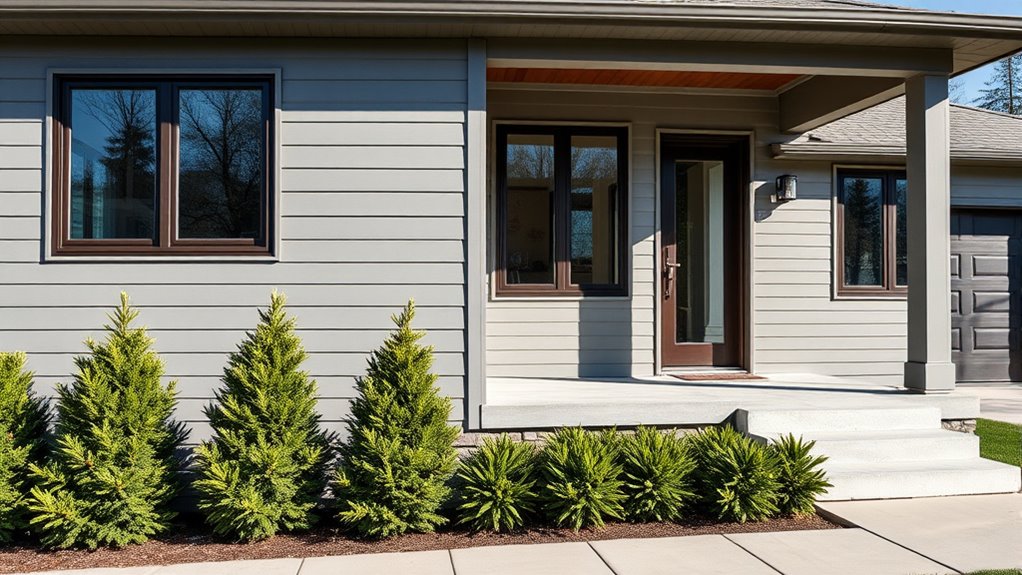

When choosing low-maintenance exterior materials, opt for options like vinyl or fiber cement siding, which require minimal upkeep and resist weather, pests, and mold. High-quality, durable paints with UV resistance help reduce repainting needs and keep your home looking fresh longer. Proper installation and regular simple cleaning can extend their lifespan even further. Keep these tips in mind, and you’ll discover more ways to simplify your home’s exterior upkeep efficiently.
Key Takeaways
- Select siding materials like vinyl, fiber cement, or metal for minimal upkeep and resistance to weather and pests.
- Use high-quality, UV-resistant exterior paint formulated for durability and flexibility to reduce touch-ups.
- Ensure proper installation to prevent moisture intrusion and enhance long-term performance of exterior materials.
- Schedule regular inspections and cleaning to maintain appearance and prevent damage.
- Choose materials designed for low-maintenance, combining durability with ease of care over time.
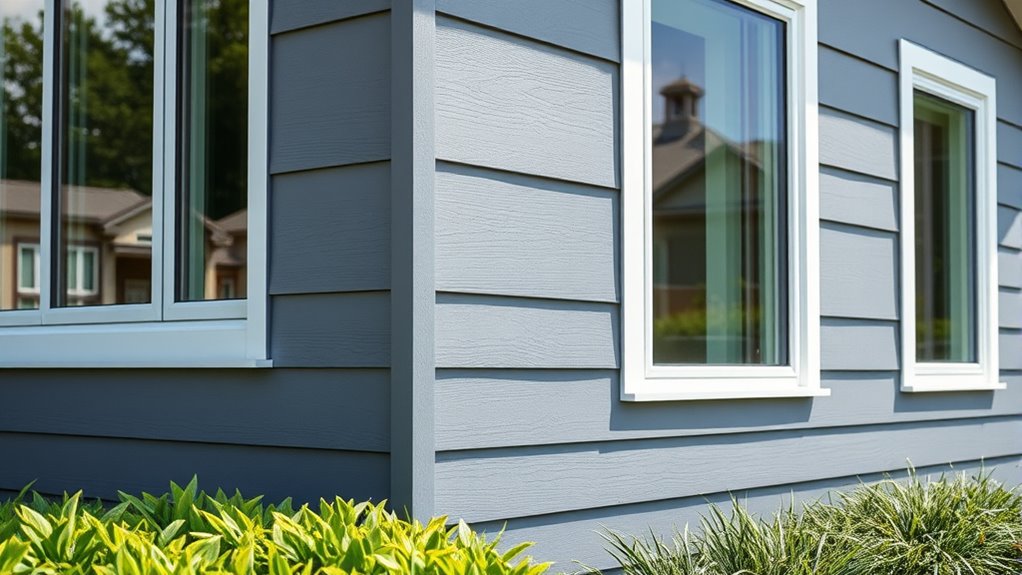
When selecting exterior materials for your home, prioritizing low-maintenance options can save you time, effort, and money in the long run. One of the most important considerations is choosing materials that stand up well to weather and wear, reducing the need for frequent repairs or replacements. Paint durability plays a key role here. Opt for high-quality exterior paints designed specifically for your climate. These paints resist peeling, fading, and mold, which means your home will retain its fresh look longer without constant touch-ups. When selecting paint, look for formulations with UV resistance and flexible finishes that can expand and contract with temperature changes, preventing cracks and peeling over time.
Another critical aspect is siding options. The right siding can dramatically cut down on upkeep, as some materials require minimal cleaning or repainting. Vinyl siding, for instance, is a popular low-maintenance choice because it doesn’t need painting and can be easily washed with a garden hose to remove dirt and grime. Its resistance to pests, rot, and moisture makes it a durable option for many climates. Fiber cement siding offers a similar low-maintenance profile but with added strength and resistance to fire, insects, and weather. It can be painted initially, but it holds paint well, meaning you won’t need to repaint frequently. For those seeking a more natural look with even less upkeep, metal siding is highly durable, resistant to pests and rot, and requires only occasional cleaning to maintain its appearance.
When considering siding options, also think about the installation process and long-term durability. Proper installation ensures your siding performs as intended, preventing moisture intrusion or other issues that lead to costly repairs. Some siding materials, like engineered wood or composite options, mimic traditional materials but are engineered to withstand elements better and require less ongoing maintenance. Additionally, choosing materials with security benefits can help protect your home from potential damage and extend its lifespan.
In addition to choosing the right materials, regular inspection and cleaning can extend their lifespan. Simple tasks like washing siding annually and checking for damage or loose panels can prevent bigger problems down the line. For painted surfaces, touch-ups should be made promptly to avoid peeling or water infiltration, but with high paint durability, these touch-ups will be less frequent. By selecting siding options that are inherently low-maintenance and investing in quality paint, you set your home up for a more manageable, attractive exterior that stays in great shape with minimal effort.
Frequently Asked Questions
Which Exterior Materials Are Most Eco-Friendly?
You should consider sustainable options like reclaimed wood, bamboo, and recycled metal for your exterior. These materials are eco-friendly finishes that reduce environmental impact and often require less maintenance. Using low-VOC paints and natural stone can also boost your home’s sustainability. By choosing these eco-friendly finishes, you help lower your carbon footprint while enjoying durable, attractive exteriors that are easier to care for over time.
How Do Different Materials Perform in Extreme Weather?
Facing extreme weather is like battling a relentless storm, but your exterior materials can stand strong. Vinyl and fiber cement excel in weather resistance, handling heavy rain, snow, and intense sun without cracking or warping. Brick and stone also perform well, though installation challenges increase with their weight and complexity. Metal sidings resist wind and hail, but may need extra coating for corrosion. Select wisely to guarantee your home endures nature’s fiercest tests.
Are Low-Maintenance Options Cost-Effective Long-Term?
Yes, low-maintenance options are generally cost-effective long-term because they save you money on repairs and upkeep. You’ll benefit from cost savings over time, especially since these materials often have better durability factors, resisting weather and wear better than traditional choices. While the initial investment might be higher, the reduced maintenance costs and increased lifespan make low-maintenance exterior materials a smart, economical choice for your home.
Can These Materials Be Painted or Customized Later?
Imagine your home shimmering with fresh paint or a splash of bold color—many low-maintenance exterior materials offer excellent paint flexibility and color customization options. You can easily refresh or change your home’s look later, just like adding a new coat of vibrant paint to a canvas. These materials are designed to accept paint well, allowing you to personalize your exterior whenever your style evolves, keeping your home feeling fresh and uniquely yours.
What Are the Best Materials for Historical Home Preservation?
For historic preservation and maintaining architectural authenticity, you should choose materials like wood, brick, or natural stone, which match the original construction. These materials preserve the home’s historic charm and are typically approved for restoration projects. Use historically accurate paint colors and finishes to enhance authenticity. By selecting these options, you guarantee your home retains its period-specific character while still being durable and low-maintenance when properly cared for.
Conclusion
Imagine your home’s exterior shining effortlessly, with vibrant colors and clean lines standing strong against the elements. By choosing low-maintenance materials, you’ll enjoy a beautiful facade without the constant upkeep—no peeling paint or endless scrubbing. Think of it as giving your home a sleek, polished look that endures seasons and storms, all while freeing up your time. With the right materials, your house becomes a stunning, worry-free retreat, inviting you to relax and enjoy its effortless charm.