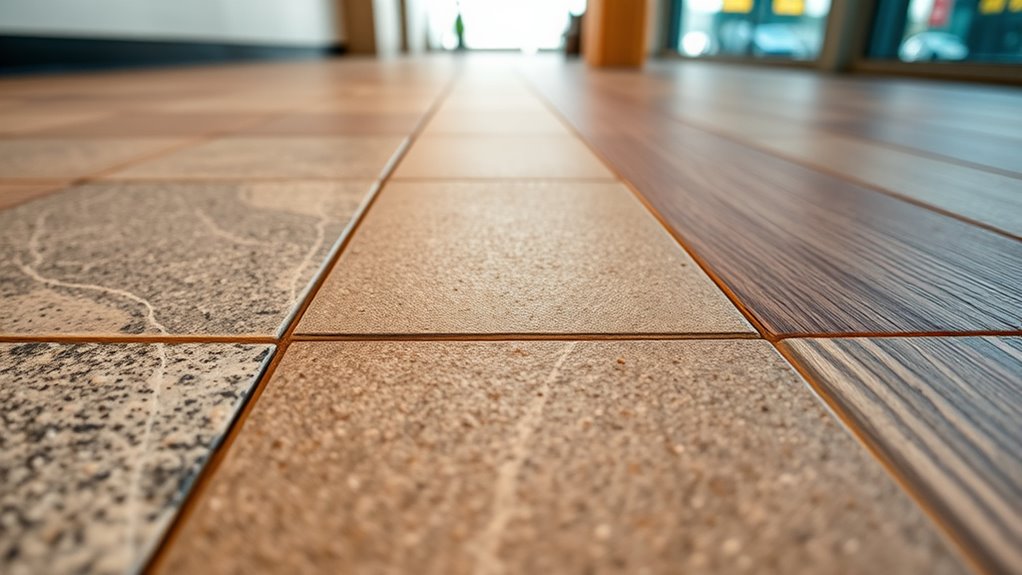

When choosing non-slip flooring for safety, focus on options with matte or textured finishes like rubber, vinyl, or textured tiles, especially in moisture-prone areas. Avoid glossy surfaces that can be slippery when wet. Regular maintenance, such as cleaning with the right products and reapplying protective coatings, helps maintain slip resistance. Considering durability and ease of upkeep ensures long-lasting safety. Keep exploring to find out how to select the best materials for your specific space.
Open a free Amazon Business account
Business pricing, bulk buying and tax-exempt orders.
As an affiliate, we earn on qualifying purchases.
Key Takeaways
- Opt for textured or matte finishes like rubber, vinyl, or textured tiles to enhance slip resistance in moisture-prone areas.
- Prioritize flooring with high-quality, wear-resistant coatings that maintain slip resistance over time.
- Choose surfaces with embedded non-slip properties or safety certifications for added assurance.
- Consider the environment—outdoor and commercial spaces benefit from durable, slip-resistant materials designed for heavy use.
- Regular maintenance and proper cleaning help preserve the slip-resistant properties of your flooring material.
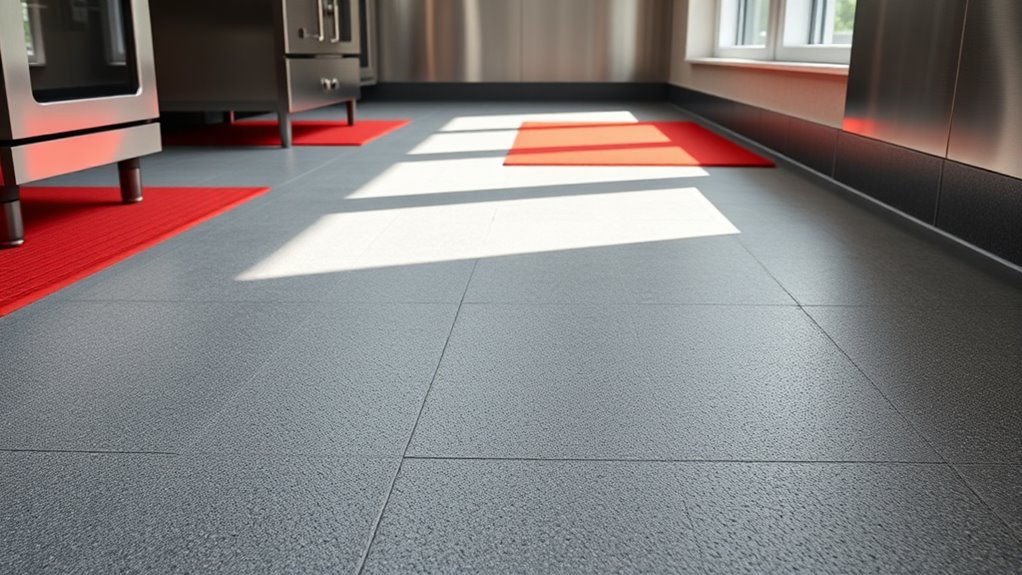
When selecting flooring for your space, safety should be a top priority, especially in areas prone to moisture or spills. Non-slip flooring options are essential to prevent accidents and ensure peace of mind. As you evaluate different materials, consider how the coat finishes impact slip resistance. Many flooring types come with various finishes that can either enhance or diminish their grip underfoot. For example, a glossy or high-sheen coat may look attractive, but it can create a slippery surface when wet. Conversely, matte or textured finishes typically offer better traction, making them safer choices in high-moisture environments like kitchens, bathrooms, or outdoor patios.
Choose matte or textured finishes for safer, slip-resistant flooring in moisture-prone areas.
You also need to think about maintenance considerations when choosing non-slip flooring. Some finishes are easier to clean and maintain than others. For instance, textured rubber or vinyl floors often resist stains and are straightforward to keep clean, but they may require specific cleaning products to preserve their slip-resistant qualities. In contrast, hardwood floors with a matte or satin coat finish can be less demanding to maintain, but you’ll want to be mindful of how frequently you need to reapply protective finishes to keep their slip resistance intact. Regular cleaning prevents dirt and grime from building up in textured surfaces, which could otherwise reduce traction over time.
Moreover, the durability of the coat finish plays a significant role in your flooring’s safety and longevity. A high-quality, wear-resistant coat finish helps maintain the non-slip properties longer, especially in high-traffic areas. Cheaper finishes might wear down quickly, exposing smoother layers underneath that can become hazardous. When choosing your flooring, ask about the wear layer and whether the manufacturer recommends specific maintenance routines to preserve its slip resistance. Some finishes may need periodic reapplication or sealing to keep their textured surface effective and safe.
Remember that selecting non-slip flooring isn’t just about the initial installation; ongoing maintenance and the right coat finishes are equally crucial. Regular inspections and proper cleaning will ensure your flooring remains slip-resistant and safe over time. When you prioritize durability, appropriate finishes, and easy maintenance, you create a safer environment for everyone. Additionally, coating technologies have advanced to improve slip resistance without sacrificing appearance or ease of cleaning. Ultimately, balancing these factors will help you choose a flooring material that offers both safety and longevity, giving you confidence that your space remains secure, no matter how often it’s used or how much moisture it encounters.
As an affiliate, we earn on qualifying purchases.
Frequently Asked Questions
How Do Non-Slip Floors Affect Indoor Air Quality?
Non-slip floors generally don’t negatively affect indoor air quality, but their slip resistance impact can influence cleaning routines. If a non-slip surface traps dust or debris, it may increase indoor air impurities over time. Regular cleaning helps minimize this, ensuring that the slip resistance doesn’t compromise air quality. Choose flooring with low VOC emissions and easy-to-maintain surfaces to keep indoor air fresh and safe for everyone.
Are Non-Slip Flooring Options Suitable for Outdoor Use?
Yes, non-slip flooring options are suitable for outdoor use. Did you know that over 40% of outdoor accidents involve slips and falls? You’ll want to choose materials with excellent outdoor durability and weather resistance, like textured concrete or rubber. These options withstand rain, snow, and sun, ensuring safety year-round. Just make certain the non-slip surface maintains grip despite weather conditions, making your outdoor space safer and more reliable.
What Maintenance Is Required for Non-Slip Surfaces?
You should regularly clean your non-slip surfaces with gentle cleaning routines, like sweeping and mopping with mild detergents, to maintain their grip. Avoid harsh chemicals that could damage the traction. Keep an eye out for wear and tear, and consider repair considerations if you notice peeling or worn areas. Promptly addressing these issues guarantees your non-slip flooring stays safe and effective, prolonging its durability and performance.
Can Non-Slip Flooring Be Installed Over Existing Floors?
Imagine you’re in a vintage film, and you decide to upgrade your space. Yes, you can install non-slip flooring over existing floors. Just make certain proper surface preparation and flooring installation techniques. You need to assess the current surface’s condition, clean it thoroughly, and repair any damage. This way, your new non-slip surface sticks well and offers safety without the hassle of tearing out old flooring.
How Durable Are Non-Slip Flooring Materials Over Time?
Non-slip flooring materials are quite durable over time, especially when they have high abrasion resistance and weather resistance. You’ll find that these surfaces withstand daily wear and tear, resisting scratches and fading even in harsh conditions. Regular maintenance helps preserve their slip resistance and appearance, ensuring they continue to provide safety and longevity. So, you can confidently choose non-slip options knowing they’ll stand up to years of use.
Conclusion
Ultimately, selecting non-slip flooring isn’t just about safety—it’s about trusting the idea that prevention can substantially reduce accidents. While some might believe all surfaces are inherently safe, evidence suggests that proper materials can genuinely make a difference. By choosing the right non-slip options, you’re not only protecting yourself and others but also embracing a proactive approach rooted in proven safety principles. Remember, the smallest precaution can have the biggest impact on preventing falls.
Fall yard work Picks
leaf blowers
As an affiliate, we earn on qualifying purchases.