
Converting your bathtub to a roll-in shower improves safety and accessibility, especially if you have mobility issues. Measure your current tub carefully to guarantee a proper fit and plan for features like a low-threshold entry, a flat, slip-resistant floor, grab bars, and a fold-down or built-in seat. Installing accessible controls and a handheld showerhead adds convenience. Proper space planning is key for easy maneuverability. If you keep exploring, you’ll discover more tips to make your bathroom both functional and safe.
Key Takeaways
- Measure current bathtub dimensions accurately to ensure the new roll-in shower fits within available space.
- Design a low or no-threshold entry with a level, slip-resistant floor for safe wheelchair access.
- Install accessible grab bars and a fold-down seat to enhance safety and comfort during use.
- Choose user-friendly fixtures, including lever handles and a handheld showerhead, for easy operation.
- Plan for adequate maneuvering space and professional consultation to optimize layout and functionality.
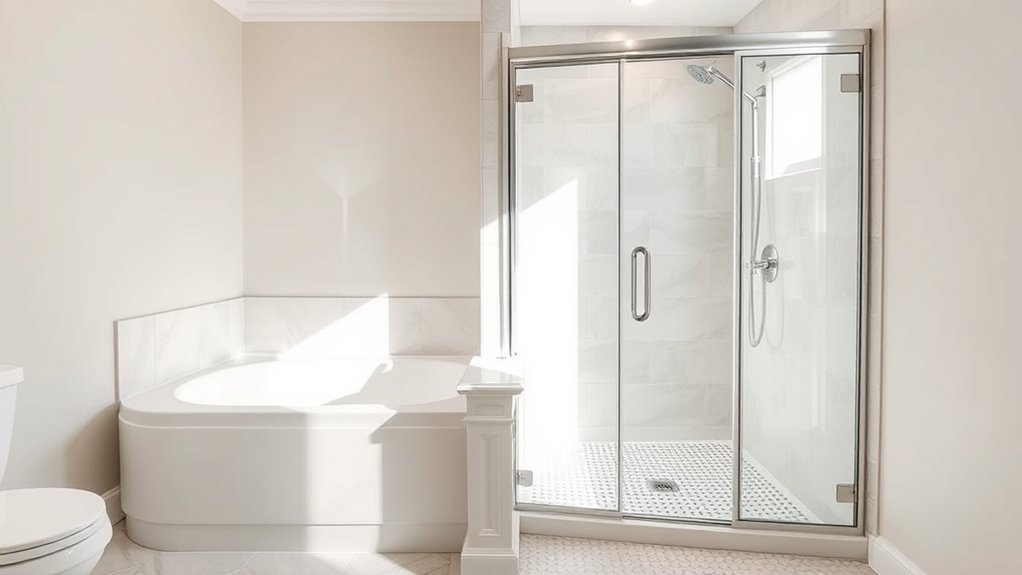
If you’re considering making your bathroom more accessible, converting your bathtub into a roll-in shower is a practical solution. This change can considerably improve safety and ease of use, especially for individuals with mobility challenges. Before starting, you’ll want to examine your current bathtub’s dimensions. Standard bathtubs tend to measure about 60 inches long, 30 inches wide, and 14-16 inches deep, but these can vary. Knowing your bathtub’s exact dimensions helps you plan the conversion accurately, ensuring the new shower will fit comfortably and function properly. The goal is to create a space that’s spacious enough to accommodate a wheelchair or mobility aid without feeling cramped.
Assess your bathtub dimensions to ensure a proper, safe roll-in shower conversion.
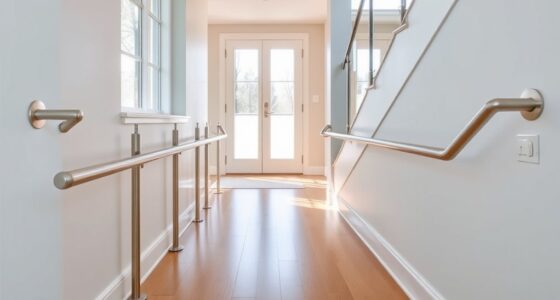
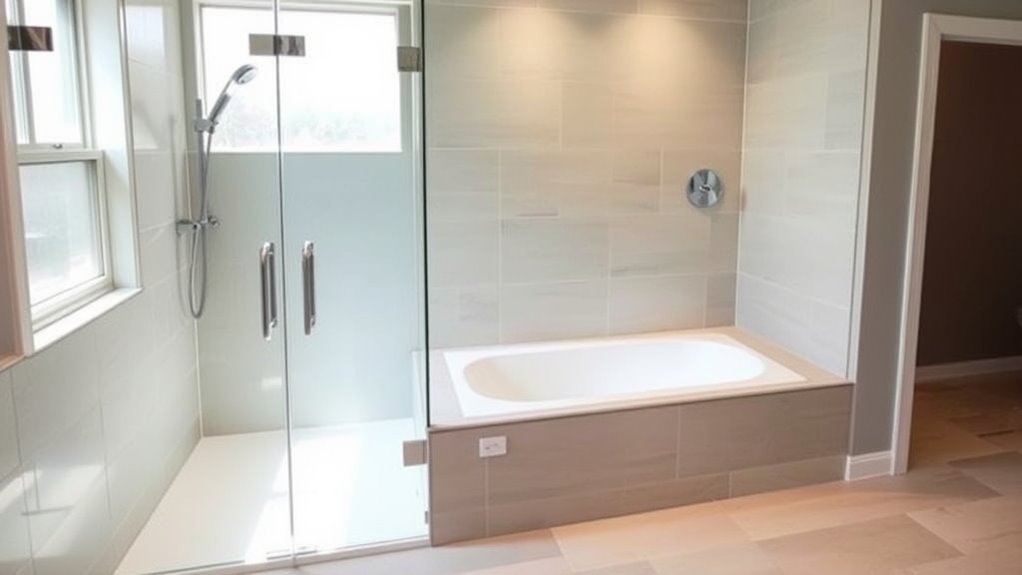
Shower accessibility features are essential in designing a functional roll-in shower. You’ll want to include features like a low or no-threshold entry, which eliminates the step-over barrier found in traditional bathtubs. This allows for easy entry and exit, providing independence to users. A properly designed roll-in shower typically has a flat, level floor that slopes gently toward the drain, ensuring water stays within the shower area and prevents slipping hazards. It’s also necessary to incorporate grab bars strategically placed around the shower for stability and safety. These provide support when standing or transferring, reducing the risk of falls.
When selecting shower accessibility features, consider adding a built-in or fold-down seat for comfort and convenience. This is especially helpful for those who can’t stand for long periods. Anti-slip flooring is another critical feature, reducing the risk of slips when the floor is wet. You might also want to install a handheld showerhead with a flexible hose, making it easier to rinse and clean. The controls should be easy to reach and operate, ideally with lever-style handles that require minimal grip strength. These features not only improve safety but also enhance overall usability, allowing users to enjoy the shower independently. Incorporating appropriate sizing and load‑planning considerations ensures the new shower space accommodates mobility aids comfortably and functions smoothly. Planning the layout carefully is key to a successful conversion. You’ll need to ensure there’s enough space for maneuvering, especially if the user uses a wheelchair or walker. Consulting with professionals experienced in bathroom modifications can help you optimize the design, ensuring all accessibility features are properly integrated. Ultimately, converting your bathtub into a roll-in shower can transform your bathroom into a safer, more functional space that meets your needs or those of loved ones. By paying attention to dimensions and incorporating key accessibility features, you’ll create a bathroom that’s both practical and comfortable.
Frequently Asked Questions
How Long Does the Conversion Process Typically Take?
The conversion process usually takes about 1 to 3 days, depending on your bathroom’s layout and the complexity of the installation timeline. You’ll want to plan your renovation scheduling carefully to allow for any unexpected delays. During this period, a professional team will remove the bathtub, prepare the space, and install the new roll-in shower efficiently. You can expect minimal disruption if you coordinate with your contractor beforehand.
Are There Any Permits Required for the Conversion?
You’ll need to check local building codes and permit requirements before starting your conversion. Most areas require a permit to make certain the work meets safety standards and building codes. You should contact your city or county building department to find out the specific permits needed. Failing to obtain the necessary permits can lead to fines or issues if you ever sell your home, so it’s best to handle this step early.
What Is the Cost Range for Converting a Bathtub?
You can expect installation costs for converting a bathtub to range from $1,500 to $5,000, depending on your chosen material options and complexity. Basic acrylic or fiberglass showers tend to be more affordable, while custom tile or accessible designs cost more. Factors like plumbing adjustments and permits might also influence the overall price. It’s best to get quotes from local contractors to understand your specific project costs.
Can I Customize the New Roll-In Shower Design?
Imagine you’re living in a world of modern comfort, just like in a sci-fi movie! Yes, you can customize your new roll-in shower design. You have plenty of options to enhance bathroom aesthetics, from choosing stylish tiles to adding sleek shower accessories. You can select features that suit your taste and needs, creating a personalized space that’s both functional and visually appealing. Customization guarantees your shower fits perfectly into your lifestyle.
Will My Home Insurance Cover Conversion Costs?
Your home insurance may not cover conversion costs for a roll-in shower, as coverage depends on your policy exclusions. You should contact your insurer directly to ask whether the upgrade qualifies under your current policy. Keep in mind, many policies exclude renovations or modifications related to aging-in-place features. It’s wise to review your policy details carefully and consider additional coverage or discounts that could help offset the costs.
Conclusion
Converting your bathtub to a roll-in shower not only enhances accessibility but also boosts your home’s value. Did you know that homes with accessible features like roll-in showers sell 10% faster? By making this change, you’re ensuring safety and convenience for everyone, now and in the future. Don’t wait—upgrading your bathroom is a smart move that can improve your quality of life now and attract more buyers later.