To set up an ergonomic home office for mobility challenges, focus on adjustable furniture, specialized chairs, and adaptive tools like monitor arms and footrests. Arrange your workspace with clear pathways, shelves within easy reach, and wide spacing to prevent accidents. Use ergonomic accessories such as wrist supports and non-slip mats to boost comfort. Prioritize flexible, user-friendly equipment that supports independence. Continuing further will help you explore detailed tips to create an accessible, comfortable work environment tailored to your needs.
Key Takeaways
- Incorporate adjustable desks and chairs designed for easy mobility and seamless transition between sitting and standing positions.
- Utilize specialized ergonomic equipment like monitor arms, footrests, and ergonomic mice to reduce strain and improve accessibility.
- Arrange workspace with clear pathways, accessible storage, and furniture placement that facilitates free movement and prevents accidents.
- Add ergonomic accessories such as wrist supports, cushioned mats, and easy-to-reach tools to enhance comfort and reduce repetitive strain.
- Apply ergonomic design principles to select flexible, user-friendly equipment that promotes independence and supports individual mobility needs.
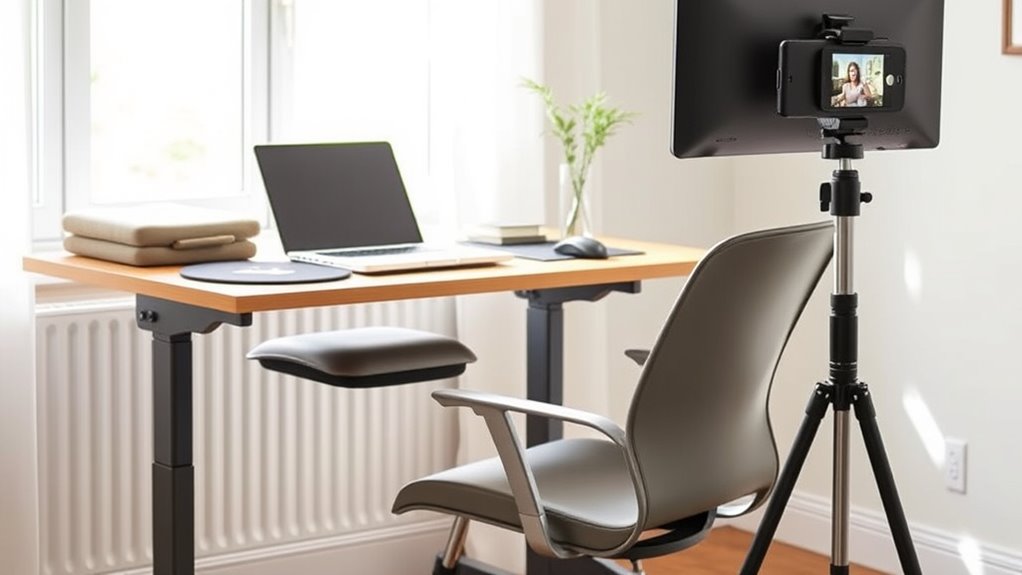
Setting up an ergonomic home office is essential for maintaining comfort and productivity during long work hours. If you face mobility challenges, it’s even more important to create a workspace that supports your needs and promotes ease of movement. One of the key ways to achieve this is by incorporating adaptive equipment designed specifically for accessibility. These tools can make a significant difference, allowing you to work efficiently without unnecessary strain or difficulty. From adjustable desks to specialized chairs, adaptive equipment ensures that your workspace adapts to your unique requirements, not the other way around. Ergonomic accessories also play a vital role in customizing your environment. Items like wrist supports, footrests, and monitor stands can help reduce discomfort and improve posture, making your workday more comfortable. The goal is to remove barriers that hinder your productivity and to foster an environment where you feel supported and capable.
When choosing adaptive equipment, focus on flexibility and ease of use. For example, an adjustable-height desk allows you to switch between sitting and standing positions, which can be beneficial for mobility. It’s important that the equipment you select is easy to operate independently or with minimal assistance. Ergonomic accessories, such as ergonomic mice and keyboards, can help prevent repetitive strain injuries, especially if your mobility challenges affect your hand and arm movements. Consider tools that can be easily reached and adjusted without needing to stretch or strain. For instance, a monitor arm can position your screen at eye level, reducing neck and eye strain, while a footrest can provide support for your legs, improving circulation and comfort during long periods of sitting. Additionally, ergonomic design principles can guide you in creating a workspace that is both functional and comfortable for your specific needs.
Creating an accessible workspace also involves thoughtful organization. Use storage solutions that keep essential items within reach and reduce the need for unnecessary movement. Clear pathways and wide spacing between furniture pieces help prevent accidents and make it easier to navigate your workspace freely. Incorporate ergonomic accessories like non-slip mats or cushioned mats if you need to shift positions frequently, giving you added stability and comfort. Remember, the key is to tailor your setup so that it accommodates your mobility needs without sacrificing functionality. Regularly reassess your workspace to identify areas for improvement, and don’t hesitate to invest in new adaptive equipment or ergonomic accessories that can enhance your comfort and independence. By thoughtfully designing your home office with these tools, you’ll create a more inclusive workspace that empowers you to work effectively and comfortably every day.
Frequently Asked Questions
How Can I Customize My Workspace for Limited Mobility?
You can customize your workspace by choosing adaptive seating that supports your posture and makes movement easier. Use voice control technology to operate your devices hands-free, reducing strain and improving accessibility. Arrange your desk to minimize reaching and ensure everything you need is within easy reach. Incorporate ergonomic accessories like adjustable desks and supportive cushions. These adjustments help create a comfortable, efficient environment tailored to your mobility needs.
What Tools Assist With One-Handed Computer Use?
To assist with one-handed computer use, you can use a one-handed mouse, which is designed for easy control with a single hand. Additionally, voice command technology allows you to operate your device hands-free, reducing the need for manual input. Combining these tools helps you work more comfortably and efficiently, enabling smoother navigation and interaction with your computer despite mobility challenges.
How Do I Adapt Furniture for Wheelchair Accessibility?
To adapt your furniture for wheelchair accessibility, adjust your desk height so you can comfortably reach everything without straining, ideally around 28-30 inches. Choose a chair with strong support that can be easily moved or adjusted for extra stability. Verify there’s enough clearance under the desk for your wheelchair, and consider installing accessible features like pull-out shelves or lever-style controls to make your workspace more functional and comfortable.
What Are the Best Ergonomic Accessories for Mobility Aids?
You should consider assistive technology and adaptive devices like ergonomic keyboard trays, adjustable monitor arms, and supportive wrist rests to enhance comfort and efficiency. These accessories help you maintain proper posture and reduce strain during work. Look for ergonomic accessories designed specifically for mobility aids, ensuring they’re easy to access and use. Choosing the right adaptive devices will make your workspace more comfortable, functional, and tailored to your mobility needs.
How Can I Ensure Safety in an Ergonomic Home Office?
Imagine your workspace as a fortress—your safety depends on it. To guarantee safety in your ergonomic home office, you should maintain proper ergonomic posture and keep pathways clear to prevent trips and falls. Adjust your chair and desk to support good alignment, and use mobility aids correctly. Regularly take breaks to avoid strain and injury, and stay aware of your surroundings for injury prevention, creating a safe, comfortable environment.
Conclusion
By creating an ergonomic home office tailored to your mobility needs, you’ll boost comfort and productivity. For example, imagine adjusting your desk height so you can easily reach everything without strain—like Sarah, who improved her posture and reduced pain with simple modifications. With a few thoughtful changes, you’ll turn your workspace into a supportive environment that makes working easier and more enjoyable every day. Your comfort matters—start customizing today!