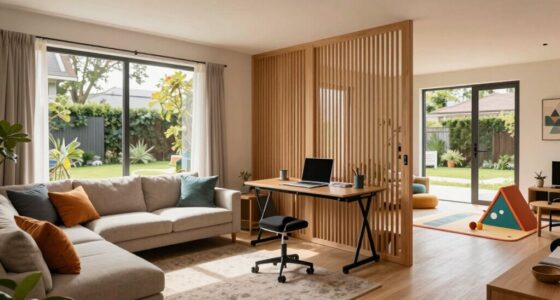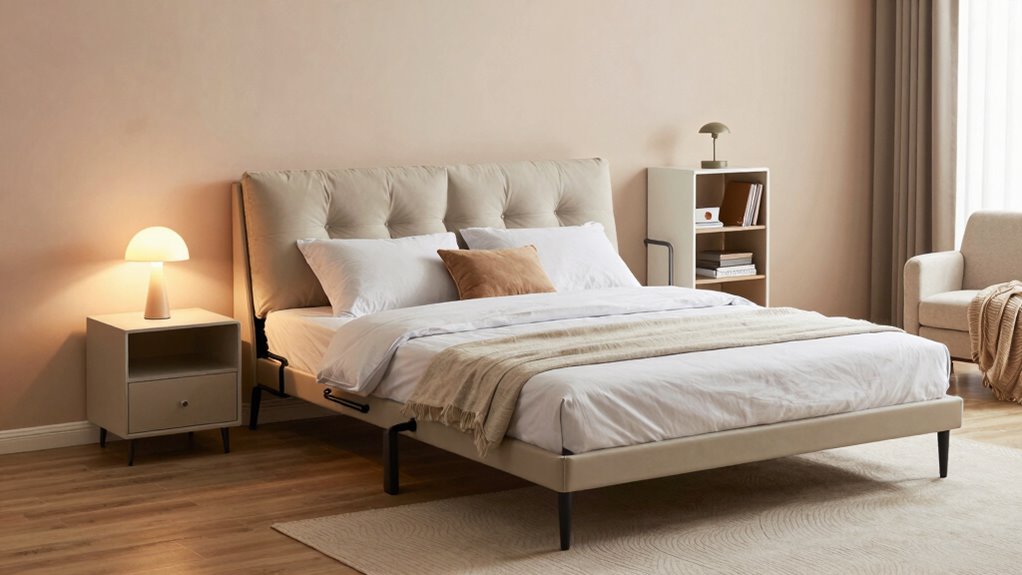

To create a guest room that doubles as a future care space, start with multifunctional furniture like sofa beds, storage ottomans, and fold-away desks to keep the room flexible and clutter-free. Use privacy solutions such as curtains or sliding doors, and incorporate layered, accessible lighting. Plan the layout to *guarantee* good mobility, with smooth flooring and rounded edges. Organize supplies within easy reach and design a safe, adaptable environment that balances comfort, privacy, and safety for both guests and caregivers. Keep exploring for more tips to make this space truly versatile.

Get decor and gifts delivered free with Prime
- Fast, free delivery on millions of items
- Prime Video, Amazon Music and more included
- Member-only deals all year
Key Takeaways
- Incorporate multifunctional furniture like sofa beds and fold-away desks for versatile use and space efficiency.
- Use adjustable privacy solutions such as curtains or sliding doors to create private zones when needed.
- Plan lighting with dimmable and accessible options for various activities and caregiver convenience.
- Arrange furniture to maximize accessibility, keep pathways clear, and include safety features like non-slip flooring.
- Ensure ample storage for medical supplies and organize equipment for easy access and safety.

Creating a guest room that can seamlessly shift into a future care space requires thoughtful planning from the start. You want a space that feels welcoming now but can easily adapt as needs change. To achieve this, focus on multifunctional furniture that maximizes versatility. For instance, invest in a sofa bed or a Murphy bed that can serve as seating during the day and a comfortable bed at night. Storage ottomans and fold-away desks can further enhance the room’s functionality without cluttering the space. These pieces allow you to maintain a clean, open environment that feels inviting rather than clinical.
Privacy solutions are just as essential, especially when shifting the room into a care space. You need to create boundaries that provide comfort and dignity without sacrificing openness. Consider installing a room divider or a sliding door that can be easily closed when privacy is needed. Curtains that can be drawn around the bed area also work well, especially if space is limited. If you’re working with a larger room, a partition wall can be a long-term solution, giving the room a distinct ‘private’ zone whenever necessary. These privacy solutions help you control the environment, making it adaptable for both guest visits and future caregiving needs.
Lighting is another key element. Use layered lighting options, such as adjustable bedside lamps, dimmable ceiling fixtures, and task lighting. This allows you to create a warm, welcoming atmosphere for guests, but also a functional, calming space for care. Incorporate easy-to-reach controls and guarantee lighting can be customized to suit different needs. If mobility becomes an issue later, accessible switches and voice-activated lighting can make the changeover smoother. Additionally, incorporating accessible lighting options ensures the space remains functional for all users as needs evolve. Considering the importance of space planning, arranging furniture thoughtfully can significantly improve mobility and accessibility within the room. Proper room layout also plays a crucial role in ensuring safety and ease of movement.
When designing your space, think about accessibility from the start. Keep pathways clear of furniture and incorporate non-slip flooring. Choose furniture with rounded edges and avoid heavy pieces that could be difficult to move if mobility assistance is needed. Adequate storage is essential, so keep supplies and medical equipment organized and within easy reach without cluttering the room. Ultimately, the goal is to create a flexible, comfortable environment that can serve your guests today and your loved ones tomorrow, without extensive renovations or sacrifices in style and comfort. By combining multifunctional furniture, strategic privacy solutions, and thoughtful accessibility, you turn your guest room into a thoughtfully adaptable care space for the future.
As an affiliate, we earn on qualifying purchases.
Frequently Asked Questions
What Are the Essential Safety Features for a Care-Friendly Guest Room?
You should prioritize fall prevention by adding non-slip rugs, grab bars, and secure lighting. Emergency accessibility is vital, so make certain clear pathways and install easily reachable devices like emergency call buttons. Keep furniture minimal and stable to prevent accidents, and use bright, even lighting to improve visibility. These safety features help create a care-friendly guest room that’s safe for everyone and adaptable for future care needs.
How Can I Maximize Space Efficiency in a Small Guest Room?
You can maximize space efficiency by choosing multi-functional furniture that serves dual purposes, like a sofa bed or storage ottoman. Pair this with flexible storage solutions such as wall-mounted shelves and under-bed drawers to keep clutter at bay. Use vertical space wisely and select sleek, compact pieces to make the room feel open. This approach guarantees your small guest room remains versatile, functional, and welcoming for both visitors and future care needs.
What Are the Best Materials for Easy Maintenance in a Care Space?
Choose multifunctional furniture like fold-out beds or storage-sofa combos for easy maintenance. Opt for hypoallergenic materials such as vinyl, ceramic tiles, or waterproof paints to keep the space clean and safe for future care needs. These materials resist stains and allergens, making cleaning straightforward. By combining durable, low-maintenance surfaces with versatile furniture, you guarantee the space remains practical and adaptable for both guests and future care purposes.
How Should I Plan for Future Technological Needs in the Room?
Of course, who wouldn’t want a room packed with future tech? Start with smart home integration—think voice-activated lighting, climate controls, and security systems. Pair that with adaptive furniture that adjusts to evolving needs. Plan for wireless charging stations and ample outlets. By anticipating tech needs now, you turn your guest room into a seamlessly connected, future-proof care space, making both visitors and caregivers’ lives easier and smarter.
What Color Schemes Promote Calmness and Accessibility?
You should choose color schemes rooted in color psychology, like soft blues, gentle greens, or warm neutrals, to promote calmness. For accessibility design, avoid overly bright or contrasting colors that can be overwhelming or confusing. Opt for muted tones that create a soothing environment, and guarantee color contrasts are sufficient for visibility. This helps make the space both calming and easy to navigate for everyone, including those with visual impairments.
Conclusion
By designing a guest room with flexibility in mind, you create a welcoming space for visitors and a future sanctuary for care. It’s a gentle reminder that today’s hospitality can seamlessly transform into tomorrow’s comfort, blending the joy of hosting with the quiet readiness of support. Embrace this dual purpose, knowing your thoughtful planning nurtures both fleeting moments of laughter and lasting peace of mind, bridging the present and future with quiet resilience.
Fall Picks
fall essentials
As an affiliate, we earn on qualifying purchases.