Upgrading your ventilation system helps improve indoor air quality by removing pollutants like dust, pet dander, mold spores, and VOCs, while replacing stale air with fresh outdoor air. Installing energy-efficient systems such as ERVs, exhaust fans, or whole-house ventilators guarantees better air circulation, reduces moisture, and keeps your home comfortable and healthy. Proper maintenance is key to keeping these systems effective. Keep exploring to discover how these upgrades can transform your home’s environment.
Key Takeaways
- Upgrading to mechanical ventilation systems ensures continuous exchange of indoor and outdoor air, reducing pollutants.
- Installing energy recovery ventilators (ERVs) conserves energy while providing fresh, filtered air indoors.
- Regular maintenance of filters and ducts maintains system efficiency and prevents mold or dust buildup.
- Using exhaust fans in kitchens and bathrooms helps remove moisture and odors, improving air quality.
- Implementing smart ventilation systems with sensors adjusts airflow based on occupancy and air quality needs.
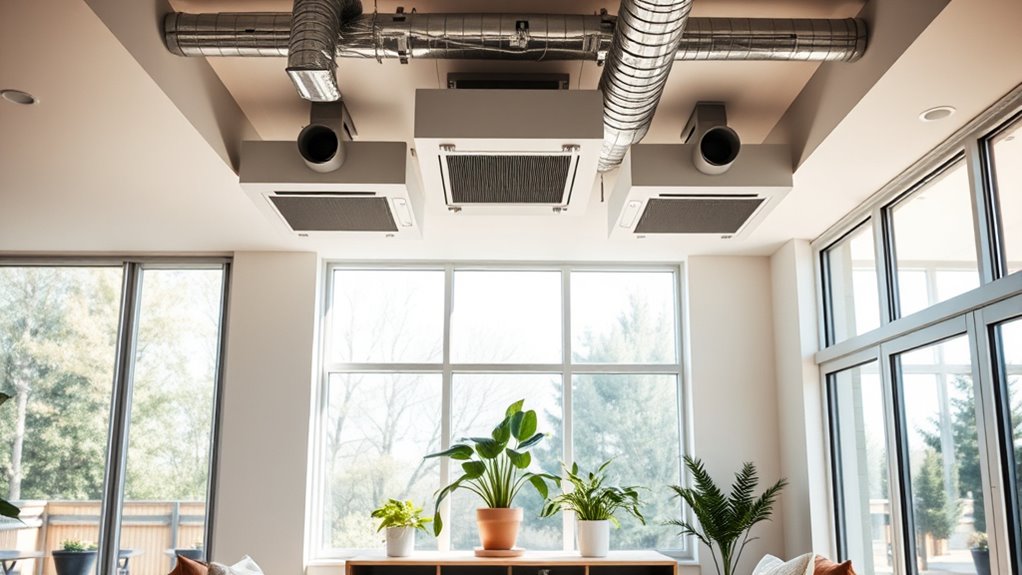
Have you ever wondered how the air inside your home affects your health and comfort? The quality of your indoor air depends heavily on proper air exchange, which involves replacing stale, contaminated air with fresh outdoor air. Without sufficient air exchange, pollutants like dust, pet dander, mold spores, and volatile organic compounds can accumulate, leading to stuffy rooms, unpleasant odors, and potential health issues such as allergies or respiratory problems. That’s where upgrading your ventilation systems becomes essential. Modern ventilation systems are designed to maximize air exchange, ensuring your living space remains fresh and safe.
Proper air exchange is vital for a healthy, comfortable home environment.
When you improve your ventilation, you’re actively controlling the flow of air in your home. Mechanical ventilation systems, such as exhaust fans, supply vents, and heat recovery ventilators, work together to bring in clean air and expel indoor pollutants. This continuous process helps remove excess moisture, which can cause mold growth, and reduces indoor concentrations of harmful substances. That way, you can better manage indoor air quality even during seasonal changes or extreme weather. If your home relies solely on natural ventilation, like opening windows, you might find it challenging to maintain a consistent air exchange rate, especially during extreme weather or in densely populated areas. Upgrading to an efficient ventilation system guarantees a balanced and steady flow of air, regardless of outdoor conditions.
You should consider the type of ventilation system that best suits your needs. For example, an energy recovery ventilator (ERV) can provide fresh air while conserving energy by transferring heat between incoming and outgoing air streams. This not only improves air quality but also reduces heating and cooling costs. If you have a small home or apartment, exhaust fans in bathrooms and kitchens can help eliminate moisture and odors effectively. Larger homes may benefit from whole-house ventilation systems that distribute fresh air evenly throughout the space. Additionally, smart ventilation systems equipped with sensors can automatically adjust airflow based on occupancy or air quality levels, giving you control and convenience.
Investing in these upgrades greatly enhances indoor air quality by ensuring consistent air exchange and reducing indoor pollutants. Better ventilation doesn’t just improve comfort; it also supports your overall health by decreasing exposure to airborne contaminants. Regular maintenance of your ventilation systems is essential to keep them functioning at their best. Filters should be replaced or cleaned periodically, and ducts should be inspected for blockages or mold. Properly implementing air exchange strategies helps prevent the buildup of indoor pollutants and maintains a healthier environment. When you make these improvements, you’re creating a healthier, more comfortable environment that actively promotes well-being. Proper air exchange through effective ventilation systems makes a noticeable difference, transforming your home into a safer, fresher sanctuary.
Frequently Asked Questions
How Often Should Ventilation Systems Be Inspected and Maintained?
You should follow a regular maintenance schedule for your ventilation system, inspecting it at least twice a year, ideally in spring and fall. The inspection frequency depends on usage and environment, so more frequent checks might be necessary if you notice issues like strange noises or reduced airflow. Regular maintenance, including filter changes and cleaning, guarantees your system runs efficiently and keeps indoor air quality high.
Can Ventilation Upgrades Reduce Indoor Humidity Levels Effectively?
Yes, ventilation upgrades can effectively reduce indoor humidity levels by improving humidity control and moisture reduction. Upgrading your ventilation system increases airflow, helping to remove excess moisture from the air. Properly designed ventilation allows moist air to escape and fresh, drier air to enter, which minimizes humidity buildup. This process not only enhances comfort but also prevents mold growth and other moisture-related issues, creating a healthier indoor environment.
Are There Specific Ventilation Solutions for Allergy Sufferers?
Yes, you can benefit from ventilation solutions designed for allergy sufferers. Look for systems with allergen filtration, like HEPA filters, and consider integrating air purifiers into your ventilation setup. These upgrades actively eliminate pollen, dust, and pet dander, creating a cleaner indoor environment. Regular maintenance of filters and proper airflow management ensure these solutions work effectively, helping you breathe easier and reducing allergy symptoms.
What Is the Typical Cost Range for Comprehensive Ventilation Upgrades?
Think of ventilation upgrades as investing in a invigorating breath of fresh air for your home. The cost estimate for all-encompassing systems typically ranges from $3,000 to $10,000, depending on your home’s size and the complexity of the upgrade. Budget considerations play a key role, so you should weigh the long-term benefits of healthier indoor air against your initial investment. Planning ahead ensures you choose a solution that fits your needs and budget.
How Do Ventilation Improvements Impact Energy Consumption?
Ventilation improvements can boost energy efficiency by using advanced ventilation technology that optimizes airflow while minimizing energy use. Upgrades like energy recovery ventilators or smart systems guarantee fresh air enters without overwhelming your heating or cooling, reducing overall energy consumption. While initial costs may rise, in the long run, these upgrades save you money through lower utility bills and better indoor comfort, making your home both healthier and more efficient.
Conclusion
By upgrading your ventilation, you’re not just improving indoor air quality—you’re transforming your entire living space into a sanctuary of health. Every breath becomes easier, and the air feels as pure as mountain air on a clear day. Don’t underestimate the power of these small changes; they could be the difference between just surviving indoors and truly thriving. Invest in your air, and you’ll breathe easier knowing you’ve taken a giant leap toward a healthier, happier home.