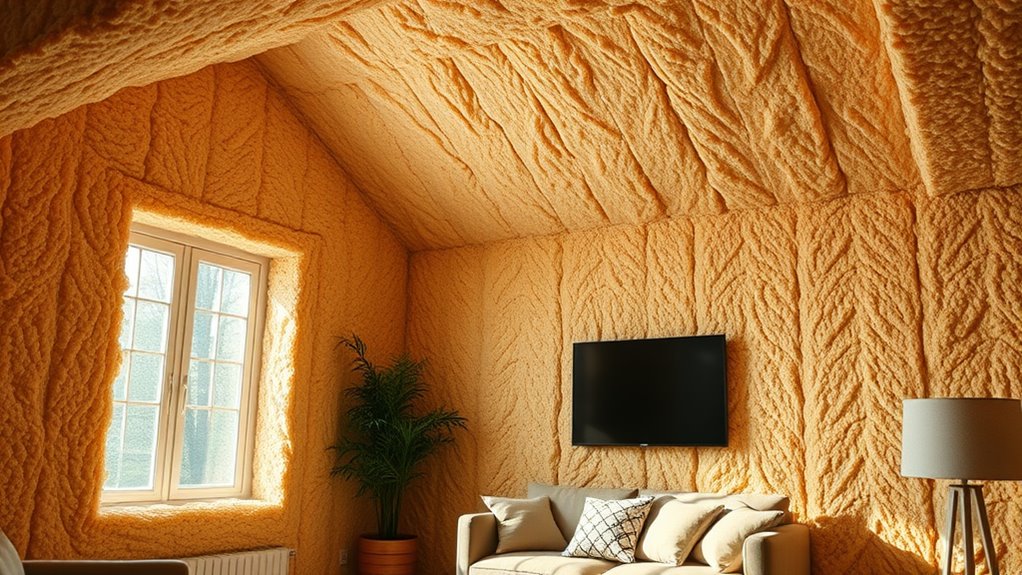

Insulating your home properly creates a thermal barrier that maintains consistent indoor temperatures, keeps your comfort level high, and reduces energy bills. By choosing the right materials, like fiberglass batts or spray foam, and ensuring proper installation, you can effectively slow heat transfer and cut down on heating and cooling costs. When done right, insulation protects you from outside temperature swings. Keep exploring to discover how specific insulation techniques can make your home more efficient and cozy.
Key Takeaways
- Choose high R-value insulation materials suitable for your specific spaces, such as fiberglass, spray foam, or rigid foam boards.
- Properly install insulation to eliminate gaps, compression, and uneven coverage, ensuring maximum thermal efficiency.
- Insulate walls, attics, floors, and ducts to create a comprehensive thermal barrier throughout the home.
- Seal air leaks and cracks to enhance insulation effectiveness and prevent heat transfer.
- Regularly inspect and upgrade insulation to maintain energy efficiency and indoor comfort over time.

Are you looking for an effective way to reduce your energy bills and make your home more comfortable? One of the smartest steps you can take is improving your home’s insulation. Proper insulation acts as a thermal barrier, helping to keep warm air inside during the winter and outside during the summer. The key lies in choosing the right insulation materials and understanding how they work to create an effective thermal barrier around your home. When you focus on upgrading or adding insulation, you’re not just saving money; you’re also creating a more consistent indoor climate that feels just right, no matter the season.
Thermal barriers are essential because they slow down heat transfer, preventing your heating or cooling systems from working overtime. These barriers are built into your walls, attic, floors, and even around ducts to keep temperature fluctuations at bay. The effectiveness of these barriers depends on the quality and type of insulation materials you select. Common insulation materials include fiberglass batts, spray foam, cellulose, and rigid foam boards. Each has its own advantages and ideal applications, but all serve the purpose of forming a solid thermal barrier. For example, fiberglass batts are easy to install and cost-effective, making them a popular choice for walls and attics. Spray foam, on the other hand, provides a superior air seal, which enhances the insulation’s overall performance by preventing drafts.
When you’re choosing insulation materials, consider not just the R-value, which measures thermal resistance, but also the material’s ability to fit your specific needs. For instance, if you’re insulating around irregular spaces or existing structures, spray foam or cellulose might be your best options because they expand to fill gaps. In contrast, rigid foam boards are ideal for basement walls or exterior insulation projects. Proper installation is just as important as the materials themselves. Ensuring that the insulation is evenly distributed without gaps or compression maximizes its effectiveness as a thermal barrier. Poor installation can create cold spots and reduce the overall energy savings.
Frequently Asked Questions
How Often Should Home Insulation Be Inspected or Replaced?
You should inspect your home insulation every 3 to 5 years to guarantee it remains effective. Follow an inspection schedule, looking for signs like mold, pests, or compressed insulation. Replacement criteria include significant moisture damage, pest activity, or if the insulation has settled or become less than 50% effective. Regular inspections help you identify issues early, maintaining your home’s comfort and energy efficiency.
What Are the Best Types of Insulation for Cold Climates?
In cold climates, you should choose insulation like spray foam or blown-in cellulose, which act as effective thermal barriers and provide excellent moisture control. These options help keep your home warm by reducing heat loss and preventing moisture buildup. You’ll benefit from their durability and high R-values, ensuring consistent comfort and energy efficiency. Proper insulation will protect your home against the cold while maintaining suitable indoor humidity levels.
Can DIY Insulation Improve Energy Efficiency Significantly?
Yes, DIY insulation can substantially boost your home’s energy efficiency by improving thermal performance and moisture control. When you install insulation carefully, you reduce heat loss, keep indoor temperatures stable, and prevent moisture buildup. This proactive approach minimizes drafts, lowers heating and cooling costs, and enhances overall comfort. With proper techniques, your efforts can make a noticeable difference in your home’s energy use, making DIY insulation a smart, cost-effective project.
How Does Insulation Affect Indoor Air Quality?
Insulation helps improve indoor air quality by reducing the entry of outdoor pollutants and maintaining a stable temperature. It also supports ventilation benefits, allowing your home to breathe better and prevent indoor air pollutants like mold, dust, and allergens from accumulating. Proper insulation minimizes drafts and helps your ventilation system work efficiently, ensuring cleaner, healthier air inside your home. This creates a more comfortable and safer living environment for you.
Are There Government Incentives for Upgrading Home Insulation?
Yes, you can open incredible savings through government grants and rebate programs when upgrading your home insulation. These incentives are like finding a treasure chest buried in your backyard—except it’s available for your insulation project! They make the upgrade not just affordable but practically free. Don’t miss out on these opportunities; they’re designed to help you boost comfort and slash energy bills effortlessly.
Conclusion
By insulating your home, you’re wrapping it in a cozy blanket that keeps warmth in and cold out. Think of it as giving your house a shield against the elements, transforming it into a fortress of comfort and efficiency. When you prioritize proper insulation, you’re not just saving energy — you’re creating a sanctuary where every corner feels just right. So, seal those gaps and insulate, turning your home into a warm embrace you can rely on all year round.